



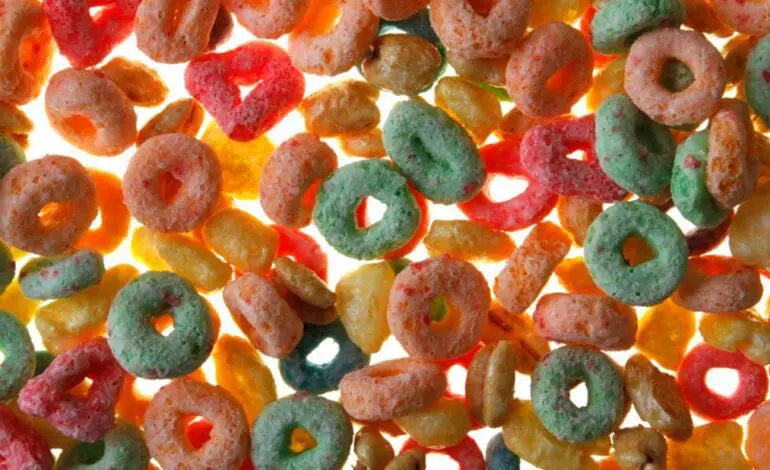

LANSING – The Republican-majority Michigan House of Representatives has passed a bill that would ban several artificial food additives and dyes from school meals starting in the summer of 2028.
The proposed legislation targets four additives: brominated vegetable oil, potassium bromate, propylparaben and titanium dioxide; along with five artificial food dyes: Red 40, Green 3, Blue 1, Blue 2 and Yellow 6.
The bill, introduced by Rep. Brad Paquette (R-Niles), passed with 58 Republican votes in favor, while 47 Democrats voted against it and five abstained — signaling a likely challenge in the Democratic-controlled State Senate.
Under the proposed law, public and private schools would be prohibited from providing, selling, offering for sale or making available any food containing any of the banned ingredients to students.
Many of these substances are already banned in other U.S. states and countries abroad. The U.S. Food and Drug Administration (FDA) rescinded its approval of brominated vegetable oil last year. The Trump administration has recently taken similar steps to ban these additives and dyes, citing studies linking them to behavioral disorders, endocrine disruption, cancer and other chronic illnesses — though other studies claim insufficient evidence of harm.
“Children using a fork or straw in the school cafeteria should have confidence that what they’re eating isn’t directly contributing to endocrine disruption, hyperactivity, cancer or a host of other serious chronic diseases,” Paquette said before the vote.
This legislation aligns with a broader effort by the Trump administration and Republicans to “clean up the food supply chain from synthetic dyes”, led by Health Secretary Robert F. Kennedy Jr.
“Our food system has relied far too long on petroleum-derived artificial colors that offer no nutritional value and pose unnecessary health risks,” Kennedy previously stated.
Though the bill (House Bill 4369) initially received some bipartisan support, it ultimately passed on strict party lines.
Republicans currently hold 58 seats in the State House compared to 52 Democrats, while Democrats narrowly control the Senate with 19 seats to the GOP’s 18. One Senate seat — formerly held by Democrat Kristen McDonald Rivet, who was elected to Congress in November — remains vacant.
The Democratic majority in the Senate is expected to shelve the bill, arguing that such regulations should come at the federal level and that the law would overburden local school districts.
“This is a worthwhile effort, but it’s a conversation better suited to the federal level,” Rep. Regina Weiss (D–Oak Park) said.
She noted that most school districts have active contracts with third-party food vendors, and the bill would require them to reassess those contracts, leading to higher costs and challenges in sourcing alternatives.
Overall, Michigan’s legislature has been gridlocked since Republicans regained control of the House earlier this year, and lawmakers have yet to pass a school budget for the upcoming year.



Leave a Reply