



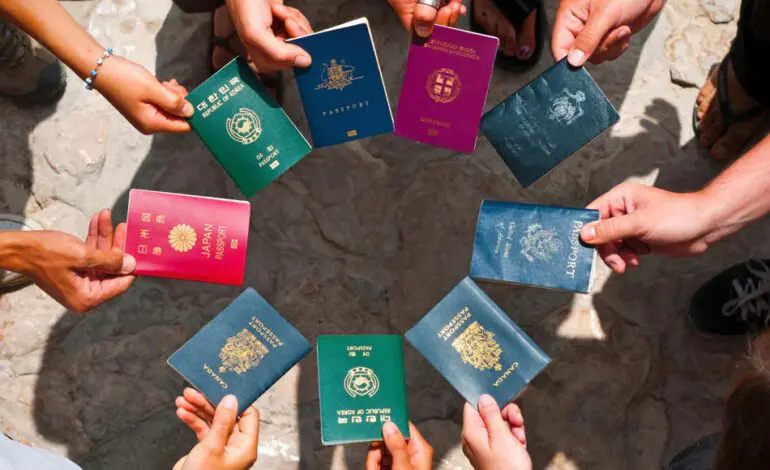

WASHINGTON, D.C. — President Trump expanded the scope of the United States’ travel ban on Tuesday, barring entry for citizens of five additional countries, including Syria, as well as holders of Palestinian Authority passports, according to the White House.
In a statement, the White House said Trump, who has made tightening immigration policies a central pillar of his political agenda, took the decision “to protect the security of the United States.” The statement confirmed the imposition of a full ban on entry for citizens of Syria, Burkina Faso, Mali, Niger and South Sudan.
The ban on Syrian nationals comes despite Trump’s previous pledge to do everything in his power to help Syria succeed under the leadership of transitional President Ahmed al-Sharaa.
However, in a post on his social media platform Truth Social on Saturday, Trump vowed a “very severe response” after the U.S. military announced the killing of two American soldiers and a civilian interpreter in Syria. The attack, attributed to a suspected ISIS affiliate, targeted a joint U.S.–Syrian convoy in the Palmyra area.
The White House cited high visa overstay rates among Syrian nationals as a justification for the ban, stating that Syria is emerging from a prolonged period of civil unrest and internal conflict. While the country is working to address its security challenges in close coordination with the United States, it still lacks a sufficiently centralized authority to issue passports or civil documents and does not have appropriate screening and vetting procedures.
Syria and the four newly added countries will join 12 other nations already subject to a full travel ban due to what the Trump administration described as “high risk.” Those countries are Yemen, Somalia, Sudan, Libya, Iran, Afghanistan, Myanmar, Chad, Congo, Equatorial Guinea, Eritrea and Haiti.
The White House also said the executive order signed by Trump expanded the list of countries subject to heightened travel restrictions — though not a full ban — by adding citizens of 15 additional countries, citing clear, persistent and severe deficiencies in screening, vetting and information-sharing processes.
Countries subject to stricter travel restrictions include Burundi, Cuba, Togo, Venezuela, Laos, Sierra Leone, Turkmenistan, Angola, Antigua and Barbuda, Benin, Côte d’Ivoire, Dominica, Gabon, Gambia, Malawi, Mauritania, Nigeria, Senegal, Tanzania, Tonga, Zambia and Zimbabwe.
“Due to Turkmenistan’s productive engagement with the United States and the significant progress it has made since the previous order, this new order lifts the ban on non-immigrant visas issued to its nationals, while maintaining the suspension of entry for immigrant visas,” the White House statement added.
The administration emphasized that the restrictions imposed by the executive order are “necessary to prevent the entry of foreign nationals about whom the United States lacks sufficient information to assess the risks they may pose” and to encourage cooperation from foreign governments, enforce immigration laws and advance key foreign policy, national security and counter terrorism objectives. The statement concluded that it is the president’s duty “to take the necessary actions to ensure that those seeking to enter our country do not harm the American people.”
Exemptions from the restrictions include lawful permanent residents, dual nationals traveling on passports from non-restricted countries, holders of diplomatic visas, athletes and teams participating in the World Cup and major international sporting events, Special Immigrant Visa (SIV) holders who worked for the U.S. government, as well as certain immigrant visas for ethnic or religious minorities “facing persecution in Iran.” Case-by-case national interest exemptions may also be granted by the Departments of Justice, State and Homeland Security.
The executive order will take effect at the beginning of 2026 and will apply to individuals who are outside the United States and do not hold a valid visa prior to that date.


Leave a Reply