



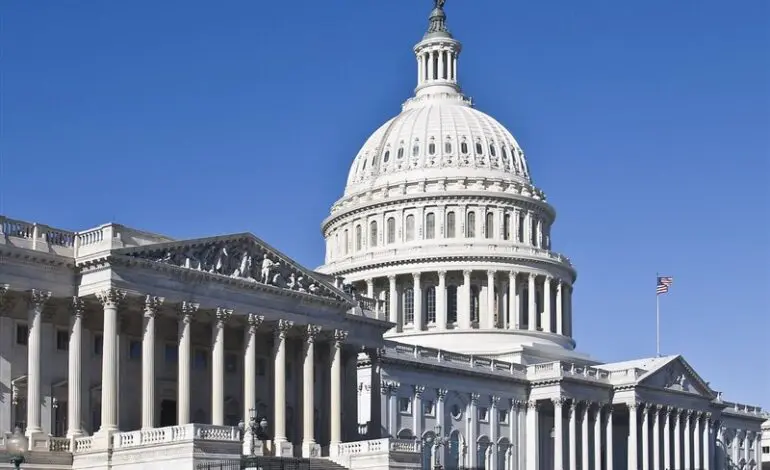

WASHINGTON, D.C. — On Wednesday, the U.S. Senate approved the 2026 National Defense Authorization Act (NDAA), authorizing a record defense budget exceeding $900 billion, including $400 million to fund weapons for Ukraine and a conditional decision to repeal the stringent Caesar Act sanctions on Syria.
The legislation passed the Senate by a vote of 77–20, after the House of Representatives approved the same bill on December 11 by a margin of 312–112.
The bill allocates $400 million to Ukraine under the Ukraine Security Assistance Initiative (USAI) for fiscal year 2026, a program designed to finance new weapons procurement rather than immediate military assistance. The same amount is also earmarked for fiscal year 2027.
Following approval by both chambers of Congress, the bill was sent to President Trump for final signature and enactment.
Republican House Speaker Mike Johnson said the legislation aims to codify 15 executive orders issued by Trump, including authorizing the use of U.S. armed forces along the U.S.–Mexico border, funding programs to build the “Golden Dome” missile defense system against ballistic and advanced aerial threats, ending what he described as progressive ideology within the Pentagon, revitalizing the defense industrial base and “restoring the warrior spirit.”
Among the most significant provisions in the more than 3,000-page legislative package are:
– $291 billion for operations and maintenance.
– $234 billion for military salaries and health care programs, including a 3.8 percent pay raise for all service members.
– $162 billion for procurement.
– $146 billion for research and development.
– $54 billion for military construction and nuclear programs.
The legislation also underscores Washington’s strategic commitment to its special relationship with Israel, reaffirming continued defense cooperation as official U.S. policy. It includes funding allocations for advanced missile defense systems such as the Arrow-3, as well as investments in emerging defense technologies including drones, cybersecurity systems and counter-drone capabilities.
Repeal of the Caesar Act sanctions on Syria
Both the Senate and House included, in a compromise version of the 2026 NDAA, a provision to repeal the Caesar Syria Civilian Protection Act of 2019, a move widely viewed as essential to reviving Syria’s economy.
Under the legislation, the White House is required to submit reports to various congressional committees, initially within 90 days, and then every 180 days for four years, certifying that Syria is “taking tangible steps to eliminate ISIS and other terrorist groups, that minority rights are respected, that the country is not engaging in military action against its neighbors (including Israel) and that it is combating money laundering and terrorist financing.”
Trump had announced his intention to lift all sanctions imposed on Syria during a meeting with Syria’s transitional president, Ahmed al-Sharaa, in May in Saudi Arabia, and his administration temporarily suspended the sanctions. However, permanently repealing the more stringent Caesar Act required congressional legislation.
The U.S. Congress originally passed the Caesar Act on December 11, 2019, to penalize senior officials of the former Syrian regime of President Bashar al-Assad over alleged war crimes against civilians. Repealing the law is expected to pave the way for the return of foreign investment and international aid to support Syria’s new administration.


Leave a Reply