




DEARBORN — Nearly seven years after voters rejected a bond proposal to fund Dearborn Public Schools, the district began discussions this week on possible options to secure hundreds of millions of dollars needed to repair, rebuild and modernize its aging and deteriorating infrastructure, amid signs that the school board is leaning toward placing a new bond proposal before voters next fall.
During a public meeting held on Monday, the Dearborn Board of Education launched the process of preparing a ballot proposal involving the issuance of a bond proposal funded through a property tax levy. The move opens the door for a series of public hearings this winter to gather community input on the best way to finance long-needed upgrades to aging school buildings.
The modernization of aging buildings and systems is the number one issue we face as a school district.
In that context, district administrators have begun developing four potential bond scenarios. Once completed, the proposed plans will be presented to the board for further discussion before being shared with the public for additional feedback.
According to a comprehensive facilities assessment conducted earlier, buildings in the Dearborn School district require more than $1 billion in repairs and renovations. Urgent needs include fixing leaking roofs in several older schools and upgrading electrical, heating and air-conditioning systems, including water heaters that are more than 40-years-old.
Four schools were tagged for critical needs — Howe, Lowrey K-8, Salina Intermediate and Whitmore Bolles. Lowrey Elementary was the only school that consulting firm Quinn Evans suggested for a full replacement.
Lowrey, which opened 99 years ago, suffers from so many chronic problems that constructing a new school on the site would cost roughly the same as rehabilitating the existing building to make it functional, according to the report.
The average age of school buildings in the Dearborn district is about 70 years. The district includes 35 buildings, 32 of them schools, many of which are more than a century old. The newest school in the city was built in 2006.
Dearborn Public Schools serves all neighborhoods of Dearborn and part of the neighboring city of Dearborn Heights. It is the third-largest school district in Michigan by student enrollment, serving approximately 20,000 students.
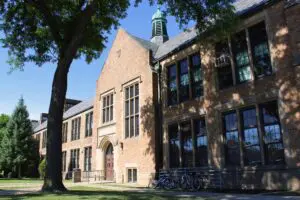
The consulting firm Quinn Evans, which conducted the assessment, recommended fully replacing Lowrey Elementary in East Dearborn. – File photo
Dearborn school buildings require more than $1 billion in repairs and renovations.
Dearborn Board of Education President Adel Mozip told The Arab American News that the district has exhausted all available options to address major facility needs, describing the modernization of aging buildings and systems as “the number one issue we face as a school district.”
Mozip explained that over the past five years following the failure of the 2019 bond referendum, the district has managed to make incremental improvements using Elementary and Secondary School Emergency Relief (ESSER) funds, including upgrades to heating, ventilation and air-conditioning systems and other limited repairs. While helpful, he said, those investments were far from sufficient.
He noted that district administrators are developing multiple ballot proposals that will be presented to the board at its next meeting in February. Each proposal, he said, will include detailed information on the scope of work, estimated costs and projected timelines.
For example, Mozip said one option might include building two or three new schools while renovating others over a 10- to 15-year period, while another proposal could explore consolidating high schools onto a single campus. Ultimately, he emphasized, the board will decide which version is presented to voters.
We have to be more specific this time. We can’t leave things vague. – Adel Mozip, president of the Dearborn Board of Education
Reflecting on lessons learned from the failed 2019 bond proposal referendum, Mozip stressed the importance of transparency in crafting the new proposal. He said the district will clearly outline “what work will be done at each school, which buildings will be renovated and which should be replaced”, adding that clear timelines, costs and priorities will be shared before anything is placed on the ballot in November 2026.
“At this point, no plans have been finalized,” Mozip said, “but it is clear that some buildings will require major renovations, while others may need to be replaced entirely.” He explained that several historic schools have “structural issues” that cannot be resolved through limited renovations.
Regardless of the total cost, Mozip emphasized that “there is a great deal of information that needs to be absorbed” and that residents must be given the opportunity to participate in the process and share their views and ideas. He added that the board will carefully consider the lessons of the narrowly defeated 2019 referendum.
That proposal, known as BRICS (Buildings, Renovations, Infrastructure, Capacity and Safety), sought to raise $240 million to carry out essential repairs at 34 district buildings. It was rejected by a margin of just 470 votes, with 51.7 percent of voters opposing the measure.
At that time Dearborn Public Schools Director of Communications David Mustonen said he was disappointed by the results of the vote, and that many problems the district wanted to solve with the BRICS bond will be delayed.
“We have to be more specific this time,” Mozip said. “We can’t leave things vague.”
He stressed that the required maintenance and modernization are in “the best interest of our students and their safety”, while acknowledging Dearborn residents’ strong attachment to the city’s historic school buildings.
Mozip said the Dearborn school district is at a “pivotal moment”, explaining that voters will face a clear choice: Either to invest in modern, well-equipped schools capable of meeting 21st-century educational needs or allow facilities to continue aging.
“There is a unique opportunity to move forward while keeping property tax rates stable,” he added, noting that some existing taxes are set to expire.


Leave a Reply