



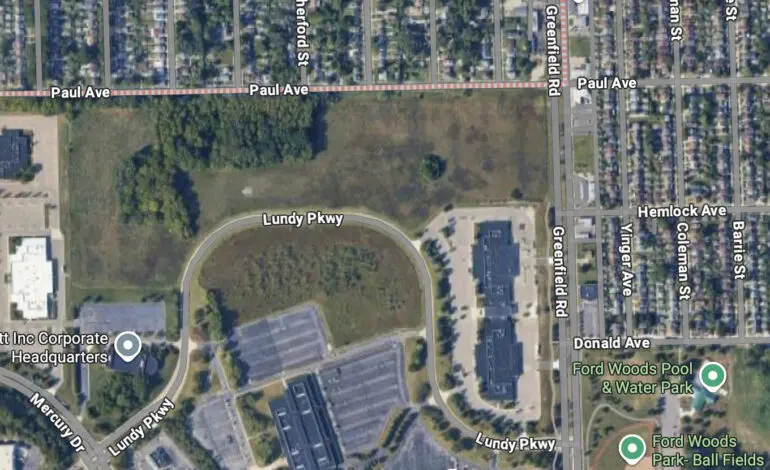

DEARBORN — As part of Mayor Abdullah Hammoud’s broader agenda for community and economic development, the city is planning a new residential neighborhood on the east side, featuring approximately 300 homes and apartments near the intersection of Greenfield Road and Paul Street.
City officials said the project — still in its planning phase — will focus on homeownership for residents who will live in the new homes themselves, rather than outside investors or large-scale property owners. The approach is aligned with Hammoud’s strategy to promote responsible development and sustainable community growth.
The project will prioritize homeownership for residents who will live in the new homes themselves, not outside investors.
A “people-first” development approach
Officials said the plan aims to strengthen neighborhood stability in the long term by building stronger community connections among residents. The project fits within Hammoud’s broader vision of development that places residents first, ensuring that economic growth benefits people who want to live, work and establish long-term roots in Dearborn.
The neighborhood initiative is also meant to expand affordable homeownership opportunities in Dearborn, while reducing the impact of speculative buyers who purchase housing units and later rent them at higher prices — contributing to upward pressure on property values.
Hammoud has previously emphasized the need for neighborhoods with strong social ties and attainable prices, especially as housing costs and market values continue to climb across the region.
300 units planned on vacant land near Detroit border
According to preliminary plans, the new neighborhood — expected to be built on vacant land along Dearborn’s border with the neighboring Detroit — would include about 300 units, consisting of apartments and single-family homes. The average home size is expected to be approximately 1,500 square feet.
Hammoud told The Arab American News that the city owns most of the land included in the project, describing it as a response to Dearborn’s housing shortage. Dearborn is home to about 110,000 residents and city leaders say demand continues to outpace supply.
The mayor said a city housing report estimates Dearborn will need around 1,500 new homes by 2035, and he expressed hope that the proposed neighborhood will help close part of that gap by adding hundreds of new housing opportunities.
Dearborn needs about 1,500 new homes by 2035, and this project can help provide hundreds of new units.
Construction timeline still years away
Hammoud said construction would be awarded through a competitive bidding process, but stressed that the project remains “several years away from breaking ground.”
He said the city is working on a comprehensive vision for the neighborhood’s design and layout.
“After the planning phase is completed and the project is ready for implementation,” Hammoud said, “the city will invite qualified parties to submit proposals to carry out construction.”
When asked who would handle the sale of homes to residents, Hammoud said key details are still being developed because the project remains in its early stages. He reiterated, however, that the core goal is expanding homeownership.
The emphasis, he said, will be on keeping prices attainable — particularly for first-time homebuyers.
Focus on young residents and first-time buyers
Hammoud said the project is designed to support residents who face major obstacles in today’s housing market — especially newly graduated young adults, early-career professionals and newly married couples who want to build families and remain in Dearborn.
The planned neighborhood will span approximately 21 acres, located west of Greenfield Road between Paul Street and Landy Street. Hammoud said the area will be primarily residential, particularly because commercial corridors already surround it.
The goal is to provide attainable homeownership, especially for first-time homebuyers.
Green space and flood mitigation included in the plan
Hammoud added that the project will incorporate principles of “responsible development”, meaning the city does not plan to build across the entire site. Instead, it intends to preserve significant green space to help absorb rainfall and prevent the project from worsening Dearborn’s persistent flooding challenges.
Officials said the inclusion of green areas is intended to reduce stormwater runoff and limit flood pressure, while also improving the livability of the neighborhood.
Leave a Reply