



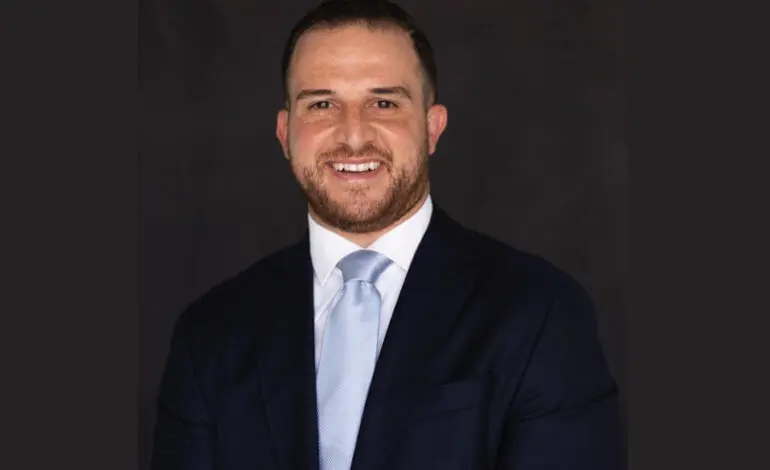

As healthcare organizations manage expanding volumes of sensitive patient information and rely more heavily on digital platforms, compliance and privacy leadership has shifted from a supporting role to a strategic one. For Hassan Abdallah, vice president and chief compliance & privacy officer at MRO, that evolution has shaped both his career and leadership philosophy.
MRO, a national clinical data management and intelligent data exchange company, expanded Abdallah’s responsibilities in 2025, reflecting a broader move to elevate compliance and privacy from back-office functions to core drivers of long-term business planning, accountability and patient trust.
“Compliance is no longer a back-office function,” Abdallah said. “It’s central to how healthcare organizations build trust, scale responsibly, improve patient outcomes and make decisions that hold up over time.”
Compliance is no longer a back-office function. It’s central to how healthcare organizations build trust, scale responsibly, improve patient outcomes and make decisions that hold up over time.
As chief compliance and privacy officer, Abdallah oversees enterprise regulatory compliance, healthcare data privacy governance, internal investigations and policy architecture, as well as oversight of how health information is collected, stored, shared and protected. His work increasingly involves shaping decisions before they are finalized.
“If compliance only shows up at the end, it’s not effective,” he said. “It has to be part of how strategy is formed, how products are designed and how data moves.”
A key part of his role is translating complex regulations — including HIPAA and evolving state privacy laws — into operational standards employees can realistically follow.
“Compliance can’t live only in policies,” he said. “It has to show up in workflows, controls and how people make decisions every day.”
If compliance only shows up at the end, it’s not effective. It has to be part of how strategy is formed, how products are designed and how data moves.
Abdallah brings more than 15 years of healthcare compliance experience. He holds a Juris Doctor and certifications, including Certified in Healthcare Compliance (CHC) and Fellow of the American Health Data Management Association (FACHDM). He previously led compliance and special investigations at Oscar Health and served as interim chief compliance officer at Health Alliance Plan of Michigan.
His most formative lessons came when compliance decisions had direct consequences for patient safety, access to care and health outcomes.
“These weren’t abstract issues,” Abdallah said. “They involved real policy decisions, real people and how organizations responded to challenges like substance use disorder and the opioid epidemic.”
Today, much of his focus lies at the intersection of privacy, cybersecurity and AI. As interoperability and data exchange accelerate, oversight grows more complex.
“There’s a strong market push for speed and accessibility,” he said. “At the same time, privacy laws haven’t gone away, and enforcement is increasing.”
He emphasizes governance over where data resides, who can access it and how AI tools influence care.
“If you can’t explain how a decision was made or what data drove it, trust breaks down.”
A strong compliance culture isn’t silent. People raise questions early. They come to compliance before decisions. They disclose issues out of trust.
Beyond his corporate role, Abdallah serves as vice chair of the Michigan Board of Medicine and chair of the Dearborn Board of Ethics.
“Public service keeps you grounded,” he said. “It reminds you that your decisions affect real people, not just organizations.”
He measures effective compliance by behavior.
“A strong compliance culture isn’t silent,” he said. “People raise questions early. They come to compliance before decisions. They disclose issues out of trust.
“Hard work matters,” Abdallah added. “But no one gets here alone — and leadership means widening the road for those who follow.”



Leave a Reply