



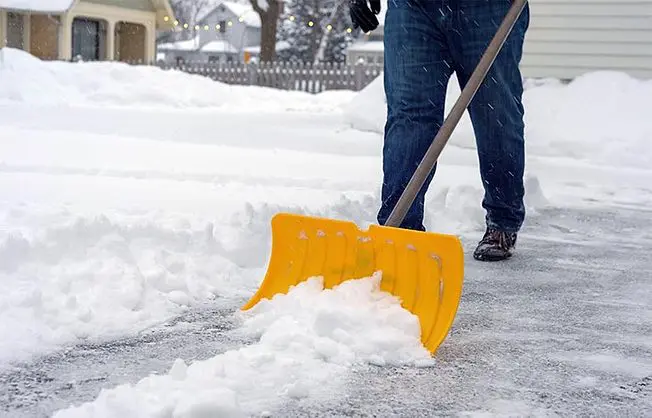

With the snowstorm that struck Michigan last week, local authorities across the state issued a series of guidelines to help residents avoid accidents caused by frost and ice buildup. Officials urged homeowners and business owners to follow local snow removal ordinances to avoid fines and protect pedestrians from slip-and-fall injuries, while also warning against excessive use of salt due to its wide-ranging environmental impacts.
Michigan’s local ordinances assign the responsibility of clearing snow and ice from sidewalks, walkways and home or business entrances to property owners, who must remove it within 24 hours of snowfall. Roadways and major streets, however, are cleared by state, county or municipal maintenance crews based on traffic volume and safety priorities.
As residents and business owners weigh their options for clearing ice — considering cost, effectiveness and environmental impact — sodium chloride, commonly known as rock salt or halite, remains the most widely used and least expensive option for roads and sidewalks. But experts at Michigan State University warn that this salt can damage concrete, kill vegetation, irritate pets and loses effectiveness when temperatures fall below 15°F (–9°C).
Calcium chloride, on the other hand, is a faster, more effective deicer because it releases heat when reacting with ice, allowing it to melt even in very low temperatures. However, it is more expensive, leaves a sticky residue and may also cause long-term concrete corrosion.
Many homeowners also rely on natural or non-chemical alternatives such as sand, wood chips, sawdust or cat litter, which provide traction and improve walking and driving conditions. These materials are often used along with chemical deicers to reduce salt usage and minimize environmental impact, though they may require cleanup after the ice melts.
To help residents use salt responsibly, Michigan environmental agencies recommend moderation, noting the documented negative effects on plants, infrastructure and water quality. According to Michigan’s Water Management Program, one 12-ounce cup of salt is sufficient to treat a 20-foot walkway or about 10 squares of sidewalk, provided the salt is spread evenly to ensure efficient melting without waste.
For larger areas, a 50-pound bag of rock salt can cover roughly 1,600 square feet, equivalent to a walkway measuring 10 feet by 160 feet.
The U.S. Environmental Protection Agency (EPA) warns that salt concentrations in freshwater ecosystems are rising globally due to human activities, particularly the widespread use of road salt for winter deicing. Excess salt is toxic to aquatic life, contaminates drinking-water sources and damages infrastructure, highlighting the urgent need to reduce overuse.
Health and safety precautions
For personal safety, the American Heart Association advises adults over age 45, especially those with known heart disease, high blood pressure, high cholesterol, smokers, individuals with obesity or those leading a sedentary lifestyle, to exercise caution while shoveling snow, as cold-weather exertion can increase the risk of serious health complications.
Snow removal tools available to residents
To help residents track snow-removal progress, the Michigan Department of Transportation (MDOT) and several municipalities provide digital maps showing plowed roads and the active locations of snowplows.
The MiDrive map, operated by MDOT, allows users to view near-real-time locations of snowplows, updated every few minutes.
By clicking on a snowplow icon, users can view detailed information about its operation, including the truck’s name, the task it is performing and even a live image from the driver’s seat showing current road conditions. Additional layers, such as road maintenance updates, can be turned on or off as needed.



Leave a Reply