



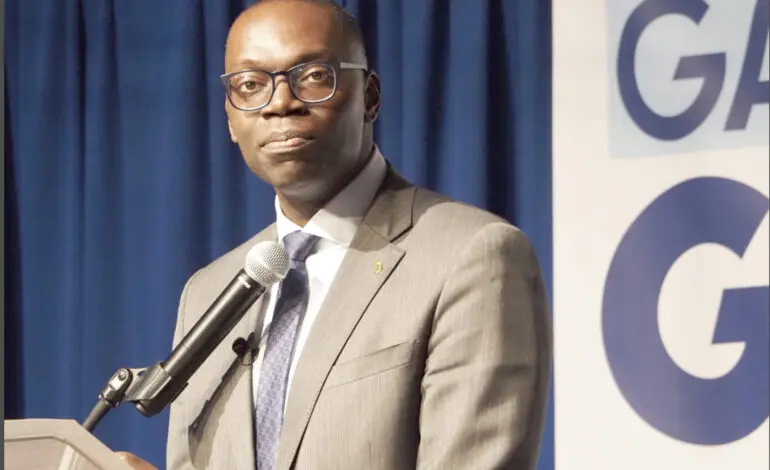

LANSING — Michigan Lieutenant Governor Garlin Gilchrist II announced on Monday that he is withdrawing from this year’s gubernatorial race and will instead run for secretary of state.
Gilchrist’s decision comes after he recently concluded that winning the Democratic nomination for governor in the statewide primary scheduled for August would be difficult, as he faced strong competition from incumbent Secretary of State Jocelyn Benson and two other candidates.
Benson, now in her second term, cannot seek a third term due to constitutional term limits.
Explaining the shift in his campaign, Gilchrist said he was not pressured to change course, adding that the time may come later to run for governor — and win — “but not now.”
“I wasn’t pressured to do this,” he said. “I’m doing this because people asked for it.”
He added that voters from across Michigan contacted him and encouraged him to take this step to unify Democratic ranks and strengthen the party’s chances in the upcoming election.
Gilchrist declined to endorse any candidate for governor at this time. However, he pledged to “work tirelessly” for whoever wins the Democratic primary — a contest that includes, in addition to Benson, Genesee County Sheriff Chris Swanson and Marni Sawicki, the former mayor of Cape Coral, Florida, who later moved to West Michigan.
The Detroit official — the first Black lieutenant governor in Michigan history — had launched his Democratic bid for governor in March, saying the state needed “a problem-solver.” But he soon faced challenges raising funds and fell behind Benson in polling.
Gilchrist also faced sharp criticism from pro-Israel Democrats due to his support for Palestinian rights and for describing Israel’s war on Gaza as genocide. He has also been known for building close ties with Michigan’s Arab American community, regularly attending events in Dearborn and forming strong relationships with the community in recent years.
Secretary of state race
With his pivot to the secretary of state contest, Gilchrist is now widely viewed as the leading contender to win the Democratic nomination at the party’s convention on April 19.
The secretary of state is the state’s chief elections officer and also oversees driver licensing and vehicle records.
Gilchrist, 43, a software engineer and former candidate for Detroit city clerk, said that if elected he would modernize licensing and registration systems, protect voter registration information and license plate data from being exploited by major technology companies or by polling efforts tied to Republican President Trump’s administration and expose hidden political funding.
“Transparency is essential to building trust,” Gilchrist said, “and I will absolutely be its first defender.”
Gilchrist, who was elected alongside Gov. Whitmer in 2018 and re-elected in 2022, now faces four other Democratic candidates seeking the party’s nomination:
-
Suzanna Shkreli, former Michigan lottery commissioner and former member of Whitmer’s administration
-
Barb Byrum, Ingham County clerk
-
Aghogho Edevbie, the incumbent deputy secretary of state from Detroit
-
Adam Hollier, former Detroit state senator
Gilchrist’s entry into the race is expected to reduce the field given his prominence. However, Byrum quickly criticized the dynamic indirectly, saying the contest is now drawing candidates “looking for a job” or who did not perform well in other races.
“We need a secretary of state who is deeply knowledgeable about elections and experienced in running them — not someone just looking for their next paycheck,” Byrum told The Detroit News.
Shkreli also issued a statement saying the secretary of state post — and the responsibility of protecting the vote — is too important for the job to become a “consolation prize,” arguing she is the most qualified candidate.
Republican candidates
On the Republican side, three candidates are running for secretary of state:
-
Anthony Forlini, Macomb County clerk
-
Monica Yatooma, businesswoman and activist from Commerce Township
-
Amanda Love, a member of the Clarkston school board
Republican delegates are expected to choose their nominee at the GOP convention on March 28.
The Democratic and Republican nominees will face off in a statewide general election in November.

Leave a Reply