



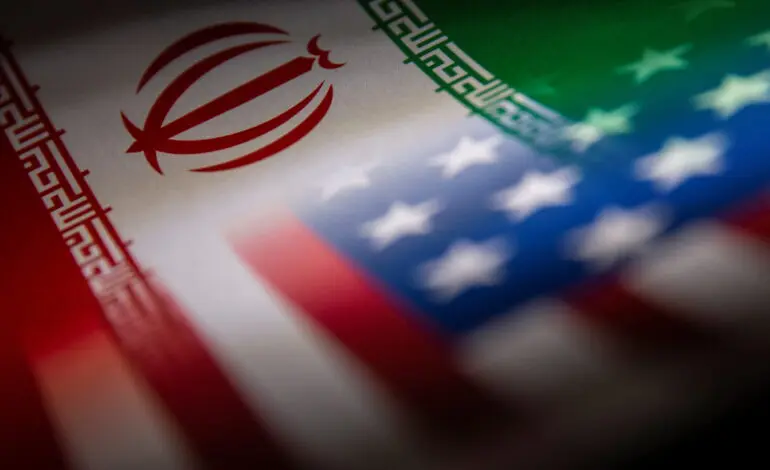

A U.S. military attack on Iran would not restore deterrence or strengthen American credibility. Instead, it would confirm a deeper failure: relying on force instead of strategy. After more than 20 years of wars labeled as necessary and manageable, Washington is again on the brink of a conflict it claims can handle but hasn’t fully thought through. The key question is no longer whether the United States can strike Iran. It is whether it understands what such a strike will follow and if it is prepared for the consequences it cannot later deny.
The key question is no longer whether the United States can strike Iran. It is whether it understands what such a strike will follow and if it is prepared for the consequences it cannot later deny.
The belief that military action can force Iran into long-term compliance is based on a common misconception: that a complex regional power can be disciplined through limited attacks or shows of strength. This approach failed in Iraq, where regime change led to sectarian division. It failed in Afghanistan, where overwhelming force did not lead to political legitimacy. This has also repeatedly failed across the Middle East, where destruction has led to cycles of retaliation rather than lasting order. There is no strong reason to think Iran would be different.
Iran is not a fragile state waiting for external correction. It is a resilient political system with multiple institutions, regional influence and years of experience dealing with pressure. A U.S. strike — even one described as “surgical” — would not tear down these structures. It would activate them. Iran does not need to defeat the United States militarily to impose costs; it only needs to make sure that escalation is unavoidable. Through regional partners, disruptions at sea, cyber operations and calculated retaliation, Tehran can ensure that no attack is contained. The U.S. would then face a familiar dilemma: escalate further or accept humiliation. Either choice would weaken American power.
Iran does not need to defeat the United States militarily to impose costs; it only needs to make sure that escalation is unavoidable.
The economic effects alone make a strong case against war. Iran’s location near the Strait of Hormuz gives it unfair leverage that no airstrike can eliminate. Even a partial disruption of shipping would affect global energy markets, raising prices, increasing inflation and destabilizing fragile economies. For American households, this would mean higher costs from a war they didn’t approve of and don’t benefit from. At a time of domestic economic struggles and competition with China, choosing a conflict that will likely raise oil prices is not a way to deter threats; it is self-inflicted harm.
Yet the most important failure of military action would be political. War does not split adversarial regimes along liberal lines; it oversimplifies their internal politics. An external attack unifies nationalism; sidelines dissent and strengthen those most eager for confrontation. In Iran’s case, a U.S. strike would weaken reformist and pragmatic elements and reinforce hardline views of constant threat. If the goal is to moderate Iranian behavior or weaken its most stubborn factions, military action would have the exact opposite effect.
If the goal is to moderate Iranian behavior or weaken its most stubborn factions, military action would have the exact opposite effect.
This is not speculation; it is a lesson that has been played repeatedly in the region. Bombs do not lead to moderation; they create unity against a threat. The more a state is attacked from outside, the less room there is for internal political diversity. In this way, war is not just ineffective; it is counterproductive.
None of this means Iran poses no challenge or that diplomacy is without costs. It simply means that military force is the least effective tool available—it is loud, blunt, and strategically empty. The real question is not whether the United States has alternatives, but whether it is ready to let go of the fantasy of total submission in favor of restriction and management.
A credible strategy begins by setting aside demands no independent nation would accept. Iran will not dismantle its entire security system under pressure, just as the United States would not. What can be achieved is limitation: negotiated limits, strict verification and conditional incentives that make restraint more attractive than escalation. The nuclear file has already shown that such arrangements can work. Past agreements limited enrichment, increased inspections and extended breakout timelines. They failed not because diplomacy was foolish, but because it was abandoned.
Sanctions also require careful management. When used as leverage toward clear diplomatic goals, they can influence behavior. When used solely as punishment without options for resolution, they act as a substitute for strategy. Broad economic pressure has not forced Iran to surrender; it has caused civilian suffering, deepened regional ties and resulted in diplomatic deadlock. Worse, it has normalized collective punishment while reducing incentives for compromise. Targeted pressure combined with realistic negotiation pathways is much more effective than extreme demands backed by threats of war.
Regionally, Washington should shift from bilateral pressure to multilateral risk management. Security agreements, de-escalation protocols and crisis communication methods are not gifts to Iran; they are safeguards against disaster. Great powers do not rely on constant brinkmanship. They develop systems that lower the chances of miscalculations leading to war. The lack of such systems in U.S.–Iran relations isn’t a sign of toughness; it is a weakness.
At the core of all this is a fundamental issue: the ongoing confusion between action and strategy. Military deployments, attacks and threats create the illusion of control but obscure the lack of political objectives. What does “success” look like after an attack on Iran? Regime collapse? Changes in behavior? Restored deterrence? None of these results can be realistically achieved through force without costs that far exceed any benefits.
A U.S. attack on Iran would not resolve a crisis; it would solidify one. It would trap the United States in a cycle of escalation, where restraint is deemed weakness and withdrawal is seen as defeat, all while costs accumulate without a solution. Once started, such a conflict would be hard to pause, reverse or separate from other issues. The alternative is not naiveness or concession; it is the conscious choice to avoid another war with predictable consequences, uncertain benefits and a lasting burden. History does not just caution against this route; it records the dangers of it.
– Jamal I. Bittar is a university professor and opinion writer focused on Middle East politics and U.S. foreign policy. He is based in Toledo, Ohio. The views expressed are solely his own and do not represent those of any institution with which he is affiliated



Leave a Reply