



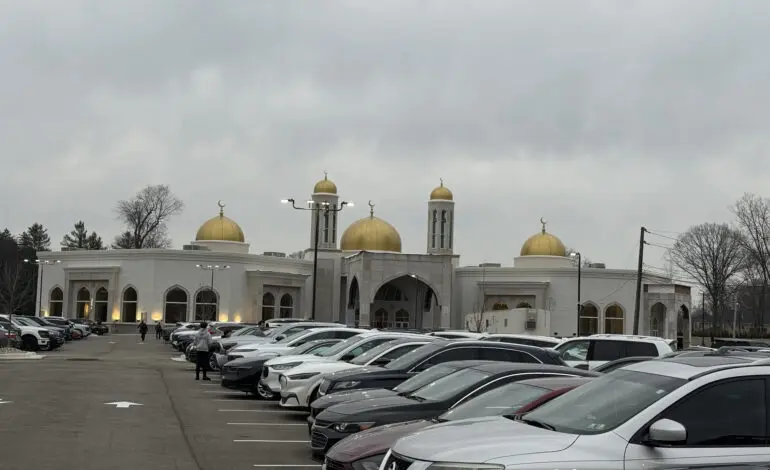

DEARBORN HEIGHTS – During the recent Eid al-Fitr holiday, the Islamic Institute of America celebrated the opening of the Imamain Al-Hasnain Mosque within its new headquarters on Beech Daly Road in Dearborn Heights, marking a new phase in serving the local community through a comprehensive vision that builds on the achievements of the institute, founded by Sayyed Hassan Qazwini in 2015.
The Al-Hasnain Mosque, distinguished by its golden domes and with a capacity of more than 1,000 worshipers, is part of the institute’s new campus, which is still under construction at a total estimated cost of approximately $16 million.
Our goal is to build people before building places. – Sayyed Hassan Qazwini
The new facility, built on a seven-acre site with nearly 60,000 square feet of constructed space, positions the Islamic Institute as one of the largest Islamic centers in the United States.
In addition to the mosque, the new headquarters includes a wide range of facilities, including a large banquet hall, a school, youth facilities, a commercial kitchen and parking for more than 500 vehicles — reflecting a qualitative shift in the understanding of the role of religious institutions. Qazwini told The Arab American News that the new campus comes as part of the institute’s vision to “build integrated institutions that serve individuals in all aspects of their lives.”
Opening day scene
The opening day itself sent a clear message. The mosque was filled to capacity on the morning of Eid, with rows of worshippers extending outside the building, while parking areas were completely full — a scene reflecting years of accumulated demand within the community.
Since the opening, overcrowding has become a regular occurrence during Friday prayers and even throughout the week, highlighting the community’s need not only for a place of worship, but for a comprehensive space that combines prayer, education and social engagement.
“The large turnout from the very first day reflects a real need within the community and confirms that the project came in response to a reality that requires this type of institution,” Qazwini told The Arab American News. He noted that Al-Hasnain Mosque is part of a broader system the Islamic Institute of America is continuing to develop.
The new complex was designed by architect Ghassan Abdelnour, constructed by Luna Construction, with decorative and layout work by artist Harout Bastajian, and interior design by engineer Ali Hatit.
The overcrowding problem
Before relocating to its new Beech Daly Road headquarters, overcrowding posed a significant challenge for visitors to the institute over the years due to its previous location on Ford Road in Dearborn Heights.
Long lines of vehicles frequently disrupted traffic on the busy road, often requiring police intervention to manage congestion.
Despite the previous facility — a converted church in 2017 — offering relatively large space, attendance continued to grow annually, especially during Ramadan and major occasions. Crowds exceeded capacity, and parking became a daily problem.
“This phase was not just a space issue, but an indication of the need to rethink the entire project,” Qazwini said.
He added that the constant overcrowding and the need for some worshipers to leave due to lack of space pushed the institute to seriously consider a larger and more comprehensive project.
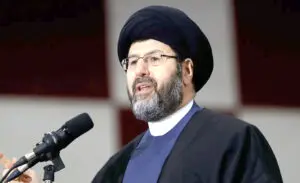
Sayyed Hassan Qazwini
A pivotal moment
Amid these challenges, a decisive initiative emerged, according to Qazwini. Businessman Mike Shehadi offered to purchase the Ford Road property for approximately $5 million, in addition to donating the land where the new Islamic Institute campus now stands on Beech Daly Road — a site that was previously also home to a church.
“This initiative was not just a partial solution, but opened the door to fundamentally reimagining the institute,” Qazwini said.
The sale of the old center provided a solid financial base, while the larger new site made it possible to implement a more ambitious vision.
As the project evolved, initial estimates proved insufficient. The building’s size expanded from approximately 43,000 to 60,000 square feet to accommodate additional services, raising construction costs to about $12 million, with total project costs reaching approximately $16 million.
Qazwini explained that the expansion of the institute’s vision was the main reason behind the increased costs, noting that funding included approximately $5 million in bank loans, in addition to widespread community donations.
“The real investment in the institute’s work is building people, not just constructing buildings,” he emphasized, expressing deep gratitude to all who contributed to the project.
Part of an integrated system
The Islamic Institute’s vision goes beyond the Al-Hasnain Mosque and religious activities to building a comprehensive social system.
The new facility includes:
- A central event hall with capacity for more than 1,100 people
- Classrooms for education and cultural programs
- A youth café
- A commercial kitchen for large community events
This transforms the institute into a center for daily life, not just a place of worship.
Qazwini said the new model reflects a shift toward building “a comprehensive institution that serves all aspects of life.”
“The goal is to build the individual before building the place,” he said.
Education remains a core pillar, with the institute hosting a religious seminary (hawza) established in 2018 that has attracted more than 600 students from around 13 countries. Programs are offered both in person and online, alongside weekend schooling, a Qur’an institute and plans under study to launch a full-time Islamic school.
Youth and challenges
“Working with youth is a top priority, as they represent the future of our community,” Qazwini said.
He noted strong youth engagement, with daily attendance ranging between 800 and 1,000 young men and women during Ramadan, reflecting the success of youth-focused programs.
The institute also prioritizes preventive and awareness programs addressing challenges such as drug abuse, depression and suicide, again emphasizing that the goal is “building the individual before the place.”
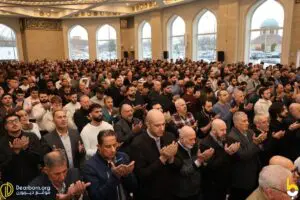
Worshipers performing the prayers of Eid al-Ftr at the Imamain Alhassanian Mosque in Dearborn Heights in March, marking the grand opening of the mosque. – Photo by Dearborn.org
Digital reach
The Islamic Institute’s impact extends beyond Dearborn Heights and Metro Detroit, reaching more than 250,000 online followers through Arabic and English programming.
“This digital reach reflects the nature of the current era, where influence is no longer tied only to physical space, but to the ability to reach a wider audience,” Qazwini said.
In addition to its religious role, the institute is expanding its community presence through specialized committees focused on health and interfaith dialogue, along with plans to open a medical clinic for uninsured individuals and provide family support and social counseling.
“The mosque must be part of people’s daily lives and contribute to addressing social issues, not just providing religious services,” Qazwini said.
A unifying message
In closing, Qazwini emphasized that the Islamic Institute in America does not represent a specific sect, ethnicity or race, but rather serves as an open space for all Muslims — and even non-Muslims — with the goal of serving the community and promoting religious and human values.
Ultimately, he views the institute’s journey as a genuine reflection of the story of the Muslim community in Michigan.
Muslims, he said, have persevered and succeeded in building organized institutions and a visible presence after decades of lacking the infrastructure necessary to preserve their identity and raise new generations on Islamic values and traditions.
From lack of recognition to discrimination and marginalization — and even direct threats and attacks, including shootings and firebombings targeting Muslim homes and religious centers — the community has continued to work and struggle until it established effective institutions that helped bring it out of isolation and gradually transform it into an active part of American society.
The experience of the Islamic Institute of America, Qazwini concluded, is a “natural result” of this trajectory and a serious desire to move from a state of community gathering to one of organized institutional work.


Leave a Reply