



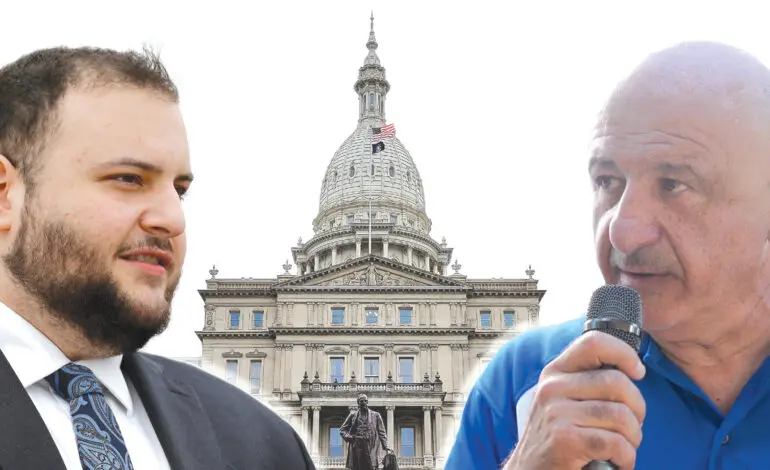

In the upcoming Aug. 4 Democratic primary, three Arab American candidates are competing for their party’s nomination for Michigan’s Third House District seat: former Dearborn Board of Education member Hussein Berry, community activist Othman Ali Alaansi and State Rep. Alabas Farhat, who is seeking a third two-year term.
The winner of the Democratic primary in the district — which includes most of Dearborn and portions of northwest Detroit — will advance to the Nov. 3 general election to face Republican candidate Gus Tarraf, who is running unopposed in the Republican primary and will automatically advance to the general election.
Following the start of absentee voting on June 25, The Arab American News sent a common questionnaire to all three candidates seeking their views on the qualifications and experience that prepare them to represent the district in Lansing, as well as their priorities and plans for improving the quality of life in this ethnically and culturally diverse community.
Alaansi could not be reached despite repeated attempts by phone and email. The Arab American News presents the responses submitted by Farhat and Berry.
Q: What distinguishes your professional and political background from that of your opponents, and how does your experience equip you to represent a diverse and dynamic district while ensuring an equitable allocation of state funding and resources in Michigan’s Third House District?
ALABAS FARHAT
What sets me apart is that I’ve always focused on delivering results, not political rhetoric. As someone who grew up in Dearborn and was raised by working-class parents, I understand firsthand the challenges families face every day. In Lansing, I’ve built a record of bringing people together to secure millions of dollars for the district, lower costs for working families, invest in our roads, schools and public safety, and stand up to powerful interests when they put profits ahead of people.
Representing one of the most diverse districts in Michigan means listening, showing up and fighting for every neighborhood, every family and every voice. That’s the approach I’ve taken since day one, and it’s why I’m committed to continuing to deliver real results for the people I serve.
Every community in the Third District deserves to know it has a representative who shows up, listens and delivers. My approach has never been about choosing one community over another—it’s about making sure every neighborhood gets the attention and investment it deserves based on its needs. I’ve worked closely with local leaders, residents and community organizations across the district to bring resources home, strengthen public safety, improve infrastructure, invest in schools and lower costs for working families. I’ll continue to fight for every corner of the district with the same commitment because, when one part of our community succeeds, the entire district is stronger.
HUSSEIN BERRY
I’ve spent more than three decades as a small-business owner and 15 years as an elected member of the Dearborn Board of Education, including three terms as board president. That’s not just a line on my résumé — it’s a track record of showing up for public schools, working across a diverse district and making decisions that affect thousands of families.
I’ve also spent 25 years building the Dearborn Youth Football and Cheerleading program from the ground up, mentoring kids regardless of their background or ZIP code. I know what sports and the arts provide for our young people and their futures. That kind of grassroots, community-first experience — not political or corporate connections — is what prepares me to represent a district as diverse as ours. I know Dearborn and Detroit because I’ve lived and worked alongside these communities my entire life.
Equity starts with treating District 3 as one community with shared needs, not two competing municipalities fighting over scraps. I’ll hold regular office hours and town halls in both Dearborn and Detroit so state resources are allocated based on documented needs — such as infrastructure conditions, school funding gaps and public health data — not political convenience or which area has more leverage over our elected officials.
I’ll also push for transparent, formula-based funding allocations at the state level rather than backroom deals that quietly favor one municipality. Every resident of this district deserves a state representative who shows up in their neighborhood, not just the ones with the loudest microphones.
Q: Many residents of the Third District struggle with the rising cost of living, housing insecurity, deteriorating infrastructure and other daily challenges. What is your vision, and what are the key priorities of your campaign to improve the quality of life in this area?
ALABAS FARHAT
Working families shouldn’t have to choose between paying their bills, putting food on the table or keeping a roof over their heads. That’s why I’ve made lowering costs and supporting families a top priority in Lansing.
I’ve fought to invest in affordable housing by securing $50 million for community housing development and to lower the cost of everyday essentials such as health care and groceries. I’m also fighting to pass a universal child care plan to help families afford the rising costs of child care, housing and other necessities.
At the same time, we must continue supporting the small businesses that are the backbone of our communities by creating opportunities for them to grow and succeed. I’ll keep working to make Michigan more affordable for families and ensure our local economy works for everyone.
Our communities deserve infrastructure that works when we need it most. After recent storms and widespread power outages, I stood with residents who were left frustrated by flooding, damaged property and a lack of accountability from our utility providers.
I’ve fought to bring more state resources home by securing investments for our roads, leading negotiations on a historic $1.8 billion road funding plan without raising taxes on working families, and pushing for greater accountability when companies fail our communities.
Going forward, I’ll continue fighting for our fair share of infrastructure investments to modernize our roads, strengthen our water systems and ensure our neighborhoods are prepared for the challenges of the future. Infrastructure is more than roads and pipes—it’s about protecting families, supporting local businesses and building communities where people can thrive.
HUSSEIN BERRY
I’ll fight for policies that put money back in working families’ pockets, such as expanding the Michigan Earned Income Tax Credit, strengthening tenant protections against unjust evictions and rent gouging, and supporting a state-level child tax credit.
On housing, I support increased funding for affordable housing development and down-payment assistance programs for first-time homebuyers.
For small businesses, which are the backbone of Dearborn’s and Detroit’s commercial corridors, I’ll advocate for reduced red tape, expanded access to low-interest state loans and targeted support for immigrant- and minority-owned businesses.
Because I’ve never taken corporate money, I can build these policies around what families and small-business owners actually need—not what large donors want.
Our district has waited too long for basic infrastructure improvements while other communities receive funding first. I’ll push aggressively for our fair share of state and federal infrastructure dollars, including any additional road funding packages that move through Lansing, and I’ll fight to ensure stormwater and water system upgrades are treated with the same urgency as road repairs.
I also believe residents deserve full transparency on how infrastructure dollars are allocated and spent, and I’ll advocate for public reporting requirements so District 3 can hold the state accountable.
Fixing crumbling roads and outdated water systems isn’t optional — it’s a basic obligation to the people who pay taxes here.
Q: Many residents, particularly those with Middle Eastern roots, expect elected officials to engage with international issues that affect their families abroad. How would you address those concerns, and where do you draw the line between state legislative responsibilities and international advocacy?
ALABAS FARHAT
Elected officials have a responsibility to speak with moral clarity about the genocide in Gaza and the aggression and ethnic cleansing taking place in southern Lebanon. My work as a state representative will always remain focused on delivering for families here in Michigan, but jurisdiction can never become an excuse for silence.
That responsibility includes defending the free speech of students demonstrating on college campuses, demanding action from our congressional delegation, and standing firmly with my community as they watch loved ones killed, displaced, starved, and forced from their homes. These issues may fall outside the formal authority of the state legislature, but they directly affect the people I represent. I will never look away simply because speaking out is politically inconvenient.
HUSSEIN BERRY
I understand deeply why residents with family abroad want their elected officials to speak out on international issues. These aren’t abstract concerns — they’re personal for so many families in this district. We saw that recently with the genocide that happened and is currently happening in Gaza.
While a state representative doesn’t set U.S. foreign policy, I believe in using my voice and platform to advocate for human rights and to support constituents navigating the personal toll of international crises, including connecting families with the resources and support they need here at home.
I’ll also work with our congressional delegation to elevate community concerns where federal action is required. My responsibility is to be honest about what a state representative can and cannot do while never being silent when my community is hurting.
Q: Voters often express frustration when elected officials become inaccessible after Election Day. What specific mechanisms would you establish to maintain regular, transparent and meaningful communication with District 3 residents throughout your term in office?
ALABAS FARHAT
I’ve always believed that representation starts with showing up and listening. My commitment to the people of District 3 doesn’t end on Election Day—it’s something I carry with me every day I serve.
That’s why I’ve prioritized being accessible through regular community events, meetings with residents and local leaders, direct constituent services and open communication with our community.
I’ll continue creating opportunities for residents across Dearborn and west Detroit to share their concerns, ask questions and have a voice in the decisions being made in Lansing. The best way to represent our community is to stay connected to the people who call it home.
HUSSEIN BERRY
I’ll hold regular, recurring town halls across both Dearborn and Detroit — not just once a year, but on an ongoing basis — along with open office hours where any resident can bring concerns directly to me or my staff.
I’ll publish regular updates on my legislative votes and priorities so constituents always know where I stand and why.
I’ll also maintain direct lines of communication through community organizations, mosques, churches and neighborhood associations already rooted in this district rather than expecting people to come to me.


Leave a Reply