




Excessive media coverage of a traffic collision between an Arab American woman and an African American woman in the Warrendale neighborhood on Detroit’s west side has sparked widespread discontent in the local community, amid accusations of attempts to inflame relations between Arab American and Black residents in the area for electoral purposes.
While local leaders across the Detroit area continue their decades-long efforts to strengthen relations between Arab Americans and African Americans, the Warrendale incident prompted news reports that sought to unearth old tensions and sow racial division between these two major communities in the Detroit area, Michigan’s Democratic stronghold, ahead of an election in which Arab American candidate Abdul El-Sayed is seeking to represent the state in the U.S. Senate.
A traffic collision
At approximately 10 p.m. on September 12, a traffic collision occurred near the intersection of Paul Street and the Southfield Freeway in west Detroit after an 18-year-old Arab American woman ran a red light and struck a vehicle driven by an African American woman.
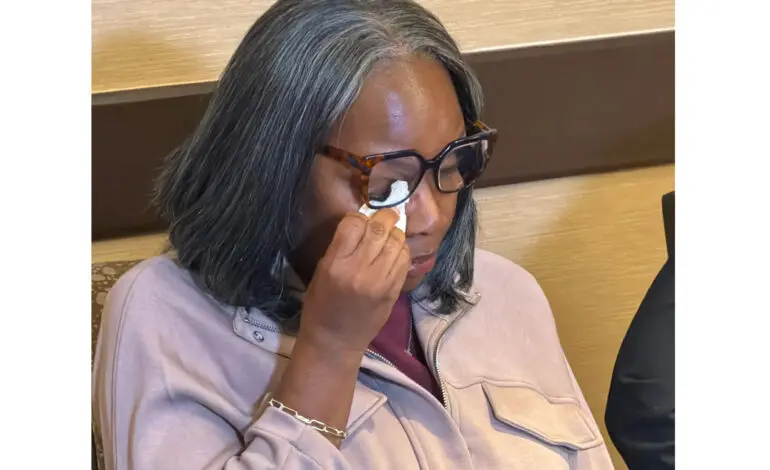
Chaos followed the collision, which coincided with a death in the predominantly Arab American neighborhood. Events quickly escalated beyond the usual circumstances of a traffic accident when dozens of young mourners gathered around the scene, directing insults, profanity and threats at the African American woman, Susan Glass-Smith, 50, according to videos circulated on social media.
In response, five days after the collision, armed members of New Era Detroit, an organization advocating for Black rights, arrived in the neighborhood to confront local residents, “demand justice” and respond to the racist insults directed at Glass-Smith.
The following day, members of the group also documented themselves walking through the neighborhood and repeating the same slogans, according to videos posted on social media.
While the victim’s attorney sought hate crime charges against some of those who verbally attacked his client following the collision, the Wayne County Prosecutor’s Office declined to charge anyone other than the young driver.
Prosecutor Kym Worthy announced that the Arab American driver, who had been spirited away from the scene, was charged with a misdemeanor for failing to stop at the scene of a collision involving possible injuries and property damage.
Citing insufficient evidence, Worthy said her office had not charged a 20-year-old Arab American man who had been arrested in connection with the incident after videos showed him threatening the African American driver.
Questionable coverage
Several Detroit-area newspapers and television stations devoted extensive coverage to the Warrendale incident, revisiting dark chapters in the history of Arab–Black relations. Local leaders accused the participating media outlets of bias and irresponsible politicization.
The media’s emphasis on the Arab American identity of the driver responsible for the collision, its revival of past incidents and its use of broad headlines such as “Tensions between Arabs and Blacks” raised observers’ suspicions about a coordinated campaign to inflame public opinion and divide local residents for purely electoral purposes.
Those concerns relate particularly to the U.S. Senate race, in which Arab American candidate Abdul El-Sayed needs the broadest possible support from Black voters to defeat his Republican opponent, Mike Rogers, in the November 3 election.
American Human Rights Council founder Imad Hamad expressed strong reservations about the coverage, particularly a report by Detroit News writer George Hunter. Hamad said Hunter had used the traffic collision as a pretext to revisit violent incidents, some dating back more than four decades, including the 1980 killing of a young Black man, James Douglas, by a store owner of Iraqi descent.
“This approach to reporting does not serve efforts to calm tensions or preserve community peace, but deliberately revives painful memories and reopens historical wounds,” Hamad said.
“What does a traffic incident that could happen at any time, in any residential neighborhood, have to do with a bloody crime committed 46 years ago?” he asked.
Hamad told The Arab American News that the growing number of media reports emphasizing the Arab American or Muslim identities of lawbreakers primarily serves to place Arab American and Muslim communities “in the dock of collective accusation, rather than focusing on professional and objective standards in addressing strictly criminal matters without ethnic or religious incitement.”
Hamad acknowledged underlying historical sensitivities between the Arab American and African American communities “that surface from time to time.” He emphasized, however, that individual criminal incidents, however serious, cannot erase “the strong relationships and alliances grounded in shared interests between the Arab American and African American communities in the Detroit area, both of which have historically faced — and continue to face — various policies of vilification, marginalization and exclusion.”
“We stand together in the same trench with our Black brothers and sisters, sharing the same fate and aspirations in the struggles to defend our civil rights, achieve social justice, advance development and secure fair political representation,” Hamad said, adding that lawbreakers on either side represent only themselves.
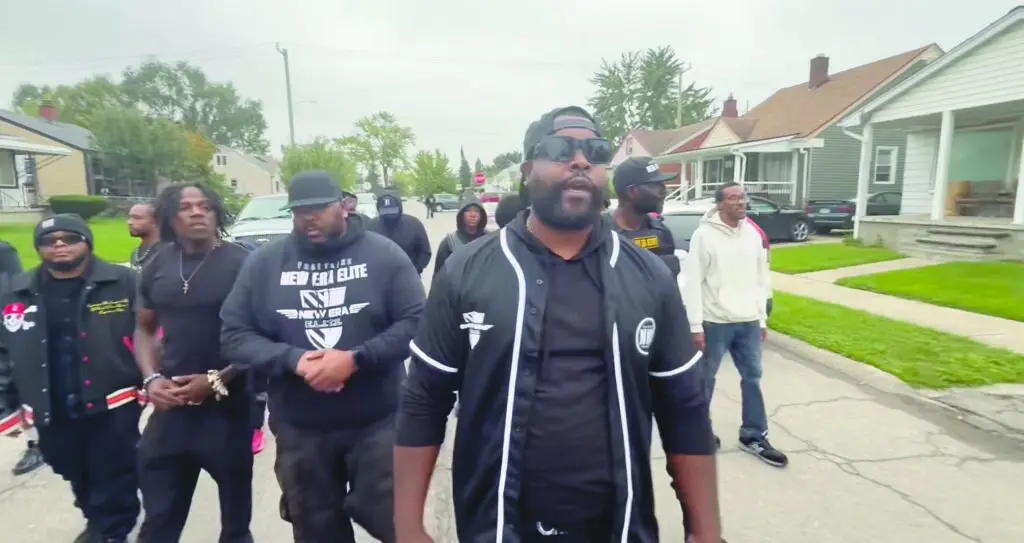
African American men walk through a predominantly Arab residential neighborhood in Detroit’s Warrendale area to protest the treatment of an African American woman following a traffic collision last month.
Media exploitation
The Arab American News Publisher Osama Siblani said the biased and systematic coverage targeting Arab American and Muslim communities in the Detroit area by the Detroit News, the Detroit Free Press and the local Fox station “is not new” and “is not a coincidence.”
He explained that he had previously worked with several Arab American community figures and leaders to contact officials at those newspapers and media organizations directly, expressing their dissatisfaction with and rejection of unbalanced coverage of Arab and Muslim Americans.
Those efforts proved fruitless and were met with complete disregard, he said, which “reflects a deliberate determination to reinforce negative stereotypes and continue targeting our communities under various circumstances and on different occasions.”
“Such media conduct and these repeated professional failures were not a passing matter. They were the principal reason behind the founding of The Arab American News, to present our community and cover its news objectively for the American public,” Siblani said.
Siblani attributed sporadic historical disputes and friction between Arab American and Black residents to the nature of everyday commercial interactions “between customers, store owners and gas station workers that can occur in any community.”
He firmly rejected attempts to attribute those disputes to cultural or religious causes, emphasizing that Arab culture and its civilizational values reject such unacceptable tendencies.
“It makes no sense for there to be hatred between Arabs and African Americans on racial grounds. How could that be when more than half the population of the Arab world is African?” he said, adding that racism “is a problem in the United States and in American culture, not in the Arab world or Arab culture.”
Siblani criticized Free Press journalist Niraj Warikoo and his Detroit News counterpart, George Hunter, saying he was not surprised by their inflammatory approach to covering the traffic collision.
“They never miss an opportunity to sow division and deepen the divide between diverse communities, and even within the Arab community itself,” he said.
He directly linked the recent reporting to the fiercely contested U.S. Senate election, arguing that it serves to damage the Democratic candidate’s chances.
Although most Detroit voters did not vote for El-Sayed in the August Democratic primary, the progressive candidate is relying heavily on Black voters’ support to win Michigan’s U.S. Senate seat in November.
He has already secured support and endorsements from leading Black officials in the state, including Lt. Gov. Garlin Gilchrist and Wayne County Executive Warren Evans, who introduced El-Sayed at a campaign fundraiser in Dearborn last month.
Rejecting incitement
Sheikh Mika’il Stewart Saadiq, a prominent African American Quran reciter and imam at the Muslim Center on Davison Street in Detroit, also criticized coverage of the Warrendale incident, including reports by the Detroit News and the Free Press, which he said appeared to follow the lead of “provocative videos and posts on social media.”
“Bringing up incidents that occurred between the two communities years or decades ago may provide some context, but it does not help address those events or heal the divisions they caused,” he told The Arab American News.
He criticized what he described as “an excessive focus on racial identity in reporting that is supposed to be objective, particularly when it comes from professional journalists.”
Saadiq said the incident had also been exploited to tarnish Muslims’ image. He said he had seen right-wing and anti-Muslim Internet users exploit images and audio clips to promote their hateful rhetoric through statements such as, “Detroit’s Black community is fed up with how Muslims treat them.”
He said White nationalists were promoting racist and anti-Muslim advertisements targeting El-Sayed. He also noted that some local media outlets had gone so far as to describe the young men shown in the Warrendale video as “Muslims”, which he considered part of deliberately misleading media framing.
Containing tensions
Ayham MishMishan, executive secretary of the Imams Council of Michigan, told The Arab American News that media reports about the Warrendale incident had generally focused on portraying what happened as clear evidence of alleged racial tension between Arab Americans and African Americans.
That framing, he said, came at the expense of objective reporting on events that had escalated by coincidence, including the hostile behavior directed at the Black driver.
“These young men did not gather with the intention of attacking her. Some tried to help her, while others mistreated her, and that is behavior we categorically reject,” he said.
The dozens of young men were at the location to offer condolences following the death of a neighborhood resident.
MishMishan, who participated in several meetings with African American community figures in Detroit to “calm things down and resolve differences”, added that responsibility for punishing anyone who violates the law rests exclusively with law enforcement agencies and the appropriate authorities.
Civil society and community organizations should not assume that role or act as agents of punishment, he said.
He emphasized that their true role should be to strengthen relations among different communities, open channels of dialogue and communication, and address disagreements in ways that help contain and ease them — bringing communities closer together rather than inflaming tensions and deepening divisions.
Leave a Reply