



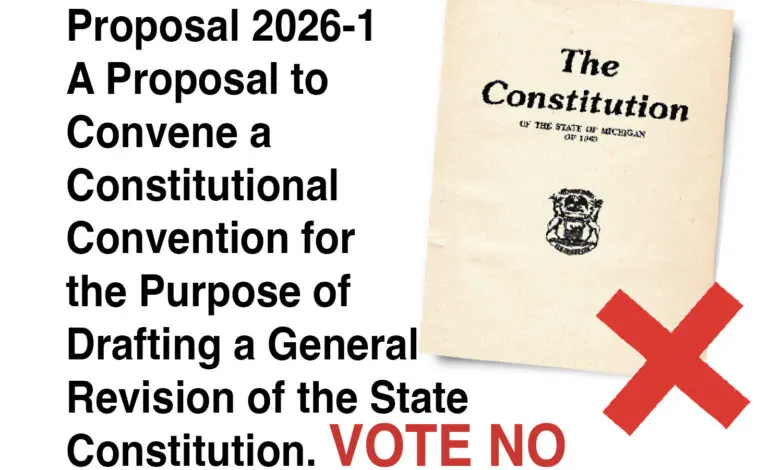

LANSING — Michigan voters weighed in on two statewide ballot proposals in Tuesday’s election, rejecting Proposal 1, which called for a review of the state constitution, while overwhelmingly approving Proposal 2, which restricts campaign contributions from certain companies.
Proposal 1 defeated
Voters across Michigan rejected a periodically required ballot question asking whether to convene a constitutional convention to review and rewrite the state’s 1963 constitution.
Approximately 74 percent voted against Proposal 1, with more than 3.1 million opposing it, compared with roughly 1.1 million voting in favor.
Under the state constitution, the question automatically appears on the ballot every 16 years. Had it passed, voters would have elected 148 delegates to review the entire constitution and submit proposed revisions, which would have required voter approval in a subsequent referendum before taking effect.
Numerous business and labor organizations opposed the proposal, citing concerns about economic and political instability and the possibility of opening the door for lobbying groups to roll back established rights.
Proposal 2 approved
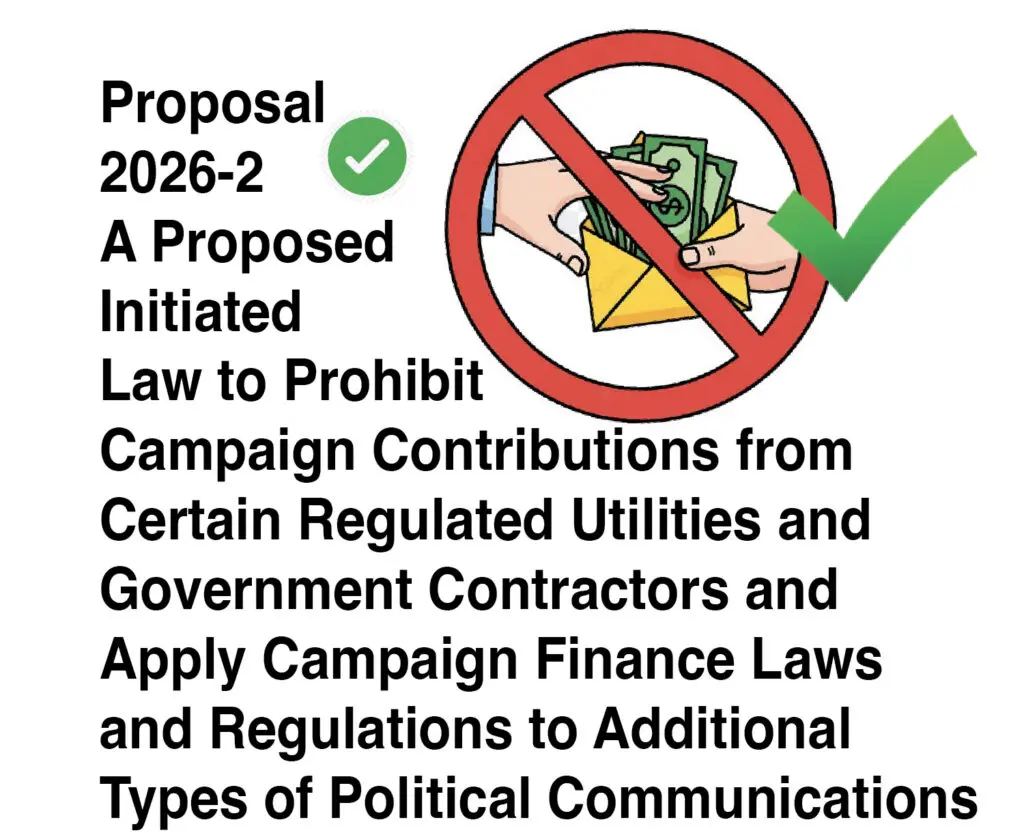
An overwhelming majority of Michigan voters approved Proposal 2, a citizen-initiated measure restricting campaign contributions from public utilities and government contractors.
The proposal received 81.3 percent of the statewide vote — approximately 3.5 million votes — with only about 800,000 voters opposed. It prohibits direct or indirect financial contributions to political campaigns by regulated utilities, such as electricity and natural gas providers DTE Energy and Consumers Energy, and contractors holding more than $250,000 annually in state government contracts. It also expands financial disclosure requirements to cover online advertising and political groups channeling “dark money” ahead of elections.
The proposal drew broad support from civic and environmental organizations seeking to curb “pay-to-play” politics. Affected groups and chambers of commerce opposed it, arguing that it restricts free speech and unfairly targets certain companies.



Leave a Reply