


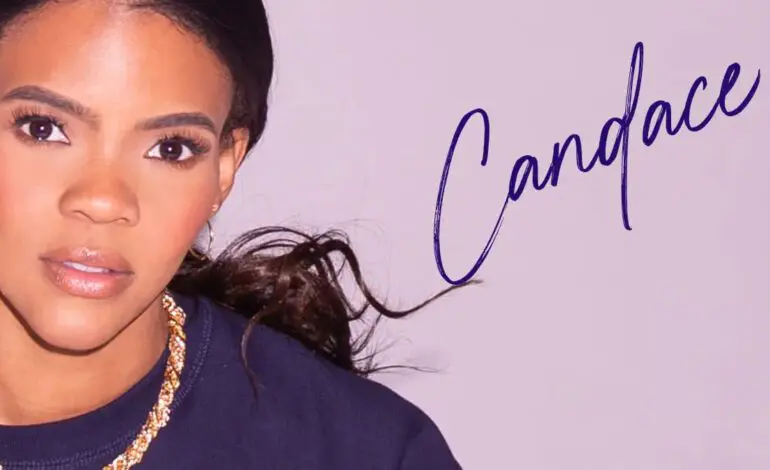

Candace Owens has always been a woman who defies expectation. Her voice cuts through the noise of politics like a blade, often attracting admiration and fury in equal measure. She has long been known as a sharp critic of liberal orthodoxy, a defender of traditional values and a figure willing to spar with anyone who dares to challenge her. Yet in recent years she has ventured into territory that even many conservatives fear to tread. Owens has declared in plain language that Israel is not a beacon of democracy as it proclaims itself to be but a cult nation. This choice of words was no accident. It was deliberate, forceful and meant to shake listeners awake.
In a world where most American political leaders treat criticism of Israel as a forbidden act, Owens has broken the taboo. She has chosen to stand with Palestinians who she believes are being killed indiscriminately, their lives devalued and their humanity erased by a war machine that operates with impunity. Her stance is not a passing remark or a rhetorical flourish. It is a firm position, anchored in a moral conviction that the blood of innocent civilians, particularly children, is not justified by political narratives or historical grievances.
A new chapter in Candace Owens’ voice
Owens’ criticism of Israel cannot be separated from her evolving worldview. For years she was regarded as a staunch voice of the American right, someone who fought against cancel culture and defended the forgotten men and women of America. Yet her willingness to critique Israel reveals a shift, or perhaps an expansion, in her understanding of justice.
By calling Israel a cult nation, she is not only attacking the political system of Zionism but also exposing what she sees as a manufactured worship that grips American politics and media. To her, this cult is not simply about religious loyalty but about political conformity. American politicians, both Republican and Democrat, speak in almost identical tones when the subject of Israel arises. It is as if their scripts were written by the same hand. Owens has suggested that this hand belongs to Zionists who wield immense influence over the media and political establishment. Her words strike at the heart of a power structure that for decades has been considered untouchable.
Her declaration does not mean she has embraced the talking points of the progressive left. Rather, she is crafting a unique space, a blend of conservative values with an insistence on truth telling, even when it threatens to disrupt traditional alliances. In this sense, her courage recalls the rare political figures who dared to defy the machinery of consensus and pay the price for their independence.
The Palestinian struggle through Owens’ eyes
Owens has made clear that her sympathy lies with the Palestinian people. She has repeatedly described them as victims of indiscriminate violence, caught between a military occupation and an indifferent world. For her, the endless images of children buried under rubble, families forced from their homes and generations growing up in despair reveal a truth that polite society prefers to ignore.
To Owens, Palestinians are not faceless figures on a television screen. They are human beings, deserving of the same rights and dignity as anyone else. She sees in their plight the same themes she has spoken of in her own activism: the abuse of power, the silencing of dissent and the manipulation of narratives to justify oppression. In her words, Palestinians are not terrorists by default, as they are so often portrayed in Western media. They are men, women and children who have been denied justice for decades.
This stance has not gone unchallenged. Critics have accused her of betrayal, of aligning herself with causes that contradict her previous political positions. Yet Owens has not flinched. She argues that truth must transcend political alignment and that the defense of innocent life is not a partisan issue but a human one.
Remembering Muslims after 9/11
Perhaps most striking is Owens’ acknowledgment of the suffering of Muslims in the aftermath of the September 11 attacks. In a nation consumed by rage and fear, Muslims were vilified, targeted and treated as enemies within. For years, few voices in the conservative space expressed empathy for their pain. Owens has admitted that she once failed to grasp the depth of this injustice.
Now, she has spoken openly about how bad she feels for Muslims who endured suspicion, hostility and violence after 9/11. She has admitted that she did not realize how much Christians and Muslims have in common. For someone with her platform to confess this realization is remarkable. It cuts against the grain of a culture that has long sought to divide people of faith for political convenience.
Owens sees the parallels clearly now. Both Christians and Muslims are people of scripture. Both revere family, honor and community. Both reject the culture of decadence and moral decay that dominates the modern West. By highlighting these commonalities, she is attempting to build a bridge where others have built walls.
The media and the Zionist narrative
Owens’ most controversial claim is her insistence that Zionists in media bear responsibility for much of the division and misunderstanding that exists between communities. She has said openly that media narratives are shaped not by objective journalism but by an agenda that shields Israel from criticism while painting its opponents as monsters.
To her, the way Muslims were demonized after 9/11 and the way Palestinians are portrayed today are not accidents. They are the result of deliberate choices made by powerful interests who profit from fear and conflict. She is not alone in this view. Scholars, journalists and activists have long pointed out the overwhelming bias in Western coverage of the Middle East. Yet for Owens to echo this critique from her position on the American right is extraordinary.
Owens’ willingness to say these things in public has come at a cost. She has faced backlash, accusations of anti-Semitism and attempts to silence her voice. But her persistence only adds to her credibility among those who believe that the mainstream narrative is collapsing under its own weight.
Boldness as a form of leadership
What makes Owens’ stance so bold is not only the content of her statements but the courage to deliver them in a climate where dissent is punished. She has risked her standing in conservative circles, where unquestioned support for Israel has long been a litmus test of loyalty. She has opened herself to relentless attacks from media outlets who thrive on character assassination. And yet she continues to speak, unafraid, unapologetic and unwilling to compromise.
This is not mere contrarianism. It is a form of leadership rooted in conviction. Owens has always understood that the power of a voice lies not in its popularity but in its ability to speak truths that others are afraid to utter. Whether one agrees with her or not, her refusal to be cowed by political orthodoxy is an act of defiance that resonates with millions.
A broader awakening
Candace Owens’ remarks about Israel, Palestinians, Muslims and Zionist influence are more than isolated statements. They are part of a broader awakening that is sweeping across the globe. People are beginning to question narratives that have been imposed upon them for generations. They are asking whether the stories they were told about good guys and bad guys, heroes and villains, align with the evidence before their eyes.
Owens is not the first to make such arguments, but she is among the few with the reach and influence to bring them into mainstream discourse. Her voice adds weight to a growing chorus that refuses to accept the silencing tactics of the powerful.
Her recognition of common ground between Christians and Muslims could signal the beginning of a deeper conversation, one that challenges centuries of division. Her insistence that Palestinian lives matter is a call to conscience for those who prefer to look away. And her accusation that Zionists in media manipulate narratives is a reminder that power often hides behind the illusion of neutrality.
The future of Candace Owens’ stand
Where this journey will take Owens is uncertain. She has opened doors that cannot easily be closed. Her supporters admire her bravery while her detractors sharpen their knives. But one thing is certain: she has altered the conversation. The once untouchable subject of Israel is now being debated with greater openness, and Owens is among those who forced that door open.
Her legacy will not be written only in terms of American politics. It will also be remembered in the broader struggle for truth, justice and humanity. By siding with Palestinians, empathizing with Muslims and confronting Zionist influence in media, she has placed herself in a battle that transcends national borders. It is a battle over narrative, morality and the future of human solidarity.
Candace Owens’ story is still being written. But in her willingness to call Israel a cult nation, to denounce the indiscriminate killing of Palestinians and to acknowledge the suffering of Muslims after 9/11, she has already proven that her voice is not one of conformity but of defiance. And in that defiance lies the potential to inspire a new generation to question, to resist and to see through the illusions that have blinded us for far too long.
– Amjad Khan is a contributing writer for The Arab American News. He is an educator, writer and academic researcher with a deep commitment to addressing the challenges facing the Muslim world. Through his work, he seeks to inspire meaningful dialogue and help chart a path toward unity, justice and peace.
Leave a Reply