



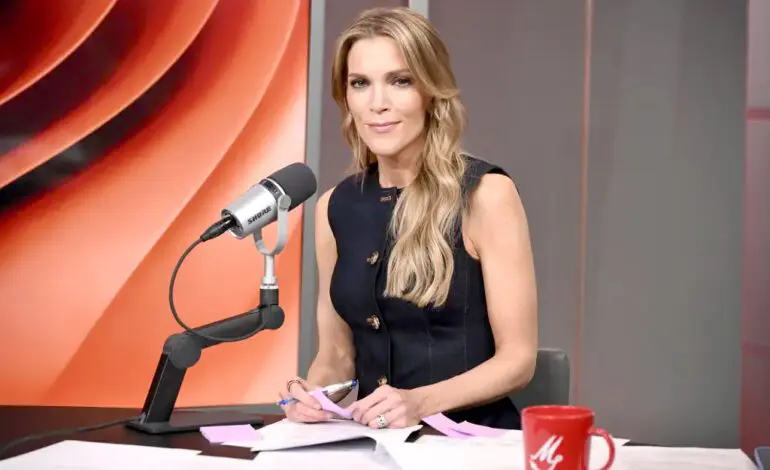

Megyn Kelly has long been known as a sharp interviewer who occupies the moderate space inside conservative media. She built her reputation on tough questions, cool analysis and an ability to challenge anyone who sat across from her. In recent years, however, her voice has taken on a new charge. She is openly rejecting the political culture that demands unconditional obedience to the Israeli government, and she is refusing to play along with the idea that American conservatives must treat loyalty to Israel as a test of character. This shift is redefining her public image and placing her among a new group of conservative commentators who are breaking away from the old order.
Kelly’s challenge to the status quo is simple but explosive. She says that conservatives should not be required to defend every military action, every political decision or every demand coming from Israeli leadership. She refuses to accept the argument that questioning Israeli policy is somehow immoral or unpatriotic. Her clips rejecting these loyalty tests have spread across social media, gathering a large audience of conservatives who are tired of being policed for their opinions. These same clips have also sparked outrage from those who believe any criticism of Israel must be silenced.
Her shift comes at a moment when conservative media itself is fracturing. Tucker Carlson has been dismantling the long-standing reflex to follow Israeli interests without question. He argues that conservatives should place American priorities at the center of foreign policy, and he openly challenges the idea that the United States owes political submission to the Israeli state. His interviews and commentary have blown apart the illusion that the conservative movement is unified on the topic. His stance has also triggered a wave of backlash from pundits and politicians who insist the old line must not be crossed.
Questioning the policies of a foreign government is not a moral offense, it’s a democratic obligation
Candace Owens has been part of that same upheaval. Her very public break with the Daily Wire in 2024 was the clearest sign yet that disagreement over Israel is enough to tear apart entire media platforms. The conflict involved accusations, counter accusations and a dramatic online feud that exposed how rigidly some conservative institutions demand compliance with pro-Israel narratives. Owens framed her stance as opposition to endless foreign entanglements and refusal to obey a political script crafted to protect a foreign government at all costs. Whether people agree with her or not, the moment revealed a deeper truth. The era of unquestioned conservative loyalty to Israel is cracking.
Owen Shroyer operates on the louder end of this rebellion. His blunt message that Israel’s wars are not America’s wars has resonated with a large populist base that is tired of watching American resources flow into conflicts that do not serve American interests. His criticism is direct, unfiltered and rooted in the belief that blind support for the Israeli government is incompatible with any serious America First agenda.
What makes Kelly distinct among these figures is not her volume but her tone. Carlson sounds like a rebel general. Owens sounds like a defector from a powerful media machine. Shroyer sounds like a voice from the street. Kelly sounds like a mainstream professional who has grown tired of watching conservatives forced into silence. She has pointed out the global decline in Israel’s credibility and has warned against the reflex to dismiss every uncomfortable report as propaganda. Her stance is not born out of hostility. It is born out of awareness that a foreign government should never be shielded from criticism by American media or American voters.
Kelly’s stance is unfolding during a dramatic shift in American public opinion. Polls from Gallup, Pew and others show widespread disapproval of Israel’s conduct, surging negative views and deep generational divides. Younger conservatives in particular see foreign policy through a lens shaped by skepticism, restraint and frustration with the idea that American tax dollars should bankroll endless conflict. Many believe that Israel should not be treated as an untouchable partner but as any other foreign government whose actions require accountability. These attitudes are fueling the new conservative conversation that Kelly and others are driving.
The internal conservative conflict is no longer about whether Israel is an ally. It is about whether conservatives will allow open criticism of a foreign government without branding their own supporters as traitors. One faction insists that critique of Israel must be equated with bigotry. The other refuses to accept that narrative. The conservative fight over Carlson’s interviews and Owens’s departure from the Daily Wire shows how quickly this debate can erupt into anger, accusations and censorship.
No ally should be above scrutiny, especially when American lives, money and credibility are on the line.
Kelly’s emerging role in this struggle is to carve out a space where conservatives can reject obedience while maintaining clarity. She has said repeatedly that foreign policy must be evaluated through the lens of American interests, not the demands of any foreign capital. She argues that conservatives should question how American tax dollars are used, insist on transparency and refuse to allow political intimidation to replace honest debate. Her stance signals to millions of center right voters that they do not have to choose between silence and vilification. They can speak freely about Israel without being pressured into supporting a government whose policies they do not endorse.
The generational shift makes this more urgent. Younger conservatives are deeply skeptical of foreign wars and deeply resentful of political narratives that pressure them into supporting actions they find inhumane or reckless. Kelly is reading this moment and meeting it. She is giving these voters a place in the conversation, a place where their refusal to cheer for Israeli military campaigns is not treated as a moral failure.
This debate will shape the next political era. The 2026 elections, the next presidential contest and every fight over foreign aid will be influenced by how conservatives navigate this issue. If the conservative movement continues to enforce Israel First loyalty tests, it risks losing its ability to speak authentically about American interests. It will also continue bleeding support among independents and younger voters who refuse to be coerced into silence.
Kelly, Carlson, Owens and Shroyer are all pushing in different ways toward the same rupture. They are challenging a consensus that has dominated conservative politics for decades. They are saying that no foreign government is entitled to automatic obedience. They are insisting that American policy must be guided by American needs.
The backlash is fierce. Critics on the left accuse these figures of entering dangerous territory. Hardliners on the right accuse them of betrayal. Media competitors use every controversy to score points. But the shift is unmistakable. With every segment where Kelly calmly rejects Israel First orthodoxy, the door opens wider for conservatives who have long felt uneasy with the party’s rigid stance.
This moment marks a turning point. The old rulebook is losing its authority. A new conservative language is taking shape, one that refuses to prioritize a foreign government over American interests and American values. Kelly represents the possibility that conservatives can finally speak freely about Israel without fear of professional punishment or social shaming.
If this becomes the norm, the movement will be closer to a foreign policy that is honest, grounded and loyal to the American people rather than to any outside power. That shift would not only reshape conservative politics. It would reshape the entire national conversation.
– Amjad Khan is a contributing writer for The Arab American News. He is an educator, writer and academic researcher with a deep commitment to addressing the challenges facing the Muslim world. Through his work, he seeks to inspire meaningful dialogue and help chart a path toward unity, justice and peace.


Leave a Reply