




Any serious forecast of the future of the Israel–Hezbollah war has to begin with a simple but uncomfortable truth: history does not repeat itself exactly, but in southern Lebanon it comes very close. Israel possesses overwhelming military and technological superiority, yet its past confrontations in Lebanon suggest that this advantage has not translated into lasting strategic success. The future of the conflict is therefore likely to be shaped less by battlefield outcomes and more by the enduring mismatch between military capability and political resolution.
Battlefield dominance did not yield a durable political outcome.
The historical record is instructive. During the 1982 Lebanon War, Israel achieved a clear tactical objective by expelling the Palestine Liberation Organization from Lebanon. However, that success produced unintended consequences, most notably the rise of Hezbollah — a more resilient, ideologically driven and locally embedded adversary. The lesson is not that Israel failed militarily, but that military victory reshaped the conflict in ways that ultimately worked against its long-term interests.
This dynamic reappeared during the 2006 Lebanon War. Despite extensive airpower and ground operations, Israel was unable to decisively defeat Hezbollah. Instead, Hezbollah absorbed the hit, adapted and emerged politically strengthened within Lebanon. Once again, battlefield dominance did not yield a durable political outcome.
Today, that same pattern is likely to persist. Israel has demonstrated exceptional capabilities in intelligence gathering and precision targeting. Its ability to infiltrate networks, track high-value individuals and carry out targeted assassinations — whether in Lebanon, Gaza or Iran — is among the most sophisticated in the world. Yet these tactical successes have not translated into strategic transformation. Leadership figures are removed, but the organizations themselves endure, regenerate and often emerge with renewed legitimacy.
This reflects a deeper structural problem: Israel has refined the art of operational disruption but lacks a clear framework for converting that disruption into sustainable political gain. In Gaza, cycles of targeting have not eliminated armed groups. In Iran, covert operations have not altered the regime’s trajectory. In Lebanon, the same limitations are likely to apply.
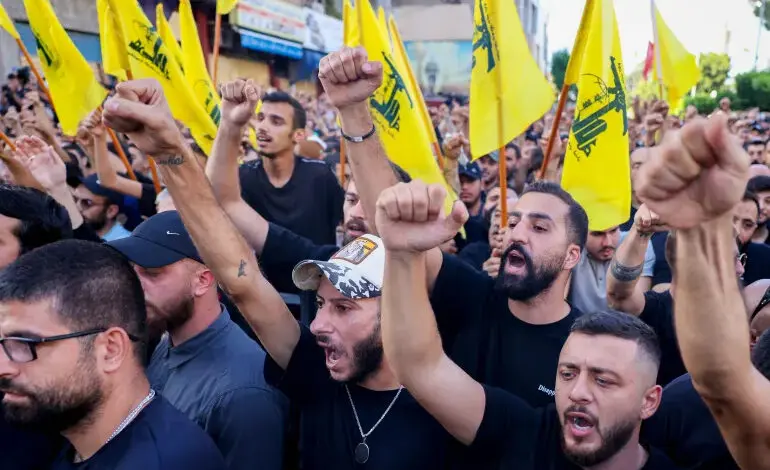
Compounding this challenge is the fundamental difference between past and present adversaries. In 1982, the Palestine Liberation Organization functioned largely as an external force that could be physically expelled. Hezbollah is not an outside force. Its fighters are Lebanese. They live in the towns and villages of southern Lebanon. They are part of the political system and the social fabric. That means there is no simple way to “remove” them. You can damage them, push them back or weaken them — but you can’t expel them from their own country.
You can damage them, push them back or weaken them — but you can’t expel them from their own country.
As a result, even if Israel escalates whether through expanded air campaigns or a ground invasion aimed at creating a buffer zone, the strategic dilemma remains. A buffer zone could likely be established, but history suggests it would be difficult to sustain. Israel’s prior “security zone” in southern Lebanon (1985–2000) ultimately collapsed under sustained guerrilla pressure. The same thing would likely happen again. Israel could take the territory quickly. But holding it would mean facing ongoing ambushes, roadside bombs and rocket attacks. Over time, the question wouldn’t be whether Israel can stay — it would be whether it’s worth it. Hezbollah’s structure reinforces this reality. It is not simply a militia but a hybrid actor with military, political and social dimensions. It can operate both within and beyond any buffer zone, using rockets, missiles and decentralized tactics. Even if pushed back geographically, it retains the capacity to strike and to rebuild.
There is also a deeper difference between the two sides. Hezbollah is built for endurance. It is disciplined, tightly organized and focused on a long-term mission. Its fighters operate under strict rules and a clear sense of purpose. Israel’s military, while highly capable, there are growing concerns about its readiness for a prolonged ground war. Critics argue that the focus on air power, intelligence and precision strikes has come at the expense of ground force preparedness. These concerns are sometimes seen along the northern border with Lebanon, including instances where the Israel Defense Forces are afraid to respond to relatively minor provocations, such as the placement of a tent or the removal of a surveillance camera.
The likely trajectory, therefore, is not one of decisive victory for Israel. In the near term, Israel is more likely to pursue calibrated escalation — airstrikes, targeted operations and possibly limited ground incursions — rather than a full-scale invasion. A broader ground operation remains possible, particularly if key thresholds are crossed, but even then, it would likely aim at a constrained objective such as a buffer zone rather than a deep, open-ended occupation. Yet even this more limited approach does not resolve the underlying contradiction. Israel can degrade Hezbollah’s capabilities, eliminate commanders and temporarily restore deterrence. But without a political strategy that addresses the conditions sustaining Hezbollah’s presence and legitimacy, these gains are unlikely to endure.
Military power can shape the battlefield, but it cannot by itself resolve a conflict rooted in politics, identity and local support.
The result is a conflict defined by cycles rather than conclusions. There will be periods where fighting gets intense, then things calm down for a while, but the tension never really goes away, and violence eventually starts again. Each round might change who seems to have the upper hand at that moment, but the bigger picture stays the same. Hezbollah remains deeply rooted in Lebanon, and Israel keeps relying mainly on military force, so neither side truly resolves the conflict.
And that brings us back to the uncomfortable truth: in southern Lebanon, history doesn’t just echo, it repeats its logic. Military power can shape the battlefield, but it cannot by itself resolve a conflict rooted in politics, identity and local support. If those structural realities remain unchanged, the war will ultimately end not in a decisive outcome, but in a bad settlement reached at a painful cost for Israel.
– Jamal I. Bittar is a university professor and opinion writer focused on Middle East politics and U.S. foreign policy. He is based in Toledo, Ohio. The views expressed are solely his own and do not represent those of any institution with which he is affiliated.


Leave a Reply