




Although the United States and Iran continued exchanging military strikes this week, with growing talk that the bilateral memorandum of understanding is effectively dead, several developments suggested that Washington remains eager to avoid sliding into a full-scale regional war.
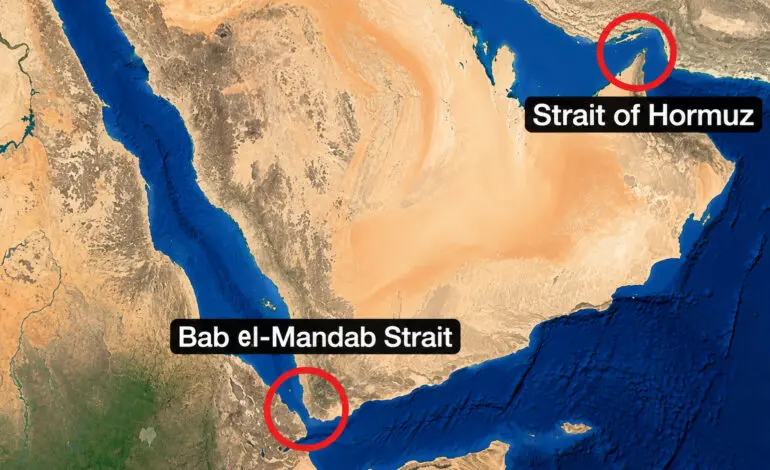
The concern centers on the possibility that the conflict could spread from the Strait of Hormuz to the Bab el-Mandeb Strait, threatening two of the world’s most important maritime chokepoints and causing severe disruptions to global energy markets.
This week, the United States sharply intensified its strikes on Iran, while Tehran renewed attacks on U.S. military bases in the Gulf and Jordan and targeted vessels in the Strait of Hormuz. Washington also resumed its naval blockade of the Islamic Republic, violating another provision of the memorandum signed by the two countries less than a month ago.
As a result, the agreement has effectively lost its meaning and practical function and entered a stage of actual collapse.
Despite the escalating attacks, Washington appeared reluctant to renew a full-scale war, particularly amid Western media reports that Tehran has coordinated with Yemen’s Ansar Allah movement over the possible closure of Bab el-Mandeb if Iran’s energy infrastructure is targeted.
Such a move would add Bab el-Mandeb to the Strait of Hormuz, which is already largely closed because of the conflict. The closure of both waterways would block much of the Gulf’s oil exports, deepen the global energy crisis and place President Trump and the Republican Party in a major domestic political predicament if gasoline prices rise to new records.
The prospect of closing both the Strait of Hormuz and Bab el-Mandeb has become a strategic deterrent, raising the cost of a wider U.S.-Iran war beyond what Washington appears willing to risk.
Reuters, citing two Iranian sources and a regional source, reported that Iran’s leadership had discussed closing Bab el-Mandeb if the country’s energy infrastructure were attacked and had communicated the idea to its allies in Ansar Allah.
Although Iranian officials have not publicly addressed the possibility of closing Bab el-Mandeb, Tehran issued repeated warnings in response to Trump’s statements asserting U.S. control over the Strait of Hormuz.
Iran’s Khatam al-Anbiya Central Headquarters said the country would not permit Washington to interfere in the strait, describing the issue as “a red line that cannot be crossed.”
“If Washington carries out its threats to strike Iran’s infrastructure, we will strike infrastructure across the region,” the headquarters warned.
Ali Akbar Velayati, senior international affairs adviser to Iran’s supreme leader, also declared that “the Strait of Hormuz belongs to Iran, and no power in the world can strip us of sovereignty over it.”
“The strait became subject to our sovereignty by a decision of the supreme leader, as an achievement of the 40-day war,” he added.
According to Iran’s Mehr News Agency, the Khatam al-Anbiya Central Headquarters was responding to Trump’s repeated threats to strike Iranian power stations and bridges.
Col. Ebrahim Zolfaqari, a spokesperson for the headquarters, warned that “all infrastructure in the region will be crushed by the steel strikes of the powerful armed forces of the Islamic Republic of Iran” should Trump carry out those threats.
Pakistan calls for diplomacy
On Thursday, Pakistan urged the United States and Iran to end the violence and resume talks, stressing that dialogue and diplomacy remain the only path toward lasting peace and stability.
Pakistani Foreign Ministry spokesperson Tahir Hussain Andrabi warned during a press conference in Islamabad that implementing the understanding signed by Washington and Tehran now faces serious “challenges.”
Amid growing uncertainty over Bab el-Mandeb, Washington’s caution was further underscored by Vice President J.D. Vance’s accusation that Israel has sought to sabotage negotiations with Iran.
The comments came as differences between Washington and Israel have widened over Lebanon and Syria, where Israeli Prime Minister Benjamin Netanyahu continues to resist withdrawing Israeli forces, limiting the Trump administration’s ability to negotiate settlements involving both countries.
As reports circulated that a possible meeting between Trump and Netanyahu next week had been canceled, the White House said Iran continues to hold talks with the United States and remains interested in reaching a deal.
“President Trump is always open to diplomatic solutions,” the White House said. “He believes in achieving peace through strength.”
The administration also stressed that Trump and Vance share the same position on Iran.
Vance, who previously criticized Israeli officials for rejecting the memorandum of understanding with Iran, renewed his accusations in a recent interview, saying Israel had worked to undermine U.S. diplomacy.
“They spent a fortune trying to sabotage our negotiations and smear everyone who was seeking an agreement,” Vance said. “Many of the people who received that funding were attacking me in completely dishonest ways.”
His remarks have continued to generate controversy in the United States and anger in Israel, while raising new questions about the relationship between Trump and Netanyahu.
Trump had previously said, before attending the NATO summit in Ankara and following a phone call with Netanyahu, that the Israeli prime minister had requested a meeting with him.
Trump added that Netanyahu “knows who the leader is.”
Axios later quoted a White House official as saying that “there is no Netanyahu visit on Trump’s schedule next week, and we will see what happens.”
Netanyahu’s office subsequently announced that his planned visit to the United States had been postponed following the delay of the funeral of Sen. Lindsey Graham, a longtime supporter of Israel, until the end of July.
Yemen raises pressure on Saudi Arabia
Further reinforcing concerns about the possible closure of Bab el-Mandeb, authorities in Sanaa escalated their confrontation with Saudi Arabia and gave Riyadh a deadline to fulfill peace commitments and lift restrictions imposed on Yemen.
The move came as regional mediation efforts appeared to be faltering and amid signs that the confrontation could enter a broader phase if political efforts fail.
Ansar Allah leader Abdul-Malik al-Houthi gave Saudi Arabia 48 hours on Thursday to fulfill peace obligations, including lifting the blockade imposed on Yemen with U.S. participation.
His warning appeared intended to prevent Riyadh from postponing a resolution to the Yemeni conflict while extending the humanitarian truce without taking reciprocal steps.
Days after a Saudi attack on Sanaa International Airport and a retaliatory strike on Abha International Airport in southern Saudi Arabia, al-Houthi said the movement’s only option was to impose a new deterrence equation.
“The only option to break the blockade imposed by Saudi Arabia with American participation is to impose a blockade for a blockade and an airport for an airport until the naval and air blockade on Yemen is lifted,” he said during his weekly address.
“Sanaa is moving forward in the battle for liberation and to end all restrictions imposed on air and maritime traffic, which have multiplied the suffering of the Yemeni people over the past years,” he added.
Al-Houthi said Riyadh had 48 hours to carry out peace commitments, beginning with lifting restrictions on Yemeni airports and ending limits on imports through the Port of Hodeidah, which receives approximately 70 percent of the country’s imported needs.
He also demanded the reopening of major roads between provinces, which have restricted civilian movement and worsened humanitarian suffering, as well as progress on the issue of prisoners and detainees.
Al-Houthi reminded Saudi Arabia that its American and British supporters had failed to defeat Yemen over the past two years and had been forced to leave the Red Sea under attacks by Sanaa’s forces.
He also warned Riyadh against participating in any renewed military assault on Yemen.
His remarks coincided with reports from Sanaa of military movements in southern Yemen in preparation for a possible offensive involving U.S. support.
The U.S. State Department, meanwhile, said it had taken note of the attack on Abha airport and stood firmly with Saudi Arabia “in confronting Iranian aggression, including attacks by the Iran-backed Houthis.”
The department also stressed the need to continue efforts to confront Ansar Allah and other groups in Yemen that it said threaten U.S. interests.


Leave a Reply