



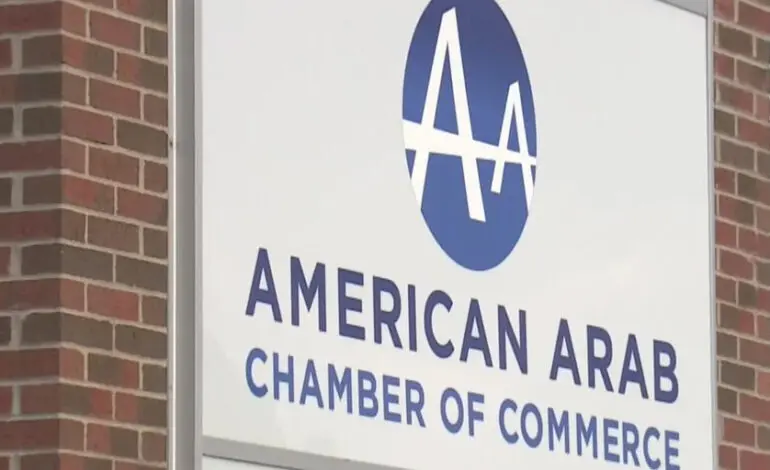

The unfolding controversy at the American Arab Chamber of Commerce is painful to watch, particularly for those of us who once invested time in the organization and believed deeply in what it could be.
The Chamber announced last week that it had terminated its executive director, Bilal Hammoud, after discovering that organizational funds could not be accounted for. It retained outside counsel and referred the matter to law enforcement. Published reports suggest approximately $1 million may be involved, including public funds intended for Tejara, the Chamber’s business incubator.
Those allegations remain under investigation, and fairness requires that we not prejudge Mr. Hammoud. But fairness does not require silence about the larger institutional problem.
Those allegations remain under investigation, and fairness requires that we not prejudge Mr. Hammoud. But fairness does not require silence about the larger institutional problem.
This is the second serious financial controversy associated with the Chamber’s executive leadership in only a few years. Former Executive Director Fay Beydoun now faces criminal charges arising from the use of a $20 million state grant originally pursued while she led the Chamber. Whatever becomes of either matter, the recurrence demands a question that cannot be answered simply by replacing one executive director with another:
Where was the oversight?
I ask because I have some history with this institution. I joined the Chamber’s board many years ago and became chairman in 2008, when it was already experiencing disagreements over governance, finances and whether institutional resources should serve the broader business community rather than particular personalities.

James Allen
As chairman, I insisted upon an independent review of the Chamber’s finances. I retained a CPA independent of the existing leadership structure. We opened the books and pursued stronger financial controls, including multiple approvals for significant transactions. I deliberately declined to become a signatory myself. I also asked a committee of board members to rewrite the bylaws while remaining off that committee so the reforms could not fairly be characterized as an effort to consolidate my authority.
Most importantly, we tried to refocus the Chamber on what a chamber of commerce should do: help businesses, particularly small businesses, through practical programs providing tangible value for membership dues.
But rules cannot protect an institution if its culture treats accountability as an inconvenience rather than an obligation.
I do not recount this because I had all the answers. With nearly two decades of hindsight, I recognize something I did not fully appreciate then. I believed the principal problem was structural: bylaws, banking controls, audits and governance procedures. Those things matter enormously. But rules cannot protect an institution if its culture treats accountability as an inconvenience rather than an obligation.
My tenure ended after about a year. I disagreed with how that occurred but concluded that fighting over a title would only compound the problem. I left and went on with my life.
What happened to me is far less important than what happened since.
The Chamber has done important work, and many honorable people have served on its board. Most are busy professionals who volunteer their time and reasonably rely upon those entrusted with day-to-day responsibility. They should not be casually tarred by the conduct of others. But precisely because so many good people have lent their names and credibility to the Chamber, those exercising enduring authority over it owe them answers.
Ahmad Chebbani has been a central figure in the Chamber for decades. He was instrumental in building it and is again chairman at this critical moment. None of that establishes wrongdoing on his part, and I am not suggesting otherwise. It does, however, establish responsibility.
Leadership cannot mean receiving credit when an organization succeeds without accountability when its systems fail.
Leadership cannot mean receiving credit when an organization succeeds without accountability when its systems fail.
If nearly $1 million can disappear from an organization overseen by experienced businesspeople, what controls were in place? Who reviewed the accounts? Were independent audits conducted? What authority did the executive director possess? And after the Fay Beydoun controversy, what additional safeguards were adopted?
These are not accusations. They are governance questions, and the community deserves answers.
They are especially important because public money is involved. Every scandal involving grant-funded organizations makes life harder for legitimate nonprofits and community institutions. Legislators become skeptical. Agencies impose restrictions. Taxpayers become cynical.
The damage extends beyond the Chamber. Arab American organizations spent generations building credibility in Metropolitan Detroit and throughout Michigan, demonstrating that our community could responsibly steward public and private resources. That reputation is an asset, and it can be squandered.
Trust is not restored merely by terminating an employee or retaining a law firm. It is restored by explaining how the failure occurred, what safeguards failed, who was responsible for preventing it and what changes will ensure it does not happen again.
Nearly 18 years ago, I believed stronger rules and transparency could protect the Chamber from precisely this kind of institutional damage. I take no satisfaction in seeing these questions arise again. But after two major controversies, asking them is no longer optional.
The Chamber belongs, in the broader civic sense, to the businesses and community whose name and reputation it carries. They deserve a full accounting—and the lessons learned should be instructive to every institution in our community.
– James Allen is a veteran lawyer and a contributor leader in the Arab American community.



Leave a Reply