




EPIC-MRA poll shows tight Michigan governor, Senate races as voters sour on economy and Trump
LANSING — Michigan’s 2026 statewide elections are shaping up as highly competitive contests, with Democratic candidates holding narrow leads over their Republican opponents in both the governor’s and U.S. Senate races, according to a new EPIC-MRA poll of likely November voters.
The poll, conducted Aug. 22 through Aug. 28 among 600 likely voters, found Democrat Jocelyn Benson leading Republican John James 45 percent to 41 percent in the governor’s race after voters who initially were undecided were asked toward which candidate they leaned.
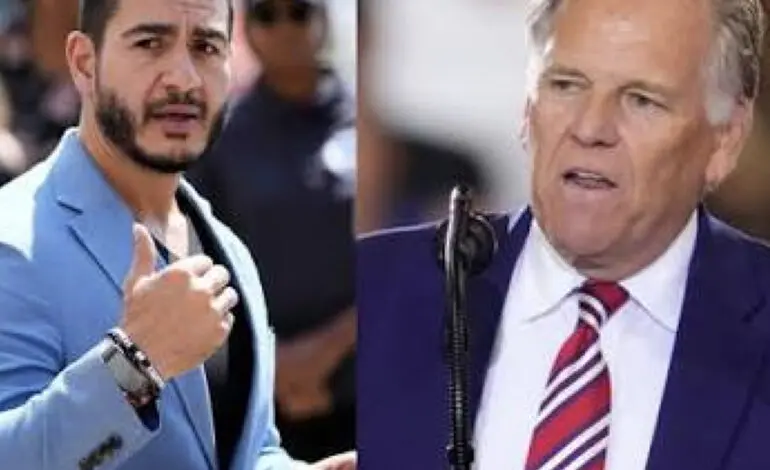
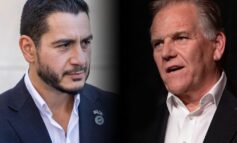
In the U.S. Senate race, Democrat Abdul El-Sayed leads Republican Mike Rogers 47 percent to 43 percent under the same measure.
Both four-point leads fall within the poll’s ±4 percentage-point margin of error, underscoring how competitive both contests remain.
The survey also reveals a Michigan electorate deeply dissatisfied with the national economy and Donald Trump’s job performance as president, while remaining closely divided along partisan lines.
Benson maintains narrow advantage over James
Benson’s lead comes after a 40 percent-35 percent initial preference among voters, with 5 percent leaning toward Benson and 6 percent leaning toward James.
Fourteen percent remained undecided or refused to answer.
When EPIC-MRA simulated the allocation of undecided voters according to their partisan leanings, Benson’s advantage increased to 48 percent compared with 44 percent for James, with 8 percent remaining undecided.
Neither candidate has established a strong favorable image among the electorate.
Benson is viewed favorably by 30 percent of voters and unfavorably by 29 percent, while 16 percent say they do not recognize her and 25 percent are undecided.
James has a 29 percent favorable rating and a 34 percent unfavorable rating. Fifteen percent say they do not recognize him, while 22 percent are undecided.
The numbers suggest that the governor’s race remains fluid, with a sizable portion of the electorate either undecided or not yet firmly committed to either candidate.
El-Sayed leads Rogers in Senate matchup
The Senate contest is similarly close.
Rogers receives 39 percent support, with another 4 percent leaning toward him, giving him 43 percent overall.
El-Sayed receives 43 percent outright support, with another 4 percent leaning toward him, giving him 47 percent.
Ten percent remain undecided or refused to answer.
When undecided voters are simulated according to partisan leanings, El-Sayed’s advantage grows to 50 percent-45 percent, with 5 percent remaining undecided.
El-Sayed also holds an advantage over Rogers in personal favorability.
Thirty-nine percent have a favorable opinion of El-Sayed, compared with 38 percent unfavorable. Six percent say they do not recognize him and 17 percent are undecided.
Rogers has a 29 percent favorable rating and a 40 percent unfavorable rating, while 10 percent do not recognize him and 21 percent are undecided.
The result represents a competitive starting point for a Senate race that could have national implications. Other recent public polling has also shown the contest close, although individual surveys have produced different results. (270toWin.com)
Polling shows a 45 percent –41 percent Benson lead, 47 percent –43 percent El-Sayed lead, Trump’s 67 percent negative job rating and the 63 percent who say the economy has gotten worse.
Trump faces severe political headwinds in Michigan
The poll finds Trump with deeply negative job ratings among Michigan’s likely voters.
Only 30 percent rate Trump’s performance positively, including 11 percent who say he is doing an “excellent” job and 19 percent who say “pretty good.”
Sixty-seven percent rate his performance negatively. That includes 16 percent who describe his performance as “just fair” and 51 percent who say “poor.”
Three percent are undecided or refused to respond.
Trump’s personal favorability is also underwater, with 34 percent holding a favorable opinion and 57 percent an unfavorable one. Nine percent are undecided.
Those numbers could become an important factor in statewide races, particularly in a state where the margins between the major-party candidates are currently narrow.
Whitmer also underwater on job performance
Gov. Whitmer receives substantially better personal ratings than Trump but is also underwater on her job performance.
Forty-one percent rate her performance positively, including 10 percent who say “excellent” and 31 percent who say “pretty good.”
Fifty-five percent give her a negative rating — 29 percent “just fair” and 26 percent “poor.”
Four percent are undecided or refused to respond.
Whitmer’s personal favorability is more balanced: 48 percent favorable and 42 percent unfavorable, with 10 percent undecided.
Economy is a major concern
Perhaps the most striking finding in the survey is voters’ assessment of the national economy.
Only 12 percent say the economy has improved over the past year.
Sixty-three percent — nearly two-thirds of Michigan voters surveyed — say the economy has gotten worse.
Twenty-three percent say it has remained about the same, while 2 percent are undecided or refused to respond.
The finding gives economic concerns a potentially significant role in the November campaign. Both parties have an incentive to frame those concerns around the policies and leadership of the opposing party.
Majority supports Medicare for All
The poll also finds broad support for a national health insurance program commonly known as Medicare for All.
Sixty-two percent support the proposal, including 43 percent who strongly support it and 19 percent who somewhat support it.
Thirty-one percent oppose it, including 25 percent who strongly oppose it and 6 percent who somewhat oppose it. Seven percent are undecided or refused to respond.
Abortion remains sharply divisive
Abortion continues to divide Michigan voters.
Fifty-five percent say abortion should be legal in all or most cases, including 37 percent who say it should be legal in all cases and 18 percent who say it should be legal in most cases.
Thirty-nine percent take the opposing position, saying abortion should be illegal in all or most cases.
Six percent are undecided or refused to respond.
Michigan electorate remains closely divided
The partisan composition of the survey illustrates the closely divided nature of the electorate.
Forty-three percent identify as Democrats, compared with 40 percent who identify as Republicans.
The Democratic figure includes 30 percent strong Democrats, 7 percent not-very-strong Democrats and 6 percent Independents who lean Democratic.
The Republican figure includes 26 percent strong Republicans, 8 percent not-very-strong Republicans and 6 percent Independents who lean Republican.
Twelve percent identify as Independents, while 2 percent identify with another party and 3 percent are undecided or refused to respond.
Ideologically, 36 percent describe themselves as conservative, 30 percent moderate and 24 percent liberal. Ten percent are undecided or refused to respond.
The poll’s racial composition is 79 percent White, 12 percent Black, 1 percent Hispanic or Latino, 1 percent Asian, 1 percent Native American, 2 percent two or more races or mixed race, 1 percent another race and 3 percent undecided or refused to respond.
A competitive road to November
The EPIC-MRA survey presents a Michigan electorate that is dissatisfied with the direction of the national economy and sharply critical of Trump’s job performance, but not overwhelmingly aligned behind either political party.
Benson’s 45 percent-41 percent advantage over James and El-Sayed’s 47 percent-43 percent lead over Rogers are both within the poll’s margin of error.
That makes the races competitive rather than settled.
The governor’s race has 14 percent of voters undecided or refusing to answer, while 10 percent are undecided or refused to respond in the Senate contest. How those voters ultimately break — and which party succeeds in turning out its supporters — could prove decisive.
For El-Sayed, the poll contains an additional favorable indicator: his 39 percent favorable rating is 10 points higher than Rogers’ 29 percent, while his unfavorable rating is two points lower.
Benson also holds a one-point favorable-rating advantage over James.
But neither Democratic candidate is in a dominant position.
With the November election still ahead, the survey points to two statewide races that are likely to remain intensely contested — with economic concerns, presidential approval, candidate favorability and turnout potentially shaping the final outcome.
Leave a Reply