


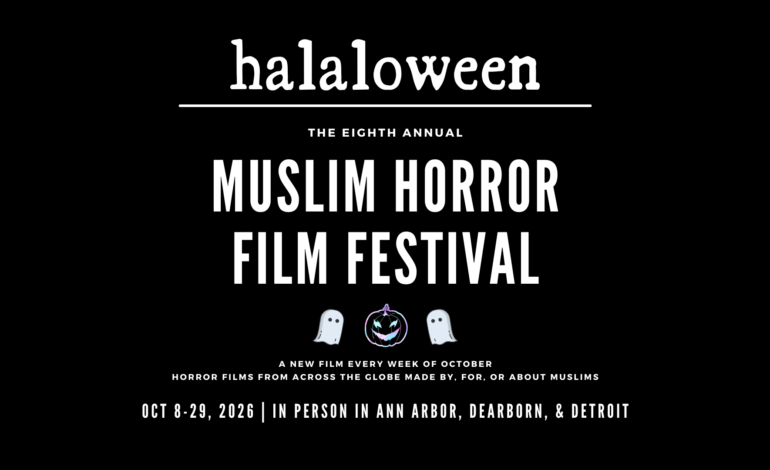

DEARBORN — The University of Michigan Global Islamic Studies Center is presenting the Eighth Annual Halaloween Muslim Horror Film Festival throughout October with events in Dearborn, Ann Arbor and Detroit.
The events include screenings of horror films from around the world that are made by, for or about Muslims.
“Halaloween is now in its eighth year, bringing horror films from across the Muslim-majority world to audiences in Southeast Michigan,” Dr. Aliyah Khan, director of the University of Michigan Global Islamic Studies Center, said. “These films are not simply versions of Hollywood horror. They draw on jinn, Islamic theology, folklore and local histories to explore social, political and religious concerns that are specific to the cultures that produce them. This year, we’re especially excited to expand that conversation through collaborations with the Arab American National Museum, Michigan Medicine and Devil’s Night Detroit, while continuing to ask the questions at the heart of the festival: what scares Muslim audiences, and what can horror tell us about the worlds we live in?”
The programming of the events highlights horror traditions from countries including Indonesia, Malaysia, Türkiye, Egypt, Iran, Morocco, Tunisia, Saudi Arabia and the UAE and incorporates hauntings, jinn, Islamic theology and pre-Islamic folklore while using supernatural horror to engage themes such as gender, hijab, war, political violence, corruption, illness, grief and death.
“Devil’s Night Detroit brings cinema, live music and performance together to create an immersive experience that is unexpected, haunting and otherworldly,” Reginald Tiessen, director of Devil’s Night Detroit, said. “As part of that experience, we’ve partnered with the University of Michigan’s Global Islamic Studies Center in Ann Arbor to bring a curated selection of films from its Halaloween Muslim horror film festival into the fold. Every culture has stories about what waits in the dark. Halloween explores those stories through a distinctly Muslim lens, from jinn to the uneasy boundary between the earthly and the supernatural. In metro Detroit, where Arab American communities are central to our cultural life, we wanted to bring these films to new audiences and give them the chance to discover work they might never have encountered on their own.”
Information and screening times can be found on the University of Michigan website.


Leave a Reply