




They grew up in Dearborn and Dearborn Heights, but chose other communities to settle in and build new lives. Young Arab Americans have many reasons for moving beyond the two Dearborns. What many share, however, is a desire to remain close.
Now in their 20s and 30s, graduates of Dearborn and Crestwood schools are completing their education, establishing careers and raising families. Increasingly, they are looking to nearby communities for schools, job opportunities, quieter neighborhoods and larger homes with more space between neighbors.
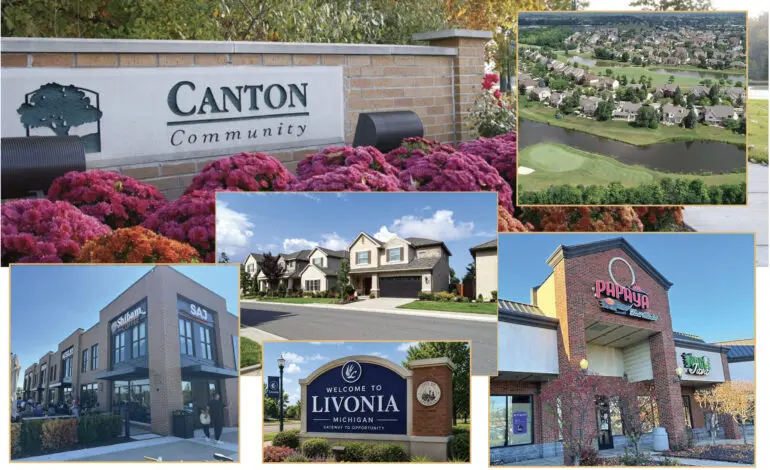
For some, Canton is the answer. Others prefer Livonia, Plymouth or the bustle of downtown Detroit. Some venture beyond Wayne County to Troy, Farmington, Novi or Birmingham in Oakland County, or Ann Arbor and its surrounding communities in Washtenaw County.
Their decisions do not necessarily reflect a weakening attachment to Dearborn. Instead, they offer a way to experience life elsewhere while keeping family, friends and familiar places within reach.
More space, quieter streets: Why young Arab Americans are moving beyond Dearborn
Seeking a quieter life
For Batoul Hammoud, 34, leaving Dearborn Heights did not mean leaving the community she grew up in.
After having two young children, she and her family began looking for more space, quieter streets and schools they felt would better serve their children. They found what they wanted in Canton.
“We wanted something calmer and more relaxed,” Hammoud said. “Dearborn can feel loud and crowded, even at night. Canton just feels different.”
Streeda Moukalled, 33, also grew up in Dearborn. A mother of two daughters, ages 9 and 4, she said education was central to her family’s decision to move to Canton.
“Schooling was a priority for us,” Moukalled said. “We wanted our children to have access to stronger schools, but we also wanted to be somewhere that respected different cultures.”
Moukalled said more Lebanese families from her generation are making the same move, creating a growing Arab presence in Canton. That has helped make the transition feel less like leaving her community and more like watching it expand.
Dearborn remains roughly a 20-minute drive away, allowing her to visit family and friends while enjoying the additional space and quieter surroundings she wanted for her children.
Arab businesses follow the community
Moving beyond Dearborn and Dearborn Heights has also become easier as familiar Arab businesses expand across Metro Detroit.
In Canton, those businesses include Papaya Fruit Market, Saj Bakery and Qahwah House, giving residents access to familiar foods and gathering places closer to their new homes.
The expansion reaches well beyond Canton. Arab restaurants, cafés, bakeries and markets now serve communities throughout the region. Buying manakish, Arab sweets or halal meat no longer requires a trip to Dearborn.
Still, access to those businesses does not replace the personal connections that draw former residents back.
Rabih Mohamed said belonging to the Arab American community no longer requires living exclusively within Dearborn. For a generation accustomed to driving between Metro Detroit communities, living in Canton or Northville, working in Detroit and meeting family and friends in Dearborn can all be part of the same routine — although, he noted, high gasoline prices complicate that convenience.
New homes, lasting ties: Arab Americans find life beyond the Dearborns
Different priorities, different destinations
Not everyone moving beyond Dearborn is looking for the same experience.
For Ali B., Livonia offers a balance between proximity to family and a quieter environment with greater privacy. Moving to a neighboring community allows him to maintain easy access to Dearborn while enjoying a different residential setting.
Bassam Mahmoud chose Plymouth for its spacious homes and yards, as well as its small downtown, restaurants, cafés and community events.
Rawan Mezher was drawn to Ann Arbor’s university-town atmosphere, lively downtown and cultural diversity.
Hadi, who settled in Birmingham, sees no need to remain amid Dearborn’s congestion simply because he was born there.
Louay Saab chose downtown Detroit. Working there made the opportunity to live near his job, restaurants and nightlife more appealing than driving into the city on weekends.
They describe a continued attachment to Dearborn, even as they explore other places to live. Some leave open the possibility of returning.
Their choices reflect different stages of life. A family with two young children may prioritize schools, a yard and quiet streets. A single young professional may place greater value on a short commute, social opportunities and entertainment.
More space for the money
Housing costs are another consideration, particularly for buyers looking in quieter neighborhoods on Dearborn’s west side.
Moukalled said families can find homes in Canton that are twice, and sometimes three times, the size of what they might find in Dearborn for a comparable price.
That does not mean Canton’s housing market is less expensive overall. According to Redfin figures, the median home sale price in August 2026 was approximately $410,000 in Canton, compared with approximately $280,000 in Dearborn.
For families such as Moukalled’s, the appeal lies in what their money can buy: larger homes, bigger yards and newer construction.
Ali Eldirani, a RE/MAX real estate agent who said he has worked in the industry for 50 years, including 31 at RE/MAX, has seen families move from Dearborn and Dearborn Heights to Canton, Northville and Novi.
“Some younger families may be moving from Dearborn and Dearborn Heights to Canton or other cities for larger homes, bigger yards and school or lifestyle preferences,” Eldirani said. “Potential savings on property taxes and insurance may also influence their decision, although those costs vary by property. Overall, they may be looking for more space and better value for their total housing expense.”
Eldirani cited millage rates of 39.84 mills in Canton, compared with 51.37 mills in the Dearborn School District and 53.00 mills in the Crestwood School District area of Dearborn Heights.
Actual property tax bills depend on a home’s taxable value and the taxing jurisdictions in which it sits. Those rates therefore do not translate into a fixed savings for every buyer. One mill represents $1 in taxes for every $1,000 of taxable value.
Auto insurance can also affect the calculation. According to 2026 estimates from the Insurance Price Guide, full-coverage auto insurance averages approximately $2,277 annually in Canton, compared with $2,920 in Dearborn — a difference of about $643.
Individual premiums vary based on driving history, vehicle and coverage.
Leaving Dearborn, keeping their roots: Arab Americans embrace nearby communities
Beyond the household budget
For Hammoud, the decision ultimately went beyond housing costs and insurance. Schools were the biggest factor in her family’s move.
With a toddler and a preschooler, she wanted an educational environment she believed would offer her children stronger opportunities. She said she had concerns about declining educational quality, particularly in English language learning.
Dearborn Public Schools serves a large and diverse student population and has maintained English Learner programs since 1976. The district continues to operate a dedicated English Learners department.
Plymouth-Canton Community Schools, which serves much of Canton, has received national recognition for its high schools. According to the 2025 U.S. News & World Report rankings, all three schools at the Plymouth-Canton Educational Park — Plymouth High School, Canton High School and Salem High School — ranked among Michigan’s top 36 public high schools and the top 5 percent of more than 24,000 schools nationally.
The families also see differences beyond the classroom.
Hammoud described Canton as less crowded and more residential. In Dearborn and Dearborn Heights, she recalled streets lined with parked cars and the effects of denser neighborhoods. In Canton, she said, residents are more likely to park in their driveways and have additional space around their homes.
For Moukalled, the subdivision setting was especially important. With two daughters, she wanted a neighborhood where they could play outside without her constantly worrying about traffic.
Taking Dearborn with them
There may be no single “new Dearborn.” Members of this generation are choosing different destinations, from Canton and Livonia to Ann Arbor, Birmingham and Detroit.
What connects them is their attachment to the community that raised them — and their determination to keep it close.
Arab businesses may now be available throughout Metro Detroit, but family gatherings, friendships, celebrations and memories continue to bring them back to Dearborn.
The children who grew up in the two Dearborns are now raising children of their own. They want many of the same things earlier generations sought: good schools, safe neighborhoods and homes that meet their families’ needs.
Their moves suggest a community whose boundaries are expanding. As they establish homes elsewhere, they carry Dearborn’s social and cultural ties with them.


Leave a Reply