



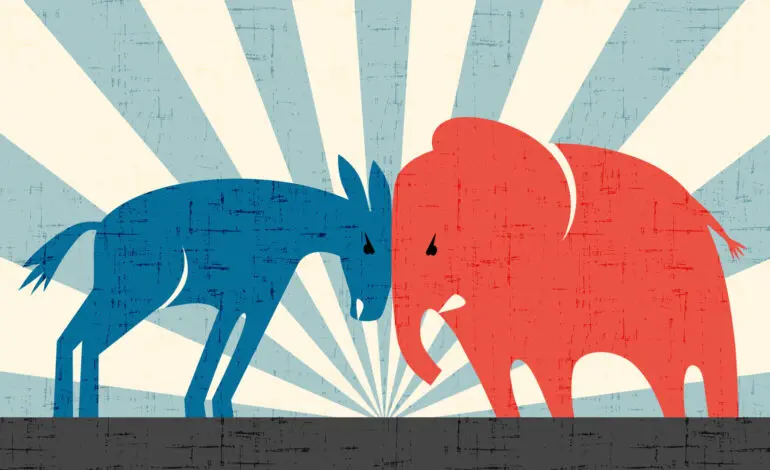

The election results should serve as a wake-up call for both political parties, but particularly for Democrats. This victory is an opportunity to reset the political conversation, rebuild public confidence and demonstrate that Democrats can govern effectively. However, winning an election is one thing; knowing what to do with that victory is an entirely different challenge. Voters are not handing Democrats a blank check. They are giving them another opportunity to prove themselves. This time, they would be wise not to blow it.
First, Democrats need to understand what voters are actually concerned about. Most Americans are not waking up wondering about the latest political controversy on cable television, ideological debates on college campuses or which celebrity has endorsed which candidate. They are worried about paying their mortgage, affording groceries, filling their gas tanks, paying utility bills, finding affordable housing and keeping up with healthcare costs.
Voters are not handing Democrats a blank check. They are giving them another opportunity to prove themselves.
Affordability should be the centerpiece of the Democratic agenda, not another collection of ambitious slogans, carefully crafted press releases or campaign promises. Voters want measurable results and practical proposals addressing housing, healthcare, prescription drugs, childcare, wages and the overall cost of living. People want to feel that working hard still provides a reasonable opportunity to get ahead. If Democrats can demonstrate that they understand this reality and have credible solutions, they will have a much stronger argument for earning voters’ trust.
Second, Democrats need to resist the temptation to return to the excesses of progressive identity politics. There is absolutely nothing wrong with defending civil rights, opposing discrimination or protecting vulnerable communities. Those principles should remain fundamental to the party. But Democrats must recognize the difference between defending equality and allowing ideological activism to dominate their political identity. The party cannot afford to make every conversation about pronouns, identity labels or increasingly complicated ideological arguments that leave ordinary voters feeling disconnected. Americans want fairness, equal opportunity and respect. They also want common sense. Democrats should defend individual freedoms without making people feel they must subscribe to an entire ideological package to belong in the party. There is a difference between being inclusive and making political messaging so culturally disconnected that it becomes an electoral liability.
Third, immigration policy needs a serious dose of realism. Democrats should continue supporting humane treatment of immigrants, legal pathways to citizenship and an immigration system that recognizes America’s history as a nation of immigrants. But compassion and border enforcement are not mutually exclusive. The party must acknowledge that uncontrolled or poorly managed immigration creates legitimate concerns involving border security, public resources, housing, employment and the capacity of local communities to respond. Dismissing every concern about immigration as racism or xenophobia is politically irresponsible and alienates voters who might otherwise support Democrats.
Americans want a functioning immigration system, with secure borders, orderly processing, sensible asylum policies and consequences for those who violate immigration laws. Democrats should be able to advocate for humane immigration reform while making it clear that national borders and immigration laws matter. There is no reason to surrender this issue to Republicans.
Fourth, Democrats must resist the temptation to turn this victory into an endless campaign against Donald Trump. There are legitimate questions about presidential conduct, accountability and the protection of democratic institutions. Those matters deserve serious attention. But the party should not confuse political victory with an invitation to settle personal scores. Immediately talking about impeachment, investigations or finding new ways to punish the president would be a strategic mistake. Americans are exhausted by perpetual political warfare. They have watched Washington spend years consumed by investigations, accusations, partisan hearings and political theater while ordinary families struggle to get ahead.
Fifth, Democrats need to rediscover the art of governing and compromise. Not every disagreement needs to become a national crisis, and not every Republican voter is an enemy of democracy. Millions of Americans vote Republican for a variety of reasons, including economic concerns, cultural values, taxes, public safety and distrust of government. Dismissing those voters as ignorant or deplorable is not a political strategy. It is a recipe for losing them again. Democrats should focus on building coalitions that include working-class Americans, independents, moderate Republicans, younger voters and communities that have become increasingly skeptical of the party. That requires listening rather than lecturing, persuading rather than insulting and delivering results rather than constantly demanding political loyalty.
That requires listening rather than lecturing, persuading rather than insulting and delivering results rather than constantly demanding political loyalty.
Finally, Democrats need to understand that this victory is not necessarily an endorsement of everything they believe. Some voters may have supported Democratic candidates because they were dissatisfied with Republicans. Others may have voted out of frustration with the political climate, economic uncertainty or the administration’s priorities. There is a difference between voters embracing a party’s platform and deciding that the alternative has become less appealing. That distinction matters enormously.
The biggest mistake Democrats could make now is becoming overconfident, interpreting this victory as a mandate for every progressive policy proposal and returning to the same political habits that contributed to their previous difficulties. They should not assume that America has suddenly embraced the entire Democratic agenda. Voters are practical, and their patience is limited.
The message from this election should be relatively simple: deliver results, demonstrate competence, respect the concerns of ordinary Americans and stop treating politics as an endless competition for moral superiority. Democrats have an opportunity to turn this election victory into a lasting political realignment, but that will require more than rhetoric and political posturing. Anything less, and voters may eventually decide that the other side deserves another chance.
– Jamal I. Bittar is a university professor and opinion writer focused on Middle East politics and U.S. foreign policy. He is based in Toledo, Ohio. The views expressed are solely his own and do not represent those of any institution with which he is affiliated.



Leave a Reply