




As ceasefire negotiations in Gaza continue, Israeli Prime Minister Benjamin Netanyahu has seized the opportunity to continue his policy of deflection from internal crises, aiming to capitalize as much as possible on the new geopolitical reality created by Operation “Al-Aqsa Flood.”
This time, however, he’s doing so through the Syrian front, under the pretext of “protecting the Druze” in the southern province of Sweida, where the Druze community suddenly found itself caught between the hammer of annihilation and humiliation by the hordes of the new regime in Damascus — as happened to the Alawites on the coast four months ago — and the anvil of seeking protection from Israel. Israel responded quickly, forcing Syria’s transitional president, Ahmad Al-Sharaa, to withdraw his forces from the southern province under heavy airstrikes and hand it over to local factions and Druze religious leaders.
This move was described as the beginning of a Syrian partition plan, whose outlines quickly emerged as Sweida came under counterattack by Bedouin tribes in what appears to be a harbinger of further escalation.
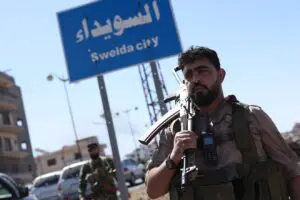
A member of Syria’s security forces stands under a sign in the predominantly Druze city of Sweida, following clashes between Bedouin tribes and Druze fighters on July 15. – AFP
The Sweida sedition
The bloody events in Sweida province erupted over the weekend in clashes between Sunni Bedouin tribes and armed Druze factions. In response, Al-Sharaa — who had just returned from the Azerbaijani capital, Baku, where he reportedly met with Israeli intelligence representatives, according to Hebrew media — dispatched a large military force to the southern province on Monday under the pretext of restoring order.
Barely had the forces entered when they committed massacres, vandalism, looting and acts of humiliation — including the forced shaving of the mustaches of elderly men and religious leaders — which they documented and shared on social media, further inflaming tensions and prompting local factions to return to the battlefield.
These flagrant violations, committed by “undisciplined” factions affiliated with Al-Sharaa’s regime, ignited Druze outrage and bolstered support for the current advocating for “international protection”, led by Sheikh Hikmat Al-Hijri. This came at the expense of the opposing camp that supported dialogue and reconciliation with Damascus, led by Sheikh Yousef Jarboe, Sheikh Laith Al-Balous and others who tried to contain the situation by announcing a preliminary ceasefire and issuing a statement welcoming the government forces’ presence and calling on locals not to resist or bear arms.
However, Al-Hijri soon reversed his stance, claiming the statement was issued under external pressure. He said that talks with Damascus had yielded no results, despite agreeing to a ceasefire to prevent bloodshed, and called for escalation against the forces that stormed Sweida and its countryside.
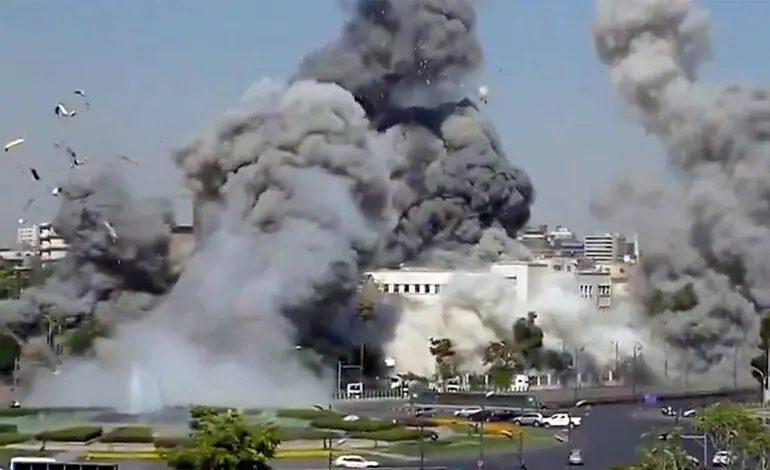
Israel began launching sporadic airstrikes against Al-Sharaa’s forces, including strikes on the Ministry of Defense and the presidential palace in Damascus, signaling its commitment to “protecting the Druze.”
By Wednesday night, Damascus’s forces began withdrawing entirely from the Druze-majority province. Al-Sharaa himself appeared to announce the handover of security responsibilities to local factions and Druze religious leaders following violence that left more than 500 dead among tribes, Druze and government forces, according to the Syrian Observatory for Human Rights.
In a televised speech early Thursday, Al-Sharaa told Syrians that his government had deployed forces to the province “to stop fighting that erupted between armed groups from Sweida and neighboring areas due to longstanding disputes.”
He claimed the government forces “succeeded in their mission” before their efforts were “directly undermined by expanded Israeli strikes on civilian and government infrastructure,” which significantly complicated the situation.
Al-Sharaa explained that “the decision [to withdraw] stems from our deep understanding of the danger to national unity and to avoid dragging the country into another wide-scale war.”
“We were faced with two choices: open war with the Israeli entity at the expense of our Druze people’s safety and regional stability, or giving Druze elders and religious leaders the space to act rationally in the national interest,” he added.
Hebrew Channel i24 reported that Al-Sharaa had attended at least one meeting with Israeli officials in Azerbaijan on the previous Saturday. The Israeli delegation included a special envoy from the Israeli prime minister and senior military and intelligence figures.
In his televised address, Al-Sharaa — notably avoiding calling Israel an “enemy” — accused it of attempting to divide Syria, but emphasized that the transitional government prioritized “Syrian interests over chaos and destruction” and made a precise decision “to preserve national unity and protect our people.”
According to Al-Sharaa’s government, the withdrawal from Sweida came as part of a 14-point ceasefire agreement sponsored by Arab, Turkish and American mediators. Key provisions included “an immediate halt to all military operations” and “the formation of a monitoring committee composed of the Syrian state and Druze religious leaders.”
Escalation continues
Indicating the conflict was far from over, the Syrian news agency SANA reported widespread revenge killings against Bedouins in Sweida. By Thursday night, Bedouin tribal forces launched a retaliatory offensive, raising fears of an expanding cycle of violence.
Meanwhile, Israel continued to inflame the situation. Netanyahu accused the Damascus regime of violating two red lines: entering the demilitarized zone and attacking the Druze.
Speaking on Thursday, Netanyahu — wanted by the International Criminal Court — said Israel had a clear policy on Syria: the area from the Golan to Mount Druze, including Daraa province, must remain demilitarized.
He accused Syria of deploying troops south of Damascus into the demilitarized zone and “slaughtering Druze.”
Netanyahu addressed Druze in Israel and the Golan Heights, urging them not to cross the border. The Israeli army had reported hundreds of Druze crossing from the occupied Golan into Syria.
“I have one request: You are Israeli citizens,” he said. “Do not cross the border.
“You are putting your lives at risk; you could be killed or kidnapped, and you undermine the mission of the Israel Defense Forces. Therefore, I ask you to go home and let the IDF carry out its mission.”
Strategic dimensions
Whether Al-Sharaa erred by sending forces to Sweida or acted on a premeditated plan, the result was the same: a deep Syrian national rift that won’t easily heal and an invitation for the Druze to fall into Israel’s arms — serving Netanyahu’s vision of a “New Middle East” built on the so-called “David Corridor.” This corridor would link occupied Palestine with Iraqi Kurdistan through Syria.
Signs of this project became clearer as Sheikh Al-Hijri called for a humanitarian corridor with the Kurds to aid the “disaster-stricken” Sweida — an allusion to the devastation in the provincial center. He also urged Jordan’s King Abdullah II to open a border crossing between Sweida and Jordan, stressing the humanitarian importance of such a move.
The “David Corridor” has gained attention since Bashar al-Assad’s fall in late 2024. Israel has taken advantage of the resulting political and security vacuum to pursue its long-term strategic goals, launching military escalations and seizing land beyond the buffer zone into Quneitra’s countryside and even nearing Damascus’s outskirts — facing little to no resistance.
The corridor is named after the biblical King David, who, according to Zionist interpretations, ruled a kingdom that extended to the Euphrates. This biblical narrative is used to justify Israel’s expansionist ambitions under the idea of “Greater Israel.”
If Israel succeeds in taking control of southern Syrian provinces, it will have moved significantly closer to linking with U.S.-backed Syrian Democratic Forces (SDF) territories in the east, via the American al-Tanf base near the Iraqi border.
Despite a current truce between the SDF and Al-Sharaa’s government, Badran Jia Kurd, deputy head of the Executive Council of the Autonomous Administration of North and East Syria, urged Damascus to reconsider its approach to Syria’s diverse communities.
Amid fears of renewed sectarian fighting, Jia Kurd posted on X (formerly Twitter), “The transitional government must urgently reassess its internal approach and begin a serious national dialogue with all Syrian communities, respecting each one’s cultural and religious identity.”
He condemned the “systematic violations” against the Druze in the south and similar acts previously committed against Alawites on the coast, asserting that the transitional defense ministry and its affiliates clearly reject cultural and religious pluralism — undermining coexistence within a single national geography.
Separately, the foreign ministers of Saudi Arabia, Qatar, the UAE, Kuwait, Oman, Bahrain, Egypt, Jordan, Iraq, Lebanon and Turkey issued a joint statement Thursday supporting “Syria’s security, unity, stability and sovereignty” while rejecting all foreign interference. They condemned the Israeli assaults and welcomed the Syrian president’s pledge to hold accountable all perpetrators of violations in Sweida.
Turkish President Recep Tayyip Erdoğan also stressed that Ankara would not allow Syria’s partition or the destruction of its multicultural makeup.
“We see attempts to sabotage the ceasefire Turkey helped mediate in Syria — evidence that Israel doesn’t want peace,” he said.
In a notable remark, Turkish Defense Ministry spokesman Gen. Zeki Aktürk stated that Turkish forces in Syria had not been affected and that Turkey was prepared — should Syria request — to help bolster its army’s defense capabilities.
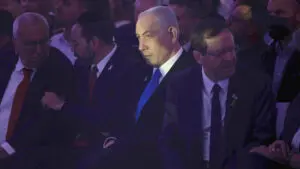
How Netanyahu prolonged the war on Gaza to stay in power
Gaza negotiations
On Thursday, American and Israeli media reported that mediators from Qatar, Egypt and the United States presented an updated proposal to both Israel and Hamas regarding a potential prisoner exchange and ceasefire deal in the Gaza Strip — where the Middle East earthquake began more than 21 months ago.
Since July 6, indirect negotiations between Hamas and Israel have been taking place in Qatar, in a renewed effort to reach a deal for a prisoner exchange and a ceasefire.
As part of its continued maneuvering to prolong the war of annihilation and starvation, Israel announced that it had presented updated redeployment maps, including a “wide withdrawal from the Morag corridor” in the city of Rafah in southern Gaza. However, these maps fall short of Hamas’ demands to return to the March 2 pre-offensive lines during the proposed truce, representing instead more stalling tactics.
According to the Israeli Broadcasting Authority, “the maps presented by Israel to the mediators show a wide military withdrawal from the Morag corridor”, noting that “the dynamic in the Doha talks is positive, but significant gaps remain between the parties.” However, the mention of withdrawal from Morag comes alongside Israel’s creation of a new corridor called “Magen Oz” (Shield of Courage) in Khan Younis, intended for establishing the so-called “humanitarian city” where hundreds of thousands of Palestinians will be herded — preparing for their eventual expulsion from the Strip.
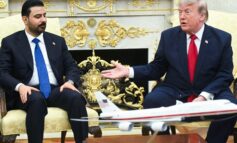
The talk of Israel’s new offer came shortly after a dinner meeting between Qatari Prime Minister Mohammed bin Abdulrahman Al Thani and U.S. President Trump at the White House, during which the Gaza ceasefire negotiations were discussed.
Following this new proposal, Israeli National Security Minister Itamar Ben-Gvir lashed out at Prime Minister Netanyahu.
“Netanyahu’s apparent approval to withdraw from the Morag corridor as part of surrender negotiations with Hamas is dangerous and constitutes another surrender,” he said.
“Netanyahu, stop negotiating with terrorists and give the necessary orders to achieve the war’s goals through full occupation of the Gaza Strip, encouraging migration, and settlement,” he added.
On the other hand, exerting counter-pressure, the Israeli army acknowledged that it was “paying a price” to implement its plans in Gaza. Army spokesman Efi Dvori stated the army is “prepared to show greater flexibility and redeploy to new boundaries in order to facilitate negotiations.”
Meanwhile, Palestinian resistance factions continue to inflict near-daily losses on Israeli forces, especially in Shujaiya, Beit Hanoun, Jabalia in the north and around Khan Younis in the south.
In recent days, the resistance targeted several Israeli military vehicles, killing and injuring soldiers and officers in operations that focused on troop carriers and engineering corps equipment.
On Thursday, Hamas’ military wing, the Al-Qassam Brigades, released a video message to Israeli soldiers in Gaza, urging them to surrender rather than be killed.
Al-Qassam’s message to “the Nazi occupation soldier in Gaza” said, “Our fierce fighters will undoubtedly reach you.” It concluded: “Captivity is better than death.”
Ongoing massacres
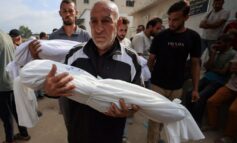
In parallel, the Israeli army continues committing massacres against displaced and starving civilians across the Strip, causing dozens of casualties every day.
Amid the stalling negotiations and ongoing war of annihilation and starvation, Hamas called for Arab, Islamic and international intervention to break the genocidal cycle.
“The occupation government is using hunger and the deprivation of basic life essentials in Gaza as one of its tools of ongoing genocide,” it said in a statement.
In this context, the Arab League’s General Secretariat issued a strongly worded statement condemning Israeli plans recently revealed to establish a so-called “humanitarian city” in southern Gaza. The League described the plan as an attempt to cram Palestinians into a small camp, stressing that it has nothing to do with humanity or civilization, but rather constitutes a new step toward ethnic cleansing and the reoccupation of Gaza.
The League said these plans reveal “moral and ethical decay” in Israeli leadership and warned that they may pave the way for new Israeli settlements in Gaza.
The Israeli plan, as disclosed by Israeli media, including the Broadcasting Authority, includes the relocation of about 600,000 Palestinians from the Al-Mawasi area to a camp between the Philadelphi and Morag corridors in southern Gaza, where they would undergo strict security screenings and later be prevented from leaving.
Yemen’s support for Gaza continues
On the only remaining front of active solidarity with Gaza, the leader of Yemen’s Ansarallah movement, Sayyed Abdul-Malik Al-Houthi, affirmed Yemen’s serious stance in targeting ships owned by companies violating the blockade, saying they would be struck “whenever they are detected by the armed forces in the theater of operations.”
In his weekly address, Al-Houthi said that Yemeni forces launched 11 operations this week using both hypersonic missiles and drones, targeting Israeli assets in Jaffa, the Negev, and Eilat (Umm Rashrash) in occupied Palestine.
He stated that the sinking of two ships belonging to companies violating Yemen’s maritime blockade on Israel led to the re-closure of Eilat port after Israel had attempted to reopen it.
He also addressed the Israeli aggression in Syria, saying that Israel seeks to impose itself in Syria’s internal affairs under the guise of protecting minorities like the Druze, exploiting “the flawed policies of armed groups in dealing with minorities.”
Al-Houthi warned Syrian minorities and sectarian communities to beware of Israeli exploitation, stating that “the enemy is greedy, not a well-meaning advisor.”
Leave a Reply