



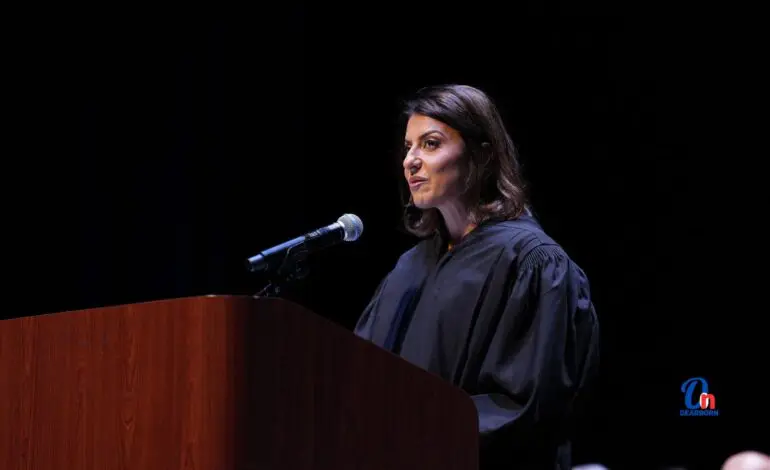

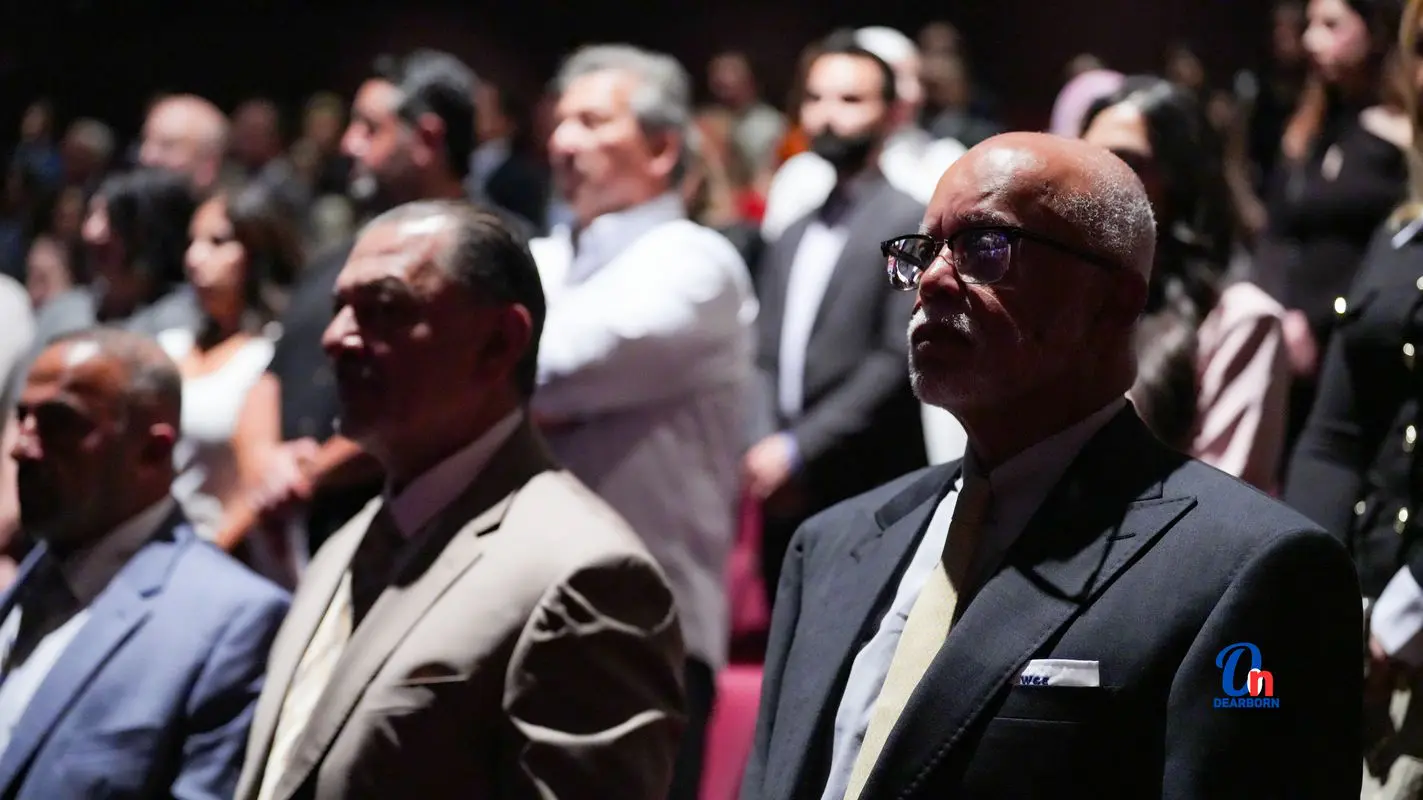
Judge Mariam Saad Bazzi was sworn in at the Ford Community & Performing Arts Center in Dearborn on Thursday, September 18, in the presence of top government, judicial and community figures, Bazzi entered the history of Michigan’s judiciary in late April as the first Arab American and Muslim to serve on the prestigious Michigan Court of Appeals.
The Court of Appeals, the second highest judicial authority in the state after the Michigan Supreme Court, is composed of 25 elected judges divided across four judicial districts: Detroit, Troy, Lansing and Grand Rapids.
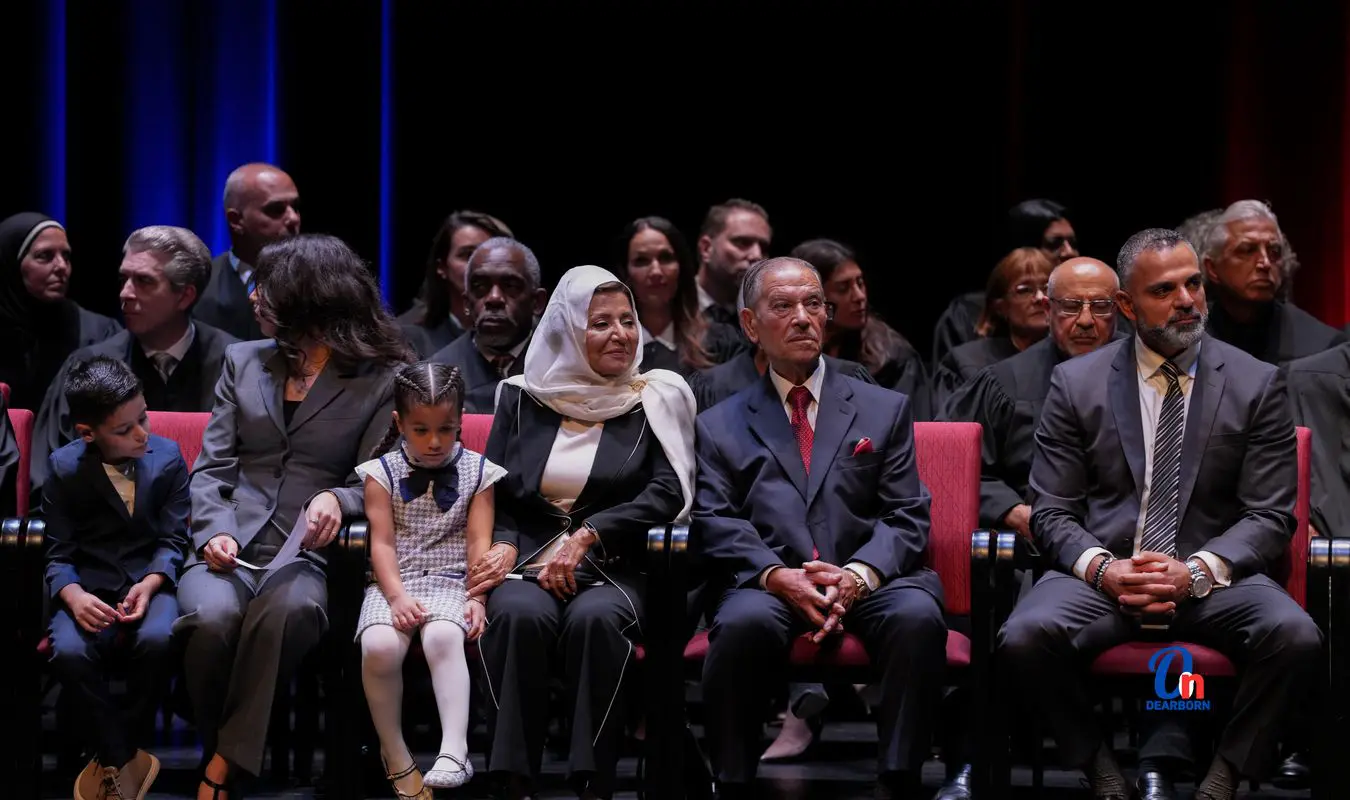
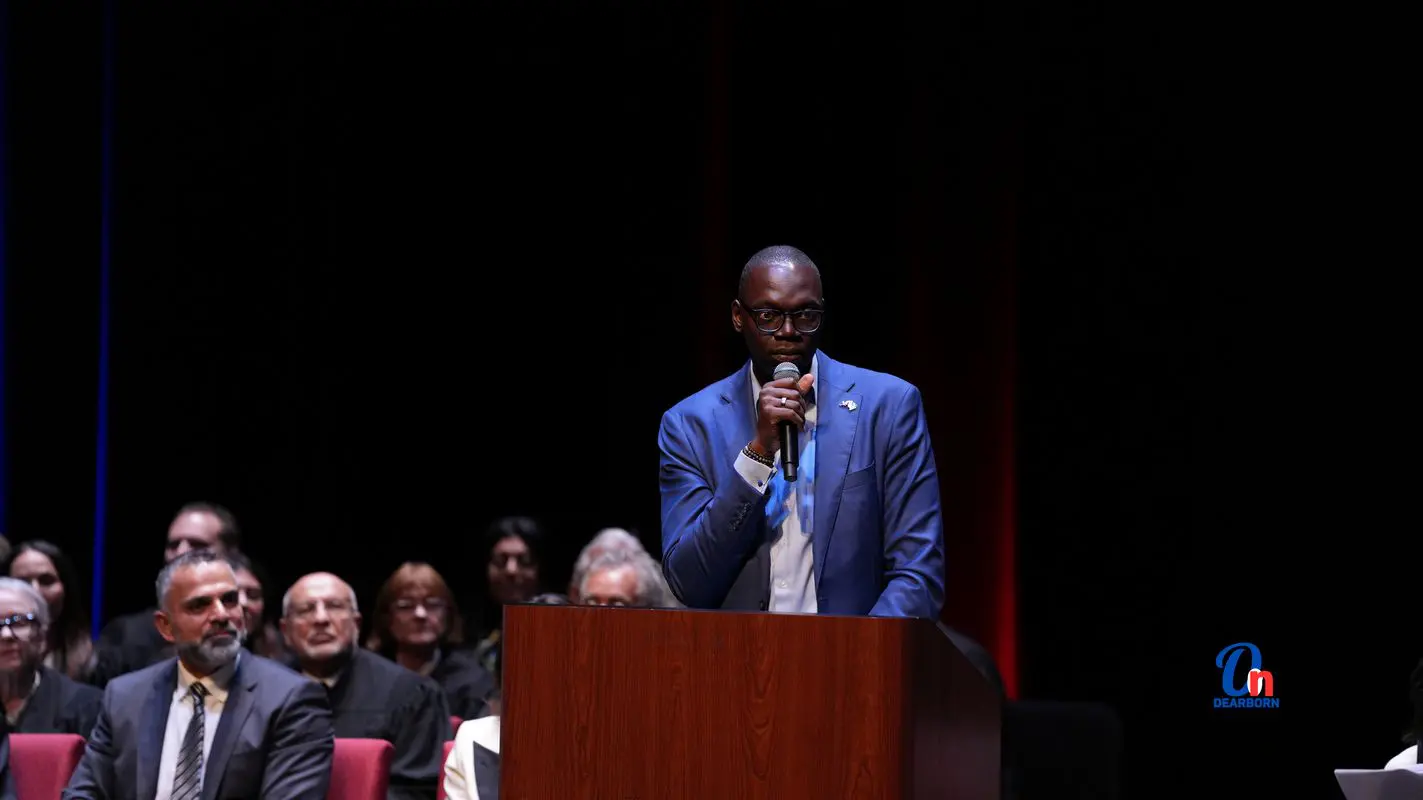
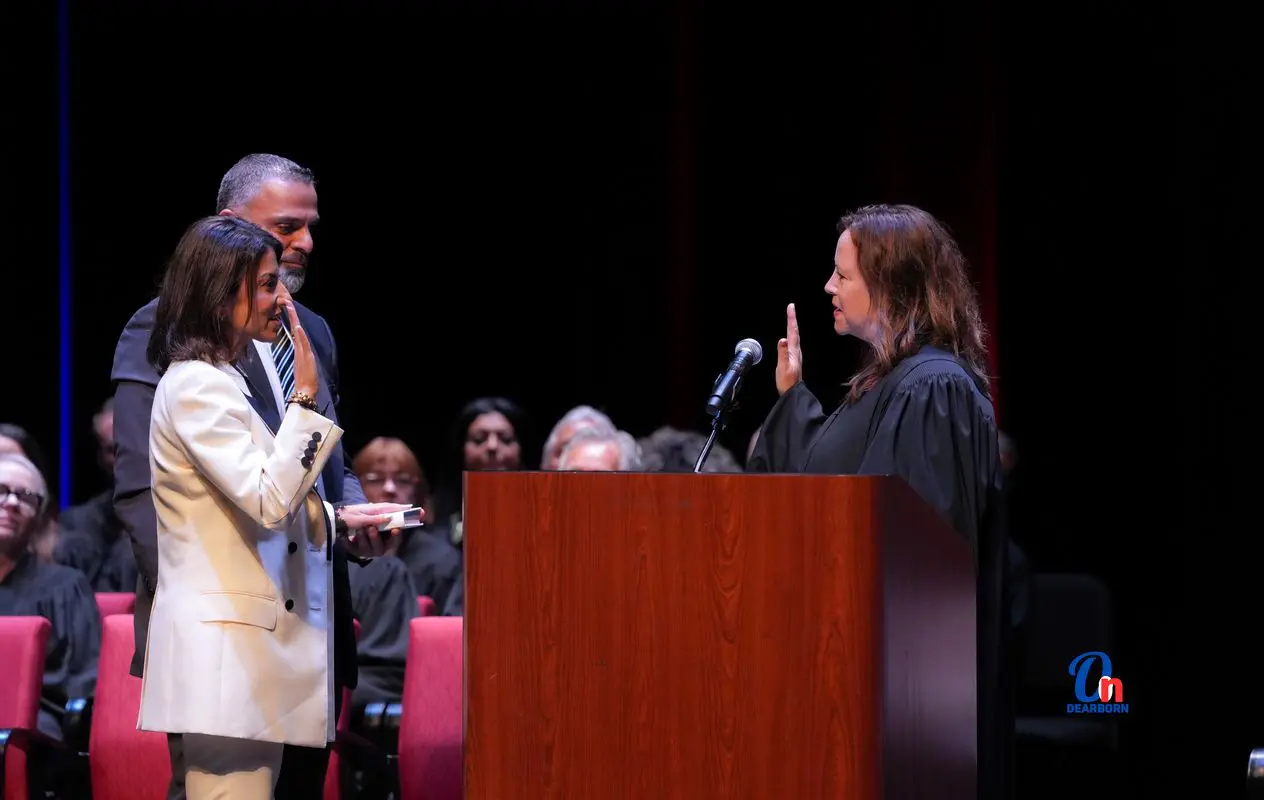
In a symbolic ceremony, the Lebanese American judge took the constitutional oath before Michigan Supreme Court Chief Justice Megan Kathleen Cavanagh, with her husband, Abdul Bazzi, holding a copy of the Holy Qur’an. Michigan Court of Appeals Chief Judge Michael Gadola, Lieutenant Governor Garlin Gilchrist, Wayne County Executive Warren Evans, along with dozens of judges from the Supreme Court, Court of Appeals, Wayne County Circuit Court and the courts of Dearborn and Dearborn Heights attended the event.
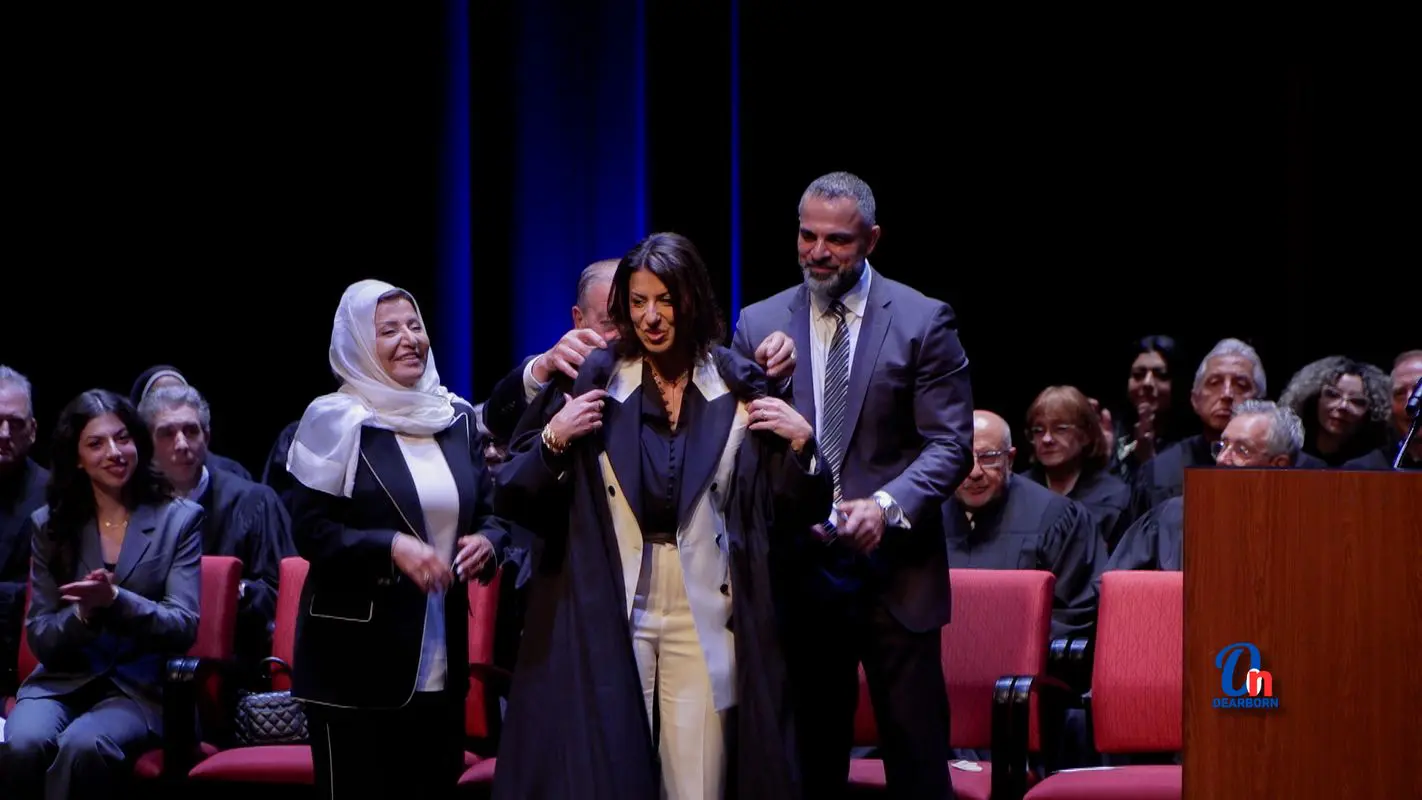
Her parents, businessman Aref Saad and his wife, Aida, helped her into the judicial robe in an emotional moment filled with pride, while hundreds of attendees in the packed Ford Theater applauded warmly, symbolizing both the strength of family ties and the community’s celebration of the historic achievement of a judge whose roots trace back to the city of Bint Jbeil in southern Lebanon.
Judge Bazzi began her duties on April 23 following her appointment by Governor Whitmer. She succeeds Judge Noah Hood, who had been elevated to the Michigan Supreme Court. Under the appointment, she will complete Hood’s term, which expires in early 2027. She will have to run for election in November 2026 to retain her seat for a full six-year term.
Ceremony highlights
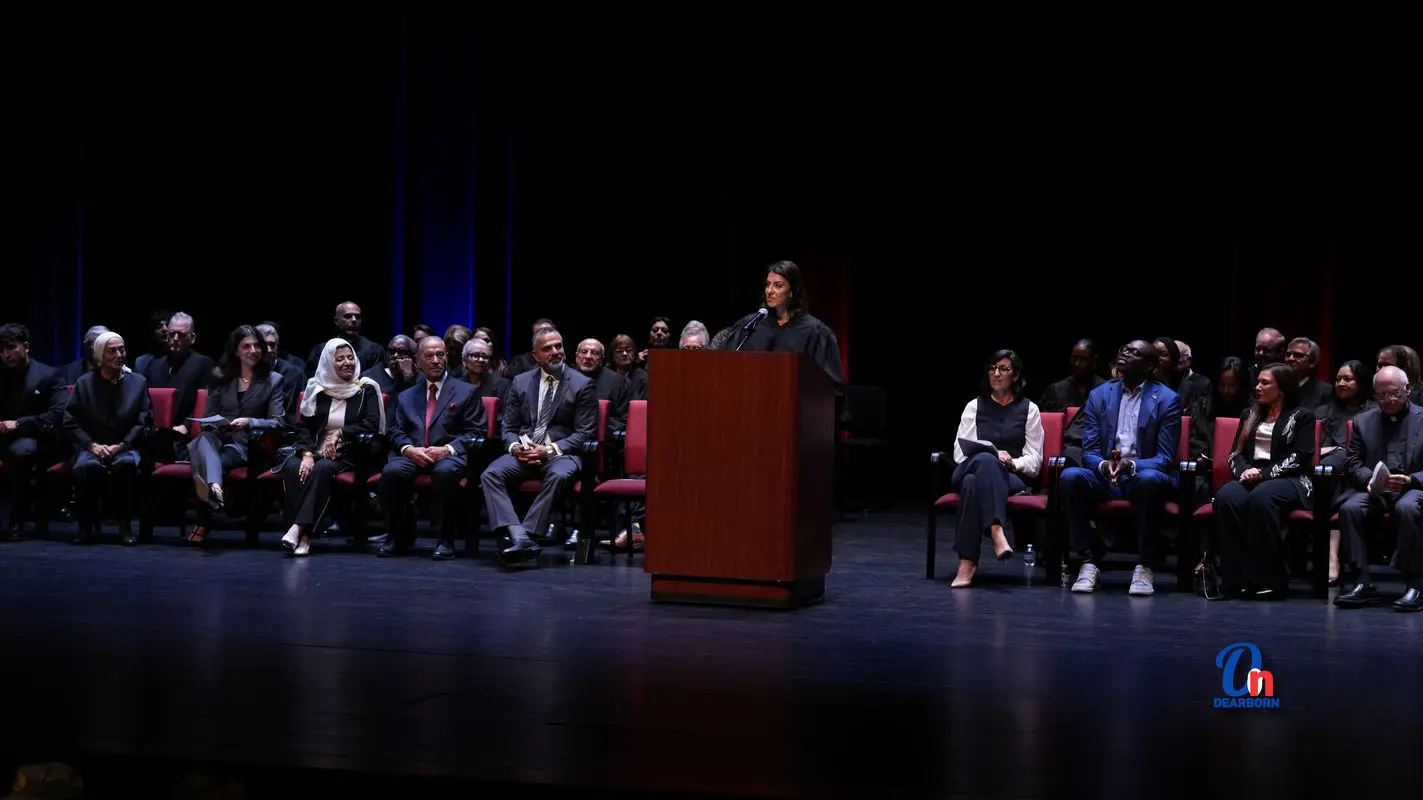
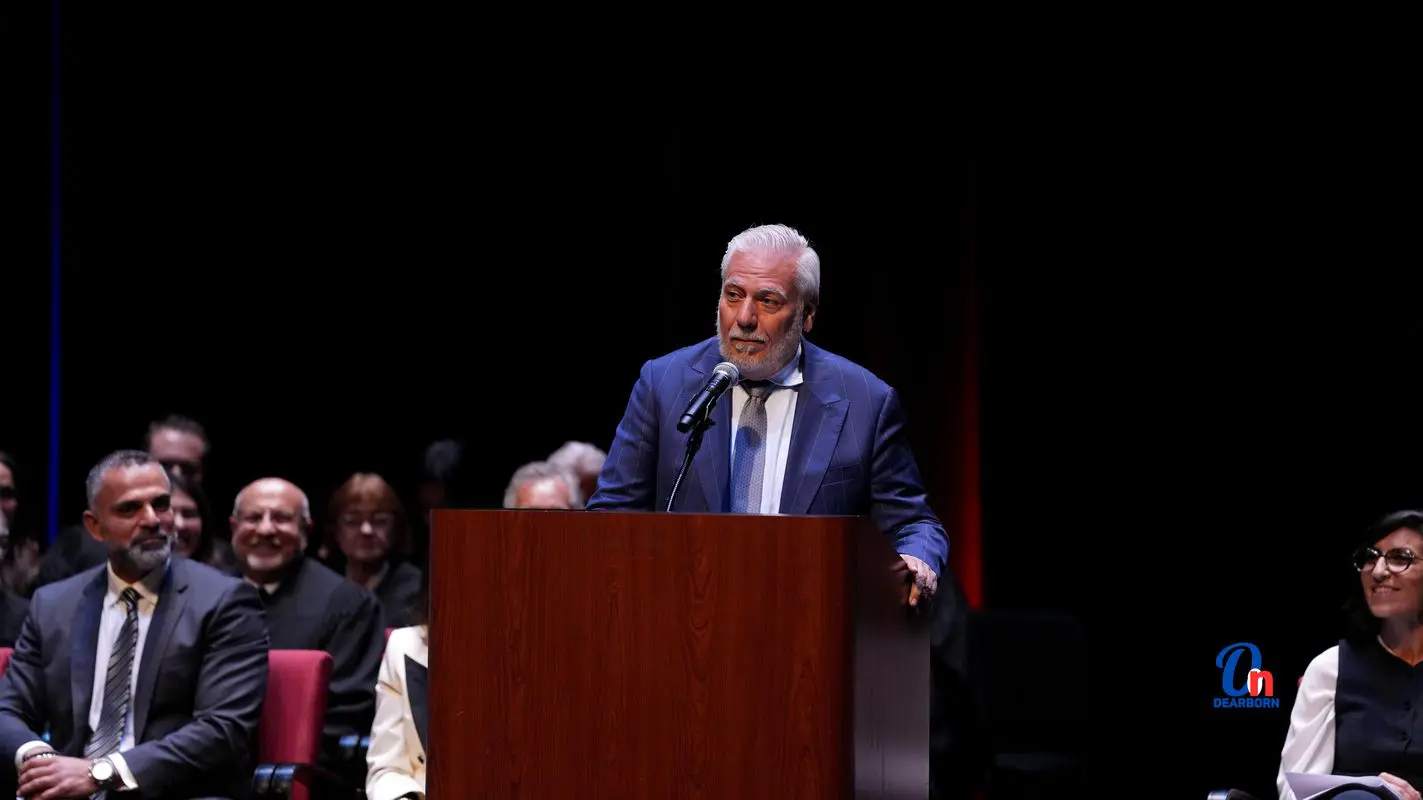
Michigan Court of Appeals Chief Judge Michael Gadola opened the event and introduced the judiciary, highlighting the major milestones of Bazzi’s highly successful legal career, praising her experience and integrity that earned the trust of the Democratic governor to serve justice in the state’s highest court after the Supreme Court. He emphasized the principle of the right person in the right place.
Gadola also noted the growing role of the Arab American community, which has produced many judges and lawyers in Wayne County and across Michigan. Jokingly, he told the audience — amid applause and laughter — that he was now able to pronounce Arabic names “the right way” as he introduced Arab American judges attending the event.
He described Bazzi as a “distinguished” personality and a “woman of action” who successfully handled thousands of cases during her service on the Wayne County Circuit Court following her 2017 appointment by Republican Governor Snyder. He noted that she has enjoyed the trust of governors from two different political parties, a testament to her wide respect within Michigan’s judicial and governmental circles.
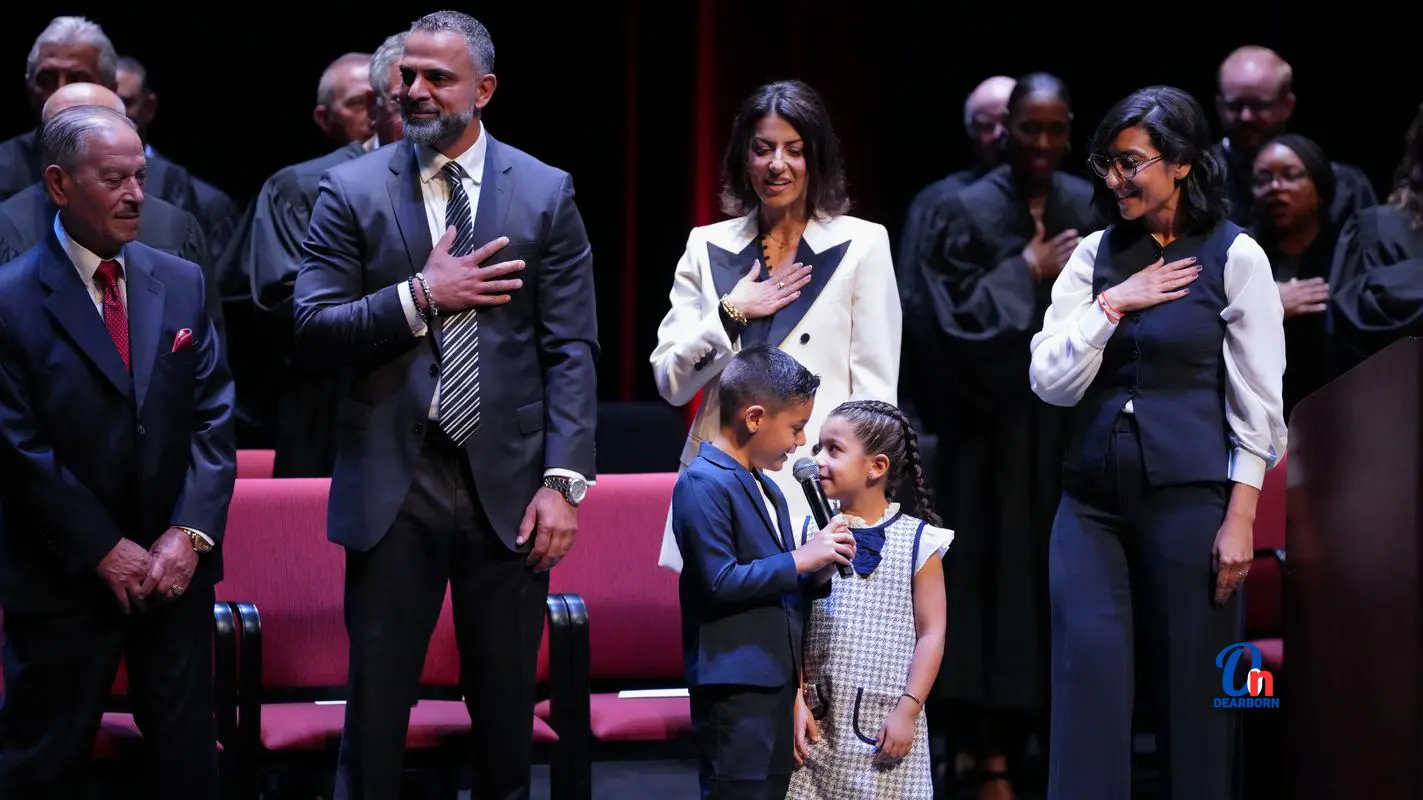
The Dearborn Police Honor Guard solemnly marched onto the stage carrying the American and Michigan state flags, presenting them in a short military display. Children Ali and Isabella Saad performed the U.S. pledge of allegiance.
Former Michigan Solicitor General Fadwa Hammoud expressed pride in Bazzi’s achievement as the first Arab American and Muslim appointed to the Court of Appeals, describing her as “humble and composed.”
“Being the first does not mean standing apart,” she said. “It means bringing your entire community with you. That is why Mariam chose to celebrate this achievement with all of you here today.”
She noted the participation of many community leaders and guests, including some who traveled from Lebanon for the ceremony.
Hammoud, herself the first Arab American and Muslim to argue before the U.S. Supreme Court on behalf of Michigan, said that Bazzi’s appointment is not only a milestone for the Bazzi and Saad families, but also “a defining moment in the history of the Arab American community across Michigan.
“This honor is not yours alone, but belongs to all of us gathered here to celebrate our Arab American story,” she told Bazzi.
The Arab American News Publisher Osama Siblani thanked Whitmer for appointing Bazzi to the Court of Appeals and Snyder for appointing her to the Wayne County Circuit Court in 2017.
“It is rare for a jurist to gain the trust of governors from the two major political parties in the nation,” he said. “But if that means anything, it means that person is highly competent, respected and deeply committed to justice. Judge Mariam Saad Bazzi is that person.”
Siblani extended his gratitude on behalf of Arab Americans and all Michigan residents to Whitmer, Snyder, Wayne County Prosecutor Kym Worthy and County Executive Evans, “who has worked with sincerity and dedication to serve and empower all communities in the state, including the Arab American community.
“Our governor still has a year and a half left in office, and I hope she appoints more of our Arab American talents to the judiciary,” he added.
“Your success is a source of pride for us,” he told Bazzi. “This celebration is not only about your personal achievements, but also about the hope and inspiration you bring to everyone who believes in justice and the rule of law.
“I have known your family since you were a little girl, and I have watched you grow into the woman you are today,” he added. “This achievement is only the beginning. The best is yet to come. Congratulations, my sister and my leader: Mariam Saad Bazzi.”
Lieutenant Governor Garlin Gilchrist said he was honored to attend the investiture, emphasizing that Bazzi earned the appointment “on merit, as a shining example of high competence in this community and our state at large.” He pointed to the diversity of the attendees, representing official and grassroots sectors, as evidence of the governor’s wise decision.
“On behalf of myself, the governor and ten million residents of Michigan,” Gilchrist said, “I am here to express our gratitude for your values and contributions to the advancement of our state. We trust you, and we will continue to trust you.”
He added that Bazzi is not only trusted but also respected for her “distinguished professional character and career.”

Photo by Dearborn.org
Oath of office
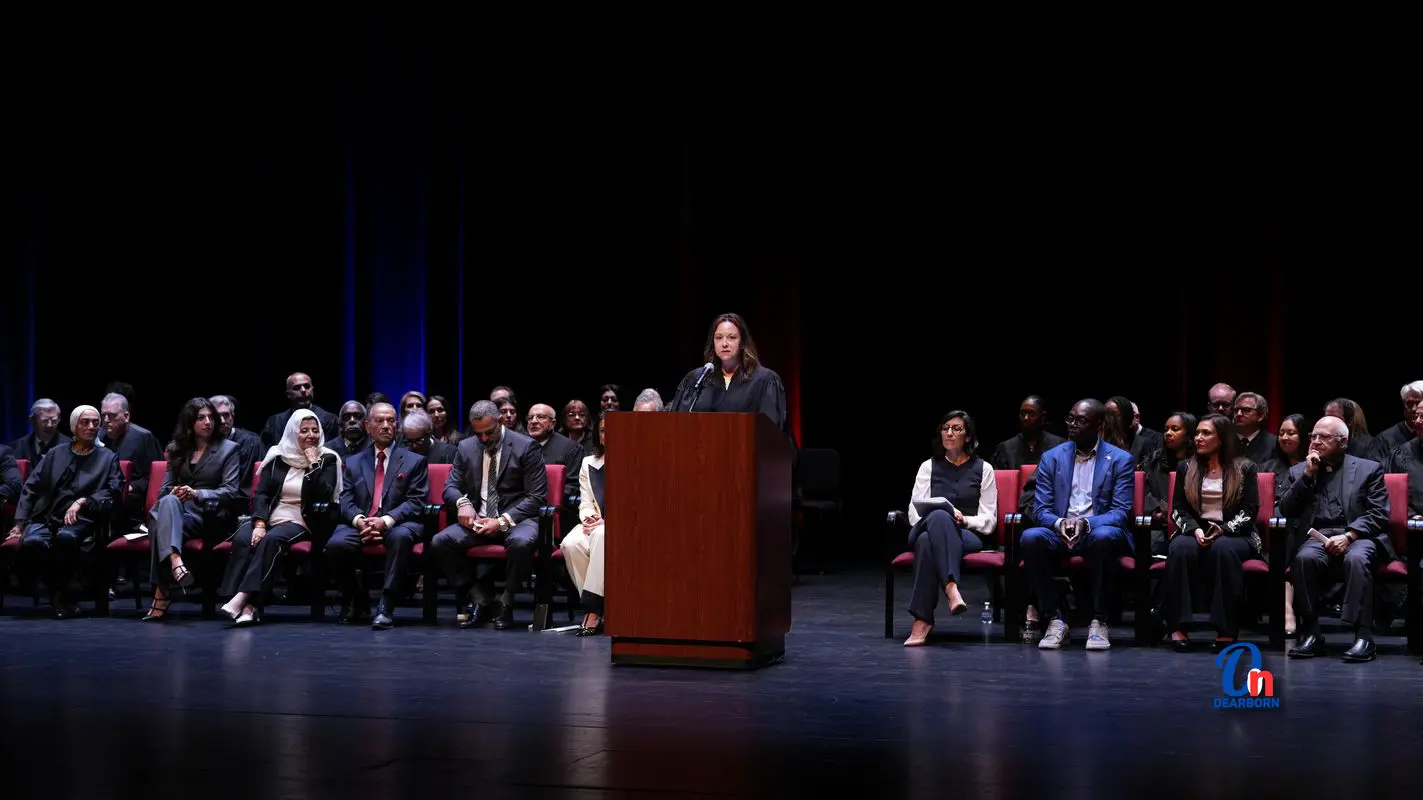
Before administering the oath, Chief Justice Megan Cavanagh gave a short address, noting that Bazzi had made history as the first Arab American and Muslim on the Court of Appeals.
“Judge Bazzi will continue to be the first: the first in her commitment to serve our community, the first in honor, integrity and fairness, and the first to ensure that everyone before the court is treated with respect,” Cavanagh said.
She stressed that Bazzi is not afraid of being “the first” in the challenges of judicial responsibility, because she is “humble, open-minded, and unafraid to change her mind.” Cavanagh said she was honored to be “the first to congratulate her on this new role” and thanked Governor Whitmer, whose decision to appoint Bazzi she described as “very, very, very easy.”
Cavanagh also noted that service on appellate courts is the most difficult in the legal system — not only due to the complexity of cases, but because of their wide impact on citizens.
“Judge Bazzi is more than qualified to serve on this court,” she affirmed.
At the close of the ceremony, Judge Bazzi thanked all the officials, organizations and community figures who contributed, directly or indirectly, to her professional and community journey leading to this appointment. She expressed special gratitude to Governor Whitmer, County Executive Evans, Prosecutor Worthy (under whom she served for nearly a decade), Chief Justice Cavanagh, Chief Judge Gadola and her judicial colleagues across the state.
She also thanked Dearborn Mayor Abdullah Hammoud for hosting the ceremony at the Ford Center.
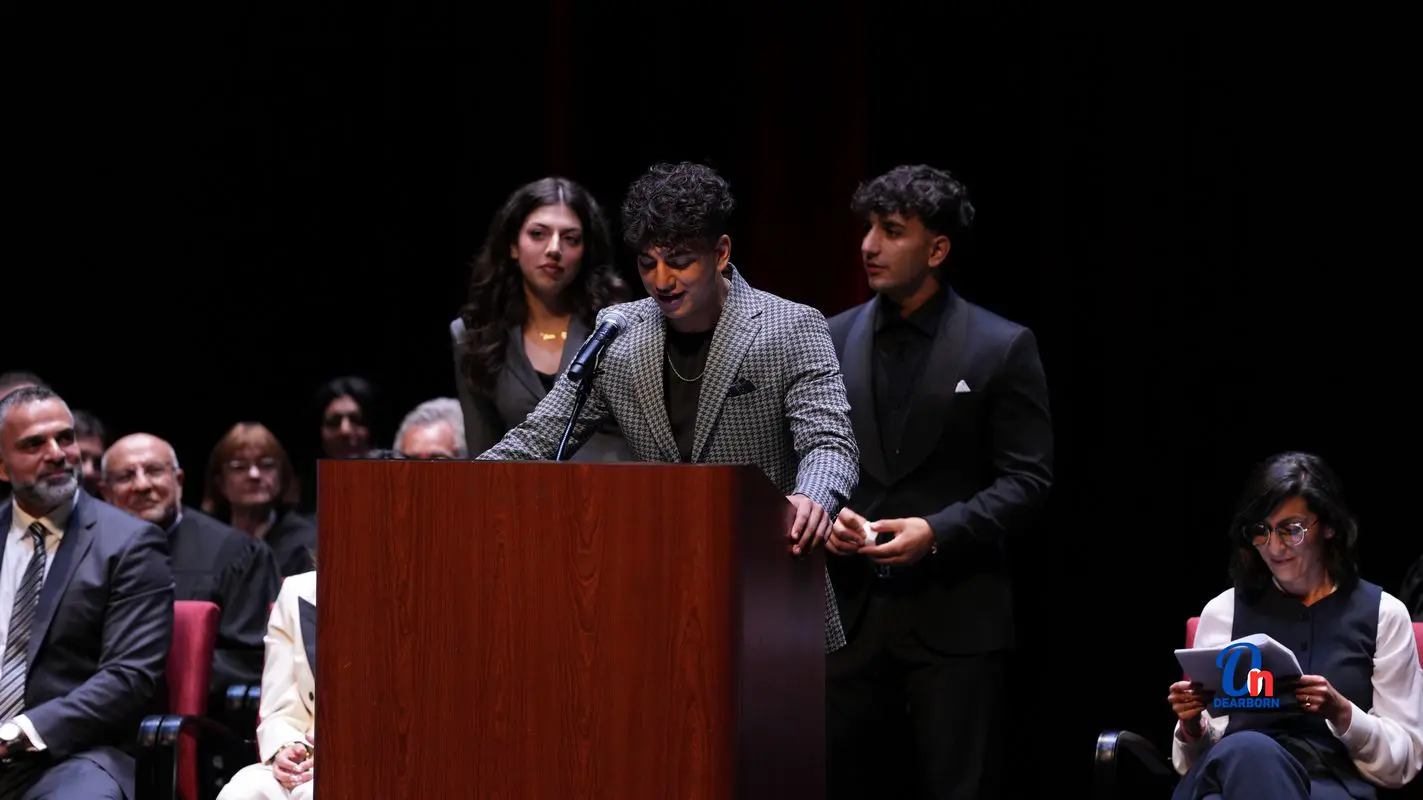
Her family — including her husband, Abdul; their three children, Noor, Zain and Yousef; her parents, Aida and Aref Saad; her siblings and their families, as well as her close friends — were all acknowledged for their support throughout her career.
Judge Bazzi said the celebration was not about her alone, but about all those who were “part of the decision-making process that Governor Whitmer undertook”, reflecting the governor’s belief that the Arab American community is an integral part of American society and must be represented across government.
“I am honored to accept this appointment from Governor Whitmer,” she said. “I thank her and her team for their time and effort in making it possible. It is a great honor to continue serving the people of this great state, and I pledge to pursue justice with fairness and integrity.”
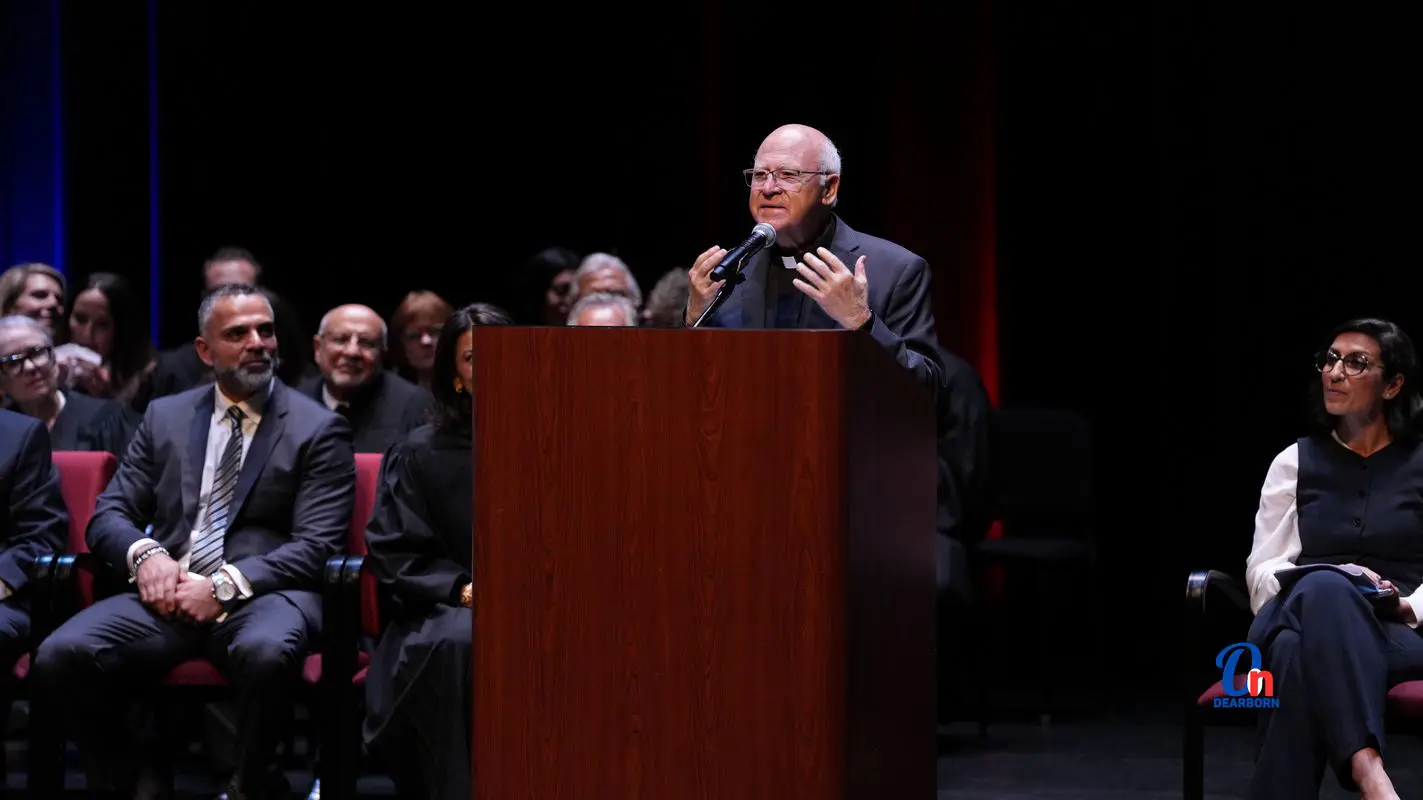
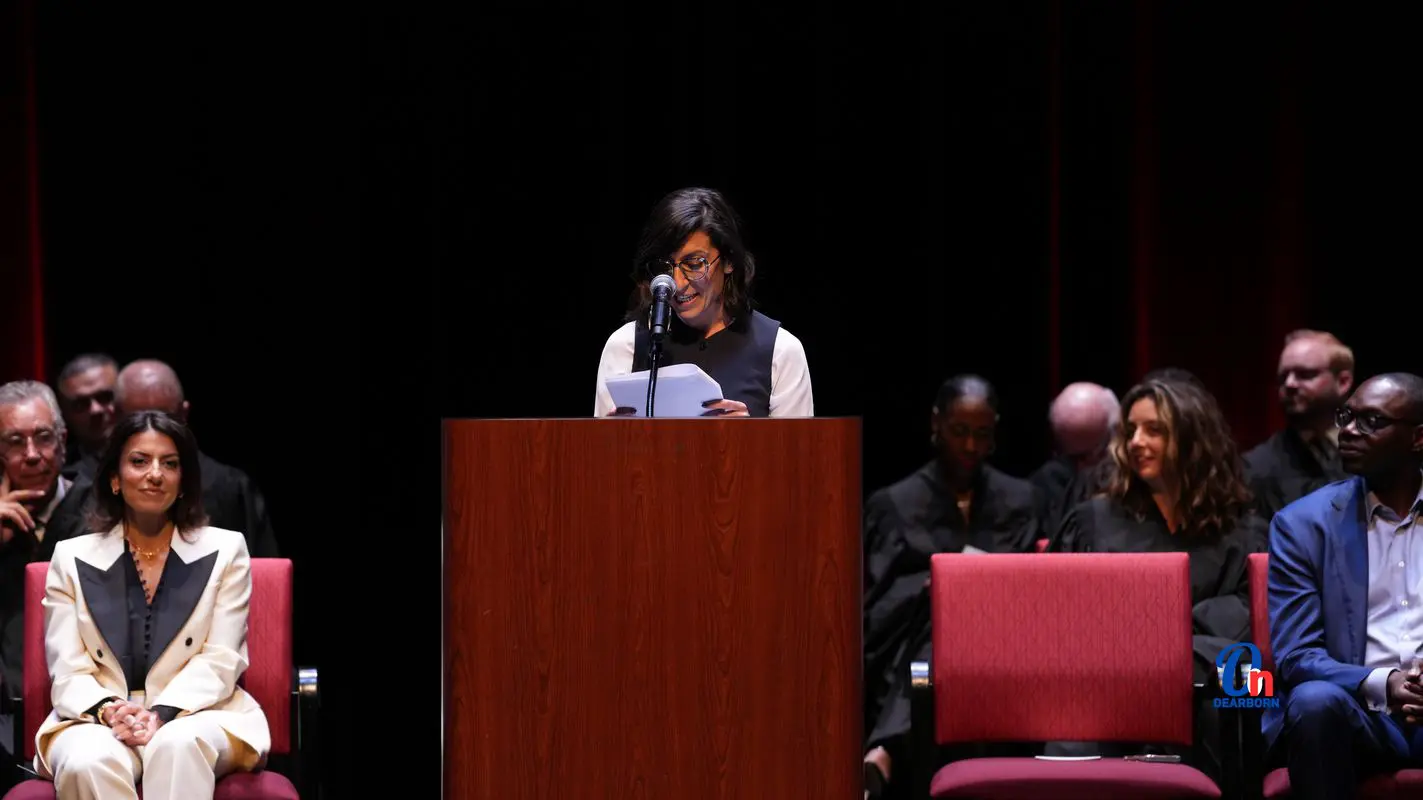
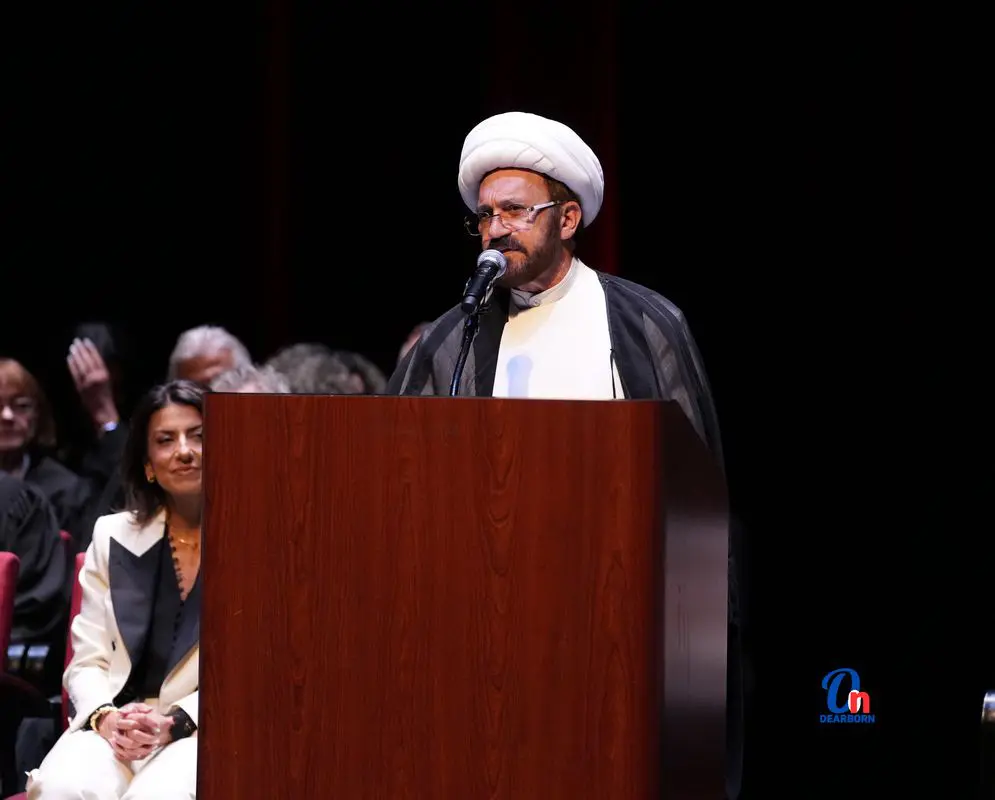
The ceremony, emceed by her sister Fayrouz Saad Bazzi, also featured remarks from Judge Bazzi’s children, Nour, Zayn and Youssef, as well as prayers and invocations from Imam Mohammad Ali Elahi of the Islamic House of Wisdom in Dearborn Heights and Father George Shalhoub of St. Mary’s Church in Livonia, who prayed for God’s guidance in her judicial decisions.
Community leadership and background
In addition to her current role on the Michigan Court of Appeals, Judge Bazzi is a prominent activist in legal, educational and social spheres. She has been a member of the Detroit Bar Association, the Michigan Judges Association, the National Association of Muslim Lawyers, the Michigan Middle Eastern Affairs Advisory Council, LAHC – Leaders Advancing & Helping Communities (formerly the Lebanese American Heritage Club) and the Arab American Political Action Committee (AAPAC).
She also chaired the Dearborn Board of Education, which oversees Dearborn Public Schools and Henry Ford College.
Judge Bazzi holds a Juris Doctor degree from Wayne State University Law School and a bachelor’s degree in political science from the University of Michigan–Dearborn.


Leave a Reply