



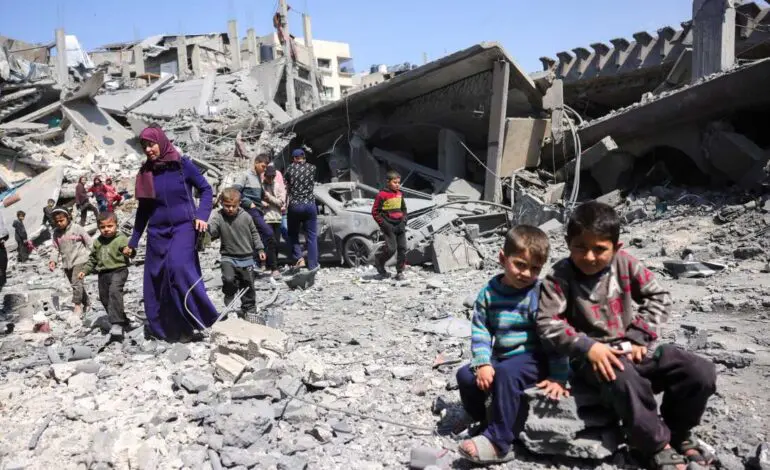

The ink had barely dried on the ceasefire agreement when the bombs began to fall again. The air that was supposed to carry the sighs of relief now carries the roar of warplanes. The brief illusion of peace between Israel and Hamas has vanished into smoke and rubble. Both sides are trading accusations like gunfire. Israel claims that Hamas attacked its troops after the truce was signed, while Hamas insists it had nothing to do with any clash. But to anyone watching closely, it feels like we have seen this play before. Israel has returned to its old strategy, manufacturing a pretext, spinning the narrative and setting the stage for another drawn out war that will pull the United States deeper into the chaos of the region.
Israel’s claim of self defense
According to the Israeli government, Hamas broke the truce first. Israeli officials claim that their troops came under attack near Rafah as they were allegedly dismantling tunnel shafts used by Hamas. Within hours, the Israeli military launched airstrikes on Gaza, striking what they described as militant positions. Eleven Palestinians were killed, most of them civilians. Israel’s message to the world was that it was merely defending itself, that it had no choice but to respond. This is the refrain that has echoed through every war Israel has waged in Gaza, a ritual justification that turns victims into aggressors and aggressors into victims.
Hamas’ denial
Hamas responded by rejecting the accusation outright. The organization declared that it had not fired a single shot since the ceasefire was signed. Its leaders claimed that Israel was using a fabricated incident to justify renewed attacks. “We had nothing to do with any events occurring in those areas,” a Hamas spokesperson said. For Gaza’s two million people, those words were less about politics and more about survival. Whether or not Hamas fired a weapon, the result is the same. Bombs fall. Buildings collapse. Children die.
The pattern repeats
If this seems familiar, it is because it is. Since the January 2025 ceasefire, Israel has been accused by Gazan authorities and international observers of violating the agreement dozens of times. Humanitarian aid convoys were blocked and border crossings remained closed despite promises to open them. When Israel accused Hamas of delaying the release of hostages in March, it used that as justification to launch massive airstrikes that killed more than 400 people. The supposed truce has always been a pause button, not a peace plan.
Even the mediators know the truth. The United States and Qatar helped broker the agreement, yet they warned from the beginning that Israel would likely resume fighting the moment it found a convenient excuse. The excuse has arrived. Washington will express concern, the United Nations will urge restraint and the bombs will continue to fall until the next ceasefire is signed and broken again.
Netanyahu’s shadow
Behind all of this looms Benjamin Netanyahu, a man fighting not only Hamas but also his own political survival. The prime minister and his wife have been accused by Israeli prosecutors of accepting expensive gifts in exchange for political favors. In a nation that still claims to uphold the rule of law, conviction seems inevitable if the trial remains free and fair. But Netanyahu has found his escape hatch. Nothing rallies a divided public like war. As corruption scandals tighten around his neck, he has chosen the oldest political distraction in the book: conflict.
And as always, America follows. President Trump, who once promised to end America’s involvement in conflict abroad, has become little more than an echo of Netanyahu’s voice. I voted for him because I believed he would end the slaughter of children in Palestine. Instead, he has become the willing partner of the very man orchestrating their destruction. The United States has been reduced to a supplier of weapons and excuses.
The real objective
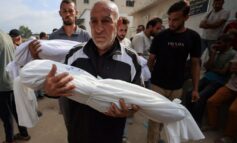
The goal of this war is no mystery. It is not security. It is not peace. It is the gradual erasure of the Palestinian people, Muslim and Christian alike, from the land of Gaza. Nearly 70,000 have already been killed. Entire families have been wiped from the registry of existence. Mothers dig through rubble searching for their children’s limbs. Fathers carry the bodies of infants wrapped in plastic bags. Yet Israel continues its campaign with the same calm precision, unmoved by global outrage or moral consequence.
The international community has condemned, debated and scolded, but has done nothing meaningful to stop the bloodshed. The Western world hides behind the rhetoric of Israel’s right to defend itself while ignoring the reality that the occupied have a right to exist. The propaganda machine hums at full speed, manufacturing narratives that paint the oppressor as the victim.
What the ceasefire really means
The ceasefire agreement promised the release of hostages and prisoners, the reopening of borders and the delivery of humanitarian aid. On paper, it sounded like a path toward stability. In practice, it was a trap. Israel has used the blockade and control over crossings as leverage to dictate the terms of life and death in Gaza. Aid trucks wait for days at closed gates while people inside the Strip starve. Every loaf of bread, every drop of water, becomes a bargaining chip in a cruel game of control.
Hamas, meanwhile, is accused of manipulating the hostage releases to maintain political relevance. The truth is that both sides exploit the truce for their own ends. Yet one side holds the power of an organized state, nuclear weapons and the backing of the United States. The other holds little more than desperation and the will to survive. To pretend that the conflict is balanced is to lie to oneself.
The media mirage
In the coming days, headlines will repeat the same tired line: Hamas breaks ceasefire, Israel responds. This is the story that Western audiences are fed with surgical precision. It presents Israel as a reluctant warrior and Hamas as the embodiment of evil. The media plays its role like a conductor leading an orchestra of deceit. The story that Israel violated the ceasefire or that it sought a reason to resume the bombing will be buried beneath talking points about self-defense.
Meanwhile, Netanyahu uses this renewed war as both a political shield and a national rallying cry. He knows that war silences dissent. It transforms corruption into patriotism and scandal into strength. And Washington, too, finds comfort in the chaos. Every missile launched is another opportunity for defense contractors, another round of funding, another reason to maintain the illusion of American influence in the region.
The price of lies
While politicians posture and journalists spin their narratives, ordinary people die. Gaza’s hospitals are collapsing. Its schools are reduced to rubble. Its children grow up knowing only the sound of sirens and explosions. Eleven people killed in a single Israeli strike may sound like a statistic, but behind that number are mothers, fathers, sons and daughters who will never see another sunrise.
In Israel, families of hostages still live with unbearable uncertainty. They are caught in the middle of a conflict that no longer serves the living but feeds on their suffering. Both peoples are trapped inside a political machine that grinds hope into dust.
The next chapter
The next phase of this story is predictable. Israel will escalate its ground operations, claiming it must eliminate the threat. The United States will reaffirm its unwavering support. Hamas will declare that it has no choice but to resist. And the death toll will rise once more. Netanyahu’s domestic problems will fade from public consciousness, drowned out by the thunder of war. Gaza will sink further into humanitarian catastrophe. The dream of peace will drift farther away, replaced by an even darker reality.
A call for clarity
We cannot afford to be distracted. Every time Israel cries foul, we must ask who benefits from the chaos. Every time Hamas denies involvement, we must look at who gains from the illusion of innocence. And every time Washington takes a side, we must ask what strategic interest lies beneath its moral posturing.
This is not a war between equals. It is a war between an occupying power and an occupied people. The power imbalance is so vast that the word conflict feels dishonest. Israel’s control over Gaza’s borders, its airspace, its access to food, water and medicine, ensures that any agreement signed on paper exists only at its discretion. The ceasefire, like so many before it, was never peace. It was permission.
The truth beneath the smoke
The death toll will keep rising, and the propaganda will grow thicker. But beneath it all lies a truth that cannot be buried. This war is not about security. It is about domination. It is about ensuring that Palestinians remain stateless, voiceless and forgotten. The goal is to carve out a Greater Israel, one neighborhood at a time, one ceasefire at a time, one massacre at a time.
When history is written, the world will not remember the speeches or the press releases. It will remember the images. The child pulled from rubble. The mother collapsing beside her son’s body. The man staring at the empty space where his home once stood. That is the reality behind the politics, the human cost behind the lies.
Final reflection
Israel and Hamas accuse each other, but only one side possesses overwhelming power. Only one side controls the land, the skies and the narrative. The other side is struggling to survive under occupation. When Israel claims a violation, the world listens. When Gaza cries for help, the world debates.
This is not a story of two equal enemies. It is the story of an occupier and the occupied, of a government that hides its corruption behind the smoke of war, and of a people who refuse to disappear. The ceasefire has been broken, but peace was never truly part of the plan.
Until the world finds the courage to hold Israel accountable, until the United States breaks free from its servitude to Netanyahu’s government and until justice replaces politics as the measure of human worth, there will be no peace. Only pauses between tragedies.
– Amjad Khan is a contributing writer for The Arab American News. He is an educator, writer and academic researcher with a deep commitment to addressing the challenges facing the Muslim world. Through his work, he seeks to inspire meaningful dialogue and help chart a path toward unity, justice and peace.


Leave a Reply