


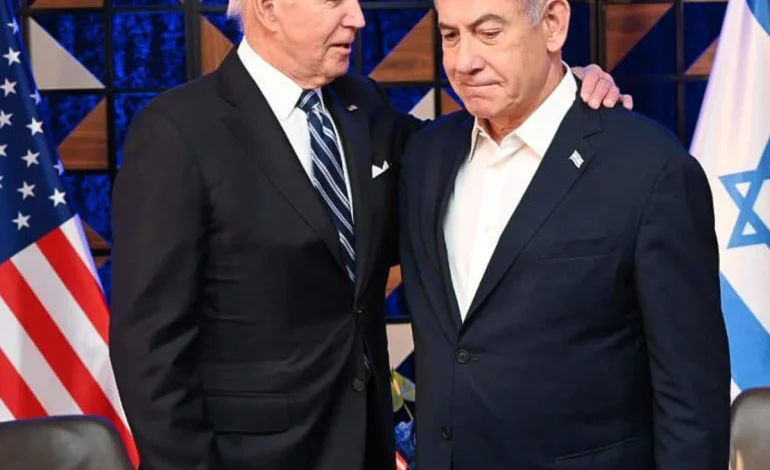

For more than 40 years, the bond between the United States and Israel has grown into one of the most enduring and politically insulated relationships in modern international affairs. What began as a partnership rooted in the language of democracy and shared values has transformed into a one-way alliance, with America serving as the financial, diplomatic and military lifeline of Israel. The result is a relationship where questioning the costs or consequences is treated almost as taboo.
Behind this alignment stands a vast and sophisticated network of lobbying groups, think tanks, donors and media allies. This intricate web functions as a powerful influence machine that has successfully positioned Israel’s interests as identical to America’s. The impact of that perception has been profound, shaping wars, defining enemies and consuming vast amounts of money and human life.
The billions behind the bond
Since World War II, Israel has received more financial aid from the United States than any other nation. The Congressional Research Service estimates that the total amount of American assistance exceeds $150 billion, with billions more promised through ongoing agreements. The most recent 10-year memorandum of understanding, signed during the Obama administration, guaranteed $38 billion in military aid alone.
Supporters often defend these transfers as vital to maintaining Israel’s “qualitative military edge.” Critics, however, describe the aid as a form of subsidy for Israel’s defense industry, underwritten by the American taxpayer. Beyond financial assistance, the United States routinely provides diplomatic protection, shielding Israel from meaningful international accountability, particularly in the United Nations.
The larger financial picture becomes even more concerning when connected to the broader consequences of American military engagement in the Middle East. The post-9/11 wars in Afghanistan, Iraq, and beyond have cost the United States several trillion dollars. Many analysts point out that these conflicts were heavily influenced by the worldview promoted within the same ecosystem of pro-Israel and neoconservative advocacy. Those wars have consumed American lives, devastated entire societies and placed generations of Americans under a financial burden that continues to grow.
The machinery of influence
Lobbying power:
In Washington, no foreign policy network rivals the organization, persistence and influence of pro-Israel advocacy. Groups such as the American Israel Public Affairs Committee (AIPAC) and the American Jewish Committee have spent decades cultivating relationships across both major parties. Their ability to coordinate donors, craft legislation and ensure bipartisan loyalty has made criticism of Israeli policy politically dangerous.
When professors John Mearsheimer and Stephen Walt published their groundbreaking analysis of the “Israel Lobby”, they sparked a national debate that has not fully subsided. Their central claim was straightforward: this lobby has been instrumental in steering U.S. Middle East policy away from pure national interest and toward an almost automatic defense of Israeli priorities. Whether one agrees or disagrees with their conclusions, few can deny the precision and persistence with which this network operates.
Think tanks and philanthropy:
A dense web of think tanks and research institutions forms the intellectual scaffolding of pro-Israel advocacy. Through philanthropic foundations and major private donors, these institutions receive steady streams of funding to generate reports, studies and talking points that reinforce Israel’s geopolitical narrative. Their publications often present the Middle East through a narrow prism of Israeli security concerns, portraying critics as naïve, dangerous or even anti-Semitic.
Many of the same donors also support organizations that propagate fear of Islam and Muslim-majority societies. The so-called “Islamophobia industry”, well-documented by scholars and watchdog groups, overlaps significantly with pro-Israel funding sources. By casting Muslims as perpetual security threats, this narrative justifies endless military spending and strengthens the argument for unwavering Western alignment with Israel.
Media narratives and public perception:
Influence is not limited to political corridors. It extends deep into the realm of public opinion through the control of narrative. Media coverage of the Israeli-Palestinian conflict consistently reveals how language and framing can shape sympathy. Israeli airstrikes are portrayed as acts of self-defense, while Palestinian resistance is labeled terrorism. Civilian deaths in Gaza are often presented as tragic but necessary, a linguistic sleight of hand that normalizes asymmetrical warfare.
The effect is subtle but powerful. Even commentators who attempt to criticize Israeli actions frequently preface their remarks with disclaimers affirming Israel’s “right to defend itself.” This repetition molds public consciousness until unconditional support feels like common sense. Over time, this has created a media environment where the humanitarian crisis of occupation and apartheid is treated as a side issue rather than the heart of the matter.
The human and moral cost
The human cost of this influence machine cannot be overstated. The wars that followed the September 11 attacks, encouraged by narratives of “spreading democracy” and “eliminating threats”, have left deep scars on both the United States and the Middle East. American soldiers have been sent to fight and die in conflicts that did little to improve national security. Meanwhile, millions of civilians in Iraq, Afghanistan and Palestine have endured loss, displacement and poverty.
The moral cost is just as steep. Within the United States, open criticism of Israel’s policies has become one of the last taboos in mainstream political discourse. Public figures who question the alliance risk being ostracized or accused of prejudice. This chilling effect has eroded democratic dialogue, leaving citizens less informed and less empowered to question the actions carried out in their name.
Hidden influence and the myth of neutrality
Critics often use the term “crypto-Zionism” to describe the more covert dimensions of this influence. It does not refer to a secret conspiracy, but rather to a subtle shaping of institutions that present themselves as objective. University programs, fellowship opportunities and research initiatives funded by ideologically aligned donors often define the boundaries of acceptable debate before the conversation even begins.
In media and academia alike, many voices that claim neutrality are quietly sustained by grants or partnerships linked to pro-Israel foundations. The result is an ecosystem that reproduces its assumptions automatically. The idea that Israel is the only democracy in the Middle East becomes unchallenged truth. The assumption that Palestinian statehood is unrealistic becomes conventional wisdom. Influence is no longer an active effort; it becomes a structural condition.
Why Americans should pay attention
The United States has every right to form alliances, but no alliance should exist beyond the reach of democratic scrutiny. When a single foreign policy relationship becomes so dominant that it resists criticism, the principles of transparency and accountability are at risk. Congress passes billion-dollar aid packages with little debate. Presidents of both major parties offer identical promises of unconditional support. The public, conditioned by years of selective storytelling, rarely questions the wisdom of this arrangement.
Being wary of this one-directional relationship is not hostility toward Israel or the Jewish people. It is a call for balance, fairness and truth. Americans have a duty to ask whether their resources and reputation are being used in ways that serve the nation’s genuine interests. Loyalty should not be automatic, and friendship should not mean silence.
Restoring balance through democracy
If Americans wish to restore integrity to their foreign policy, several reforms are necessary.
- Transparency in funding: All think tanks, media outlets and universities should be required to disclose major donations that have foreign or political ties.
- Lobbying reform: Strengthen existing laws that require the registration of foreign agents and make the sources of policy influence visible to the public.
- Media accountability: Encourage editorial boards to adopt strict disclosure policies and present multiple perspectives on Middle Eastern affairs.
- Civic education: Expand programs that teach critical media literacy, helping citizens distinguish between advocacy and analysis.
- Public oversight: Demand that elected officials justify each foreign aid commitment in terms of the national interest rather than inherited political loyalties.
A call for clarity and courage
Over the past four decades, pro-Israel advocacy has created one of the most effective influence systems in modern politics. It has ensured that American support remains unconditional, even when such loyalty undermines U.S. credibility abroad and drains its treasury at home. The success of this system has come at a steep price: trillions of dollars in military spending, thousands of American lives and untold suffering for millions across the Middle East.
Real friendship between nations is not built on manipulation or fear. It depends on honesty, respect and the willingness to hold one another accountable. The time has come for Americans to reclaim their foreign policy from the machinery of influence and restore it to the democratic principles upon which their nation was founded. Only through transparency, courage and independent thought can the United States ensure that its actions abroad truly reflect the values it claims to defend.
– Amjad Khan is a contributing writer for The Arab American News. He is an educator, writer and academic researcher with a deep commitment to addressing the challenges facing the Muslim world. Through his work, he seeks to inspire meaningful dialogue and help chart a path toward unity, justice and peace.



Leave a Reply