


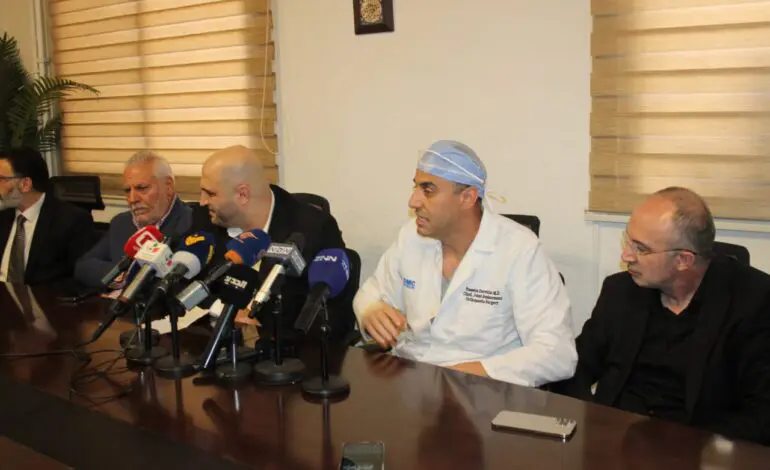

BAALBEK, NABATIEH – A two-week humanitarian medical mission led by Lebanese American physicians from Michigan delivered life-changing care to dozens of patients in Baalbek and Nabatieh, performing 50 free orthopedic surgeries and providing consultations to scores of others. The mission logistics, sponsored by the Arab American Foundation and spearheaded by its president, The Arab American News Publisher Osama Siblani, and Dr. Hussein Darwiche, drew widespread praises from Lebanese officials, hospital administrators and grateful families across the region.
Darwiche, a renowned orthopedic surgeon, chief of joint replacement surgery at the Detroit Medical Center (DMC) and professor at Wayne State University School of Medicine, led the delegation. The team included surgeons and medical specialists who traveled from Michigan at their own expense to offer advanced surgical care to underserved patients in Lebanon in two governmental run public hospitals. The following medical professionals took part in the mission:
- Dr. Adam Fahs
- Dr. Michael Jawad
- Dr. Mohamad Bazzi
- Dr. Fadi Nasseredein
- Dr. Yehia Shokor
- Technician Jordan Vincent
- Nurse Ali Taha
The Arab American Foundation, in partnership with Stryker, the Michigan-based global leader in medical device manufacturing, donated all prosthesis for hip and knee replacement surgeries; while the Detroit Medical Center loaned all necessary equipment needed to perform all surgeries in the Baalbek and Nabatieh hospitals.
Lebanese Minister of Health Dr. Rakan Nassereddine stands with the members of the medical mission after a day of surgeries at Baalbeck Governmental Hospital and after the press conference. – Photo courtesy of the Baalbeck Governmantel Hospital Press Office
Warm welcome from Lebanese officials
The mission began at Baalbek Governmental Hospital, where Lebanon’s minister of health, Dr. Rakan Nassereddine, met the U.S. delegation and later hosted them at the Ministry of Health in Beirut. The minister commended the initiative as a model for diaspora engagement at a time when Lebanon’s public hospitals continue to struggle with staffing shortages, financial strain and outdated infrastructure.
“These young doctors came from America to perform free surgeries for their people in their homeland, a gesture that deserves tremendous respect,” Nassereddine said. He added that the Baalbek hospital is “rising again” thanks to new investments and diaspora-supported initiatives, noting that a modern CT scanner had just been delivered, with an MRI machine and additional cardiac and dialysis facilities scheduled to follow.
Alongside the minister, several civic leaders welcomed the delegation, including Dr. Abbas Shokor, director of Baalbek Governmental Hospital, Baalbek Mayor Ahmad Al-Tufayli and a large team of local physicians, nurses and staff.
Surgeries in Baalbek and Nabatieh, and patients walking the next day
Over the course of few days, the Michigan medical team performed several orthopedic surgeries in Baalbek and Nabatieh, from hip and knee replacements to complex fracture repairs. Baalbeck Hospital Director Dr. Shokor described the mission as a “ray of sunlight” during a challenging season.
“In autumn, the leaves fall and the atmosphere often feels heavy,” he said. “But with the minister’s visit and this distinguished medical team, the sun rose again over the City of the Sun.”
Dr. Shokor highlighted that nearly all patients were able to stand and walk after a day of surgery, returning home in one or two days, a remarkable turnaround considering the complexity of the procedures.
He also praised Siblani’s pivotal role, citing the Siblani family’s longstanding philanthropic involvement in the region and announcing that a new hospital building under construction will bear the name Arkan and Hind Siblani, the oldest brother and sister-in-law of the long time publisher of The Arab American News.
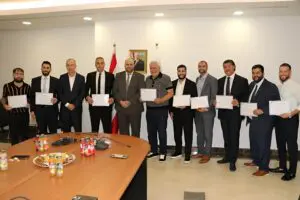
Medical mission team members receive certificates of appreciation from the Lebanese Minister of Public Health at the end of the mission.
A complex mission made possible by broad support
In his remarks, Siblani thanked the medical team for their dedication and professionalism, calling them “a wonderful group of doctors who gave their time, skills and hearts to help people they don’t even know.” He emphasized that the mission succeeded due to extensive cooperation across international borders.
The transportation of medical equipment and implants from Detroit to Beirut, routed through Paris, required coordination with numerous partners. Siblani expressed appreciation to:
-
Mahmoud (Michael) Berry, an executive at Delta Airline.
-
Mohammad Sarsour, manager at the Delta Cargo Facility
-
Maj. Gen. Hassan Choucair, director general of Lebanon’s General Security
-
Mohammad El-Hout, chairman and CEO of Middle East Airlines
-
Pamela Medawar, MEA Paris office director
-
Ned Fawaz, business leader, CEO of Energy International and philanthropist
-
Jihad Mkari, logistical coordinator and freight forwarder based in Paris
He also thanked his nephew, businessman Mohammad Arkan Siblani, for clearing and handling the internal transportation of equipment within Lebanon.
Darwiche: “Lebanon is always in our hearts and on our mind”
Reflecting on the mission, Darwiche expressed deep pride in the team’s accomplishments and reaffirmed the delegation’s commitment to Lebanon.
“Lebanon is always in our hearts and on our minds,” he said. “We will always serve the Lebanese people, especially during these extraordinary times the country is going through.”
He praised his colleagues, thanked patients for their trust and acknowledged the tremendous support from the Ministry of Health and Baalbek and Nabatieh Governmental Hospitals.
The mission also revealed firsthand the immense challenges facing Lebanon’s health sector.
“Transporting medical equipment from the United States to Lebanon was an obstacle in itself,” Darwiche said, “but the experience reminded us of the urgent needs that still exist.”
The minister awarded certificates of appreciation to the entire team during a ceremony at the Ministry on Wednesday, November 12.

Mission members meet with Maj. Gen. Hassan Choucair, director general of Lebanon’s General Security. – Photo courtesy of the General Security Press Office.
Visit to General Security Headquarters
Choucair also received the delegation. He pledged continued support for future medical missions and praised the Lebanese-American diaspora for its commitment to helping their homeland during difficult times.
Nabatieh: Completing the mission in the south
After finishing the Baalbek phase, the delegation traveled south to Nabatieh, where they performed several surgeries and conducted medical evaluations for dozens more patients.
Hospital staff in Nabatieh described the mission as “a lifeline” for families who cannot afford surgical care amid Lebanon’s ongoing economic collapse.
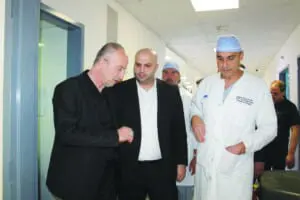
Minister of Health Dr. Nasseredine tours with Dr. Darwiche (right), whose patients had surgeries at the hospital in Baalbeck.
A model of diaspora engagement
The humanitarian mission, combining American medical expertise, Lebanese community hospitality and corporate philanthropy from Stryker and the DMC, demonstrated how coordinated diaspora-led initiatives can make a transformative impact on Lebanon’s strained healthcare system.
“When we put our hands together, the Ministry, hospitals, doctors in Lebanon and abroad, we can build the country we want,” Nassereddine said. “This mission is a shining example of what Lebanese unity can achieve.”
The Arab American Foundation and its partners intend to expand future missions to additional regions of Lebanon.
Leave a Reply