



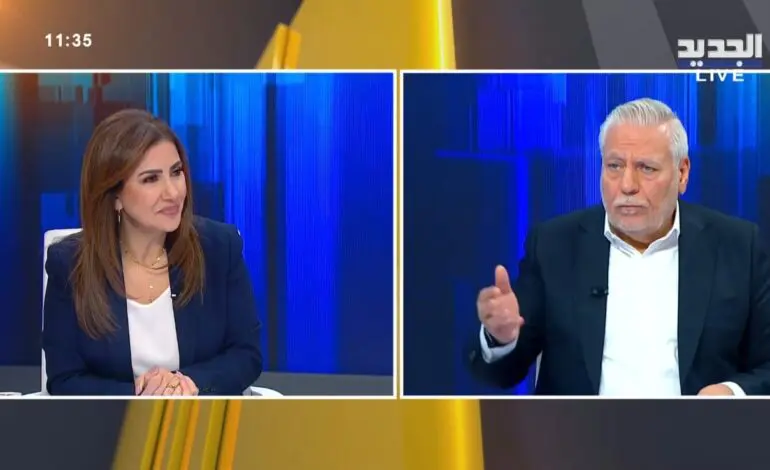

In an extensive political appearance on Lebanon’s Al Jadeed TV channel, as part of the program Al-Hadath, journalist and anchor Samar Abu Khalil hosted Osama Siblani, publisher of The Arab American News and president of the Arab American Political Action Committee (AAPAC), in an episode that aired Sunday, November 16. The discussion focused on shifting developments inside the United States and their impact on the Arab American community and the current Lebanese crisis.
Siblani, who is visiting Lebanon as part of a medical delegation that has performed dozens of free surgeries in South Lebanon and Baalbek, began by addressing the U.S. domestic scene and the deep transformations in American political and public attitudes. These changes, he said, were made evident by the victory of Zohran Mamdani in the New York City mayoral race, in one of America’s largest and most influential cities politically, socially and economically.
He noted that Mamdani’s victory — as a Muslim who speaks openly on sensitive issues such as Palestine and Israel and who won comfortably against a well-known rival, former New York Governor Andrew Cuomo — signals that American voters are no longer captive to the traditional narrative. Instead, they are increasingly willing to trust new figures who represent the country’s true demographic makeup, where White Americans now comprise only about 40 percent of the population compared to nearly 60 percent who are people of color and other ethnicities.
Siblani connected the current political transformation to previous milestones, saying that Barack Obama’s election as U.S. president shocked a large segment of White Americans and far-right groups. He argued that Donald Trump’s rise to power was a reaction to the arrival of “the Black president with Muslim roots”, as he described it.
Today, Siblani said he believes Mamdani’s election represents a new reaction to the Trump era and its extreme rhetoric. He said this shift will not remain limited to New York but will expand to other states and cities as demographic shifts continue and new political forces emerge within the Democratic Party, led by its increasingly influential progressive wing.
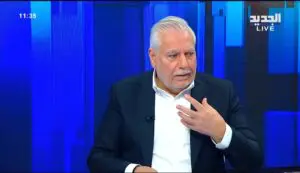
Siblani at Aljadeed TV in Beirut, Lebanon on Sunday, November 16. – Videograb
Gaza and the collapse of the Western narrative
On the Israeli war on Gaza, Siblani stressed that the conflict played a decisive role in exposing a profound moral and political collapse in the U.S. and Western approach to the Palestinian cause. He explained that, unlike the post-September 11 era and the 2003 American invasion of Iraq, Americans no longer rely solely on traditional mainstream media but see for themselves through platforms like TikTok and Instagram the destruction, killings and genocide inflicted on the Palestinian people.
He added that the dominance of the Israeli lobby and its direct pressure on American politicians — even including threats to unseat those who do not comply — has started to alarm ordinary Americans, leading many to ask, “Where is our democracy? And can it be bought with money on behalf of a foreign country?”
The rise of Arab and Muslim representation
Siblani emphasized that change is not limited to New York. In Michigan — home to the largest Arab American population in the United States — Arab and Muslim Americans have achieved electoral victories in more than 38 municipal positions nationwide, including major wins in Dearborn, Dearborn Heights and Hamtramck. Leaders such as Abdullah Hammoud, Mo Baydoun and Adam Alharbi won with significant voter support, reaching nearly 70 percent in some cases.
He also highlighted the increasing involvement of Arab Americans in the judicial system. Recent examples include Judge Helal A. Farhat being selected as chief pro tem of the Wayne County Third Circuit Court— Michigan’s largest county and the seventh largest in the nation — with the possibility of leading the entire bench in the near future. Additionally, Judge Mariam Saad Bazzi entered Michigan’s legal history in late April, becoming the first Arab American Muslim woman appointed to the prestigious Michigan Court of Appeals.
Siblani said the achievements of the Lebanese diaspora demonstrate that Lebanese expatriates are continuously advancing and increasingly present in decision-making positions in the United States. However, he argued that the Lebanese state does not sufficiently capitalize on this strength.
While commending the work of Lebanese Ambassador to Washington Nada Hamadeh Mouawad and Lebanon’s Consul General in Detroit Ibrahim Charara, he criticized political officials in Beirut for neglecting engagement with influential Lebanese Americans on the ground, preferring instead to meet with figures who lack real impact.
Economy still drives U.S. elections
Despite these political and social developments, Siblani stressed that “the decisive factor in U.S. elections remains the economy.” American voters base their choices mainly on “what goes into their pockets”, not too much on foreign policy. Rising prices and inflation, he noted, have placed enormous pressure on American families, and Trump’s slogan “America First” has not materialized, especially with continued spending on wars abroad and artificial intelligence threatening traditional employment sectors and putting Americans out of work.
Lebanon’s missed opportunity
Shifting to Lebanon, Siblani addressed American political pressures, sanctions and threats — including speculation about sanctions against Parliament Speaker Nabih Berri and restrictions on financial transfers under the pretext of targeting Hezbollah’s funding sources. He said much of this is political intimidation, pointing out that Hezbollah does not rely on traditional banking channels, meaning ordinary Lebanese families who depend on remittances from their relatives abroad are the ones harmed most.
U.S. pressure and Lebanese sovereignty
He warned that a key danger lies in Lebanon’s own government overreacting and submitting to external pressure and implementing punitive policies that damage its citizens instead of defending their rights to live and thrive. He emphasized that “the dignity of the state and its people must be a red line”, asserting that Americans respect those who respect themselves and manage their interests wisely.
Reconstruction as a weapon, and a responsibility
Siblani criticized obstacles to reconstruction in devastated areas, calling the refusal to rebuild another form of warfare aimed at punishing communities rather than helping them recover. He revealed that humanitarian initiatives from Lebanese expatriates, including medical missions and free hospital equipment, have sometimes encountered local bureaucracy and customs taxes in Lebanon, while U.S. companies have provided logistical assistance to ensure the delivery of support from America.
A dual message: Progress and responsibility
In conclusion, Siblani delivered a dual message. He reassured that Arab and Lebanese communities in the United States are steadily advancing, politically, socially and professionally, and that recent election results in New York, Michigan and other states reaffirm this trajectory.
At the same time, he urged the Lebanese state to treat this growing influence as a real source of national strength capable of supporting Lebanon during crises, not merely as symbolic figures to greet during protocol visits or ceremonial gatherings. He insisted that Lebanon’s proper path to Washington must be built through empowered partners who respect themselves and understand their leverage, not through fear, submissiveness or intimidation by foreign pressure.


Leave a Reply