




WASHINGTON, D.C. — The U.S.–Israel war against Iran has entered its fourth week without achieving any meaningful breakthrough in subduing the Islamic Republic, while no clear path toward a near-term resolution has emerged.
Instead, fears are mounting over widening regional consequences and escalating global risks, as President Trump appears increasingly unable to contain the fallout of the conflict — particularly the partial closure of the Strait of Hormuz, which continues to drive energy prices upward in a politically sensitive moment for Republicans ahead of congressional elections.
A war without results
Despite continued assassinations targeting senior Iranian officials — including three high-ranking figures last week — and Israeli strikes on Iranian gas facilities, Tehran has shown no signs of retreat or weakness.
The conflict has taken on a dangerous new dimension that can be described as a “war on energy infrastructure.”
Iran has responded forcefully, targeting oil and gas facilities in the Gulf as well as in Haifa, drawing a red line that has proven difficult for Washington to manage — despite continued pressure from Israeli Prime Minister Benjamin Netanyahu.
Even Netanyahu appears to have scaled back expectations of toppling the Iranian regime through airstrikes alone, after Iran demonstrated resilience and its ability to respond in kind despite thousands of U.S. and Israeli airstrikes and the assassination of senior leaders — including Supreme Leader Ayatollah Sayyed Ali Khamenei, who has been succeeded by his son, Sayyed Mojtaba Khamenei.
Air power challenged
While Trump has repeatedly claimed that Iran’s naval forces, air defenses and missile capabilities have been destroyed, developments on the ground suggest otherwise.
Tehran has continued launching missile and drone attacks against Israel while demonstrating notable defensive capabilities.
In a significant escalation, Iranian forces shot down a U.S. F-35 fighter jet on Wednesday while it was operating over Iranian airspace — an unprecedented development that could limit the operational freedom of U.S. and Israeli aircraft.
The U.S. Central Command (CENTCOM) later acknowledged that the aircraft made an emergency landing at a U.S. military base in the region after being hit by Iranian fire, confirming that the pilot was in stable condition.
Strategic failure and war of attrition
Events during the third week of fighting have made clear that the war is not unfolding as Washington and Tel Aviv had anticipated.
Targeted assassinations — including those of senior political and military figures such as Ali Larijani, Esmail Khatib and Gholam Reza Soleimani — have failed to destabilize the Iranian state or alter its strategic posture.
Similarly, attacks on military installations have not halted Iran’s retaliatory strikes against Israel and Gulf targets. Even intensified internal security measures have failed to weaken popular support for the government or trigger unrest.
Instead, Tehran appears committed to a war of attrition, seeking to reshape the strategic balance by maintaining control over the Strait of Hormuz and restricting maritime traffic without its approval.
Hormuz: The decisive battleground
Trump has so far failed to secure international support for forcibly reopening the Strait of Hormuz, while also struggling to persuade key allies to engage directly in the conflict.
At the same time, the president faces a strategic dilemma: he cannot easily declare victory and withdraw, as doing so while Hormuz remains partially restricted would be widely interpreted as a defeat for Washington.
Compounding the challenge, Iran has shown no willingness to negotiate or offer Trump a face-saving exit.
Energy war and global fallout
Global energy markets continued to surge last week, particularly after Israel struck gas facilities in the South Pars field near Assaluyeh in southern Iran.
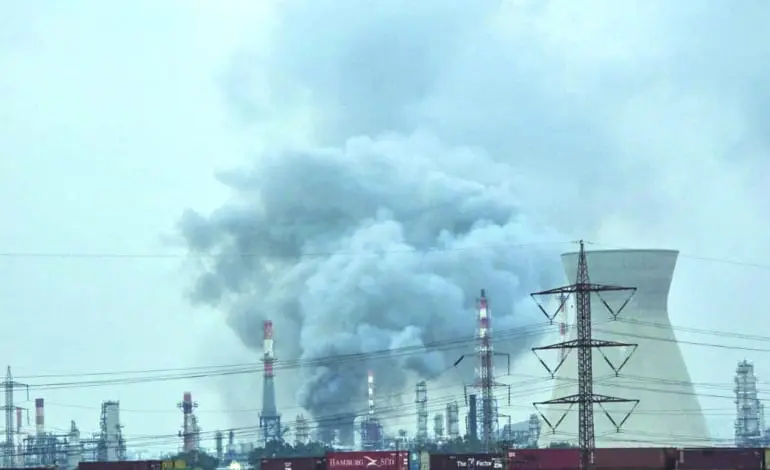
Tehran escalated in response, targeting Qatari gas facilities in Ras Laffan, as well as oil refineries in Haifa, where fires broke out and electricity outages affected parts of the city.
Iranian Foreign Minister Abbas Araghchi warned that restraint would not continue if such attacks were repeated.
U.S.–Israel differences surface
Trump quickly distanced himself from the energy escalation, claiming he had no prior knowledge of the South Pars attack — a position echoed by Netanyahu, who said Israel acted independently.
Netanyahu added that Trump had requested Israel refrain from further attacks on Iranian energy infrastructure.
In a notable development, U.S. Treasury Secretary Scott Bessent indicated that Washington may temporarily ease sanctions on Iranian oil to stabilize global markets.
Different definitions of victory
The war has revealed a fundamental divergence between Washington and Tel Aviv over what constitutes “victory.”
Trump appears to have envisioned a short, decisive campaign delivering a rapid strategic win. Israel, however, is pursuing a broader objective — forcing Iran into full strategic submission.
After three weeks of intensive bombardment, Netanyahu acknowledged the limitations of airpower alone, suggesting that a ground component may be necessary to achieve regime change.
Trump under pressure
Facing growing domestic criticism, Trump has rejected claims that he is acting under Israeli influence and reiterated that he does not plan to deploy U.S. ground forces in Iran.
However, reports indicate that the administration is considering additional troop deployments to the region as it weighs its next steps.
Congressional pushback
Meanwhile, the Pentagon’s request for $200 billion in additional funding for the war has faced strong resistance in Congress.
Lawmakers from both parties have questioned the necessity of such funding following already record defense spending levels.
Lebanon front: War expands North
On the Lebanese front, despite massive Israeli troop buildups and repeated threats of invasion, Israeli forces have failed to achieve meaningful ground advances.
Frontline villages in southern Lebanon have become zones of attrition under sustained resistance operations.
In one of the latest engagements, resistance fighters carried out a complex ambush in the town of Taybeh, destroying six Israeli Merkava tanks as Israeli forces attempted to advance toward the Litani River.
Israeli media acknowledged a “serious security incident” in southern Lebanon, though strict military censorship has limited further details.
Escalation and internal risks in Lebanon
The confrontation has expanded beyond border defense, with resistance forces striking deeper into Israeli territory, including Haifa, Safed and the Golan Heights, reinforcing a deterrence equation.
Meanwhile, the humanitarian toll continues to rise, with more than one million displaced persons and more than 1,000 fatalities in Lebanon.
Analysts warn that Israel’s objectives may now extend beyond weakening Hezbollah to deepening internal divisions in Lebanon — potentially pushing the country toward internal conflict.
Lebanese President Joseph Aoun has adopted a more cautious tone, emphasizing the need for internal consensus before advancing any political initiative to end the war.
His shift reflects mounting internal pressure, including growing domestic backlash, particularly within Lebanon’s Shi’a community, over recent political positions.
A region at a crossroads
As the war drags on without a decisive outcome, the region faces an increasingly volatile future.
With energy markets under strain, military escalation continuing on multiple fronts and political divisions deepening, the conflict is entering a phase whose consequences may extend far beyond the battlefield — shaping the Middle East for years to come.


Leave a Reply