



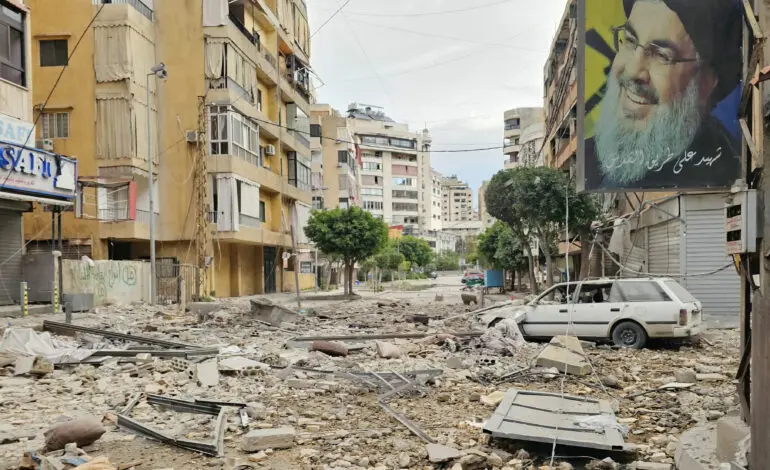

The war being waged by the United States and Israel against Iran has entered its fifth week, with no real prospect of a near end, amid the high thresholds set by Washington, Tel Aviv and Tehran. Meanwhile, the Islamic Resistance in Lebanon continues to confront Israeli ground incursions south of the Litani River, inflicting heavy losses on advancing forces along multiple fronts. Hezbollah also continues to strike deep inside Israel, particularly targeting northern cities and settlements that have become largely deserted.
Trump’s shifting strategy and delayed escalation
On the American front, Donald Trump continues to struggle with the situation he has created following the failure of the “Epic Rage” operation to subdue Iran. After threatening to escalate attacks on Iranian energy facilities if the Strait of Hormuz was not reopened by Monday, the president surprised observers by announcing the start of negotiations with Iran, granting Tehran five days to respond to a 15-point proposal.
By Thursday evening, Trump extended the deadline by an additional 10 days, despite counter-conditions put forward by Iran as a framework for negotiations reportedly being conducted through Pakistan, according to media reports.
While escalation was considered unlikely earlier in the week due to the reopening of global stock markets and fears of investor panic, Trump reversing course again as the new deadline approaches — now set for Monday, April 6 — appears increasingly possible. This comes as Iran remains firm in maintaining control over the Strait of Hormuz and continues attacks on U.S. bases in the region, while Israeli territory faces daily waves of heavy Iranian missile strikes.
Conflicting narratives on negotiations
Despite signs of potential de-escalation, with Trump claiming that “very good and constructive negotiations” are underway between the United States and Iran, Tehran has repeatedly denied that any direct negotiations have taken place since the start of the war on February 28.
Iranian officials insist that what is occurring is merely an exchange of messages regarding a ceasefire through regional intermediaries.
In this context, Western media outlets, including the New York Times, reported that the United States presented Iran with a 15-point proposal via Pakistan. The proposal reportedly includes dismantling Iran’s stockpile of highly enriched uranium, halting enrichment activities, restricting its ballistic missile program and ending financial support for regional allies.
In return, the United States would lift all sanctions and provide assistance for developing Iran’s peaceful nuclear program.
Iran’s conditions and rejection signals
Iranian officials have not issued an official response to the reported proposal. However, Foreign Minister Abbas Araghchi stated that “message exchanges” are ongoing through “friendly countries”, reiterating that no direct negotiations have taken place.
Media outlets close to the Iranian government, including Press TV, cited a “senior Iranian official” who indicated that Tehran had rejected the U.S. proposal, asserting that any end to the war would only occur under Iran’s own terms and timeline.
According to these reports, Iran has set five conditions for ending the war: a complete halt to aggression and killings, mechanisms to prevent future attacks, compensation payments, cessation of hostilities across all fronts involving resistance forces and international guarantees recognizing Iran’s sovereign right over the Strait of Hormuz.
Diplomatic efforts amid deep divisions
Despite the significant gap between the two sides, Trump announced a 10-day suspension of planned strikes on Iranian energy infrastructure.
“At the request of the Iranian government, I hereby suspend the destruction of energy facilities for 10 days,” he posted on Truth Social. “Negotiations are ongoing, and despite misleading media reports, they are progressing very well.”
U.S. officials, cited by Axios, said Washington has yet to receive any formal response from Iran.
Reports also indicate that the Trump administration is working to organize a meeting in Pakistan between American negotiators and potential Iranian counterparts to explore ways to de-escalate the conflict. CNN reported that senior U.S. officials view the meeting as an attempt to find a formula to reduce tensions.
However, the wide gap between the two sides continues to cast doubt on the prospects of a near-term ceasefire, especially amid Israeli concerns that any agreement might not adequately address its interests.
These doubts are reinforced by the fact that previous rounds of negotiations were accompanied by U.S. and Israeli military strikes on Iran, further deepening Tehran’s mistrust of diplomatic efforts — particularly when paired with maximalist demands that resemble terms of surrender.
Regional dimensions and escalation risks
According to Reuters, citing regional sources, Iran has informed mediators that Lebanon must be included in any ceasefire agreement with the United States and Israel, linking an end to the war with halting Israeli attacks on Hezbollah.
If the diplomatic track fails, military escalation could intensify by the end of the week. With the United States deploying thousands of special forces to the region, speculation is growing about potential operations targeting Iran’s southern coasts and islands in the Strait of Hormuz or the Gulf.
One scenario includes the occupation or blockade of Kharg Island, Iran’s main oil export terminal, aimed at pressuring Tehran to relinquish control over maritime traffic in the Strait of Hormuz — currently one of Iran’s strongest leverage points.
Iran, however, appears to have prepared countermeasures for such scenarios.
Warnings of wider war
As the possibility of a U.S. ground operation increases, warnings are growing that even the “best-case scenario” would involve significant American casualties, potentially deepening divisions within Trump’s political base.
Iranian Parliament Speaker Mohammad Bagher Ghalibaf warned that Iran’s enemies may be preparing, with support from a regional country, to seize one of Iran’s islands. He stated that all enemy movements are being closely monitored and warned that any such action would result in severe retaliatory strikes targeting critical infrastructure in that country — widely interpreted as a reference to the United Arab Emirates.
At the same time, reports within Iranian military and security circles suggest that Yemen’s Ansar Allah (Houthis) could open a new front in support of Iran if U.S. attacks escalate, potentially expanding the conflict and disrupting global shipping through the Bab el-Mandeb Strait.
Israel intensifies military attacks
Israeli Prime Minister Benjamin Netanyahu stated that “the battle in Iran is still at its peak, contrary to what is being reported in the media.” Israel’s stance reflects a mix of public skepticism toward Trump’s push for ending the war and ongoing coordination with Washington, even as fighting with Hezbollah intensifies in Lebanon.
Over the past week, missile barrages from Iran and Lebanon have continued to target Israeli cities and settlements, while Israel has imposed heavy censorship on reporting damage.
Channel 12 cited a senior security official expressing pessimism about the scale and frequency of attacks from both Iran and Lebanon, as Israeli forces continue daily airstrikes on both fronts.
Notably, Israel has intensified strikes on bridges over the Litani River, signaling preparations for a broader ground invasion after mobilizing approximately 400,000 troops.
Hezbollah inflicts heavy losses on Israeli offensives
Meanwhile, the resistance has turned Israeli ground advance routes in southern Lebanon into what observers describe as a “graveyard for tanks.” Israeli forces have so far failed to establish control over any frontline town, despite incursions reaching Deir Siryan overlooking the Litani River.
Over the past week, resistance operations reached record levels, targeting advancing troops, military positions and settlements across northern and central Israel — from Haifa to the Israeli Ministry of Defense in Tel Aviv.
Hezbollah fighters also carried out an unprecedented “tank massacre”, destroying multiple armored columns attempting to advance along the Taybeh–Qantara and Qouzah–Debel axes.



Leave a Reply