



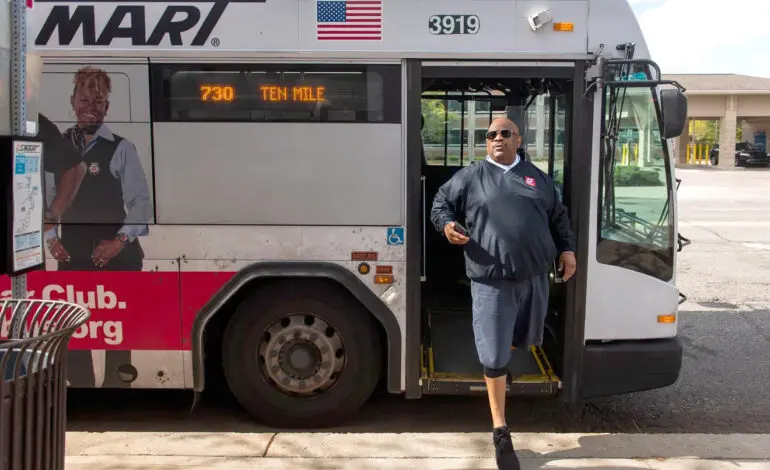

DETROIT — Voters across Wayne County will head to the polls in the August 4 primary election to decide on a new tax proposal aimed at funding countywide public transportation.
If approved, the ballot measure would impose a uniform property tax on all residential and commercial properties across the county’s 43 cities and townships — including major communities such as Detroit, Dearborn Heights, Hamtramck, Dearborn and Livonia, among others.
The proposal follows a recent amendment to Michigan law that eliminated the longstanding “opt-out” provision, which previously allowed municipalities to decline participation in the regional bus system.
If approved, the measure would establish a tax rate ranging between 0.98 and 0.994 mills annually — with one mill equal to $1 per $1,000 of a property’s taxable value — to fund the Suburban Mobility Authority for Regional Transportation (SMART) system for a period of four years.
For homeowners, the cost would be relatively modest. A home with a market value of $200,000 — and a taxable value of $100,000 — would pay approximately $99 per year under the proposal.
All 43 municipalities in Wayne County will participate in the vote, including 17 communities that had previously opted out of the SMART system, such as Livonia, Canton, Northville and Plymouth Township.
Despite participating in the vote, residents of Detroit will not be subject to the new tax, as the city operates its own public transit system through separate local funding.
According to SMART officials, the proposal is designed to replace what they describe as a “fragmented” transit system with a modern, fully integrated regional network. Planned improvements include expanding service to communities previously not served, enhancing on-demand transit through the SMART Flex app and reducing average wait times between buses to 15 to 30 minutes.
The Suburban Mobility Authority for Regional Transportation (SMART) is the primary public transit provider for suburban Detroit, serving Wayne, Macomb, Oakland and Monroe Counties, and is partially funded through taxpayer dollars.


Leave a Reply