



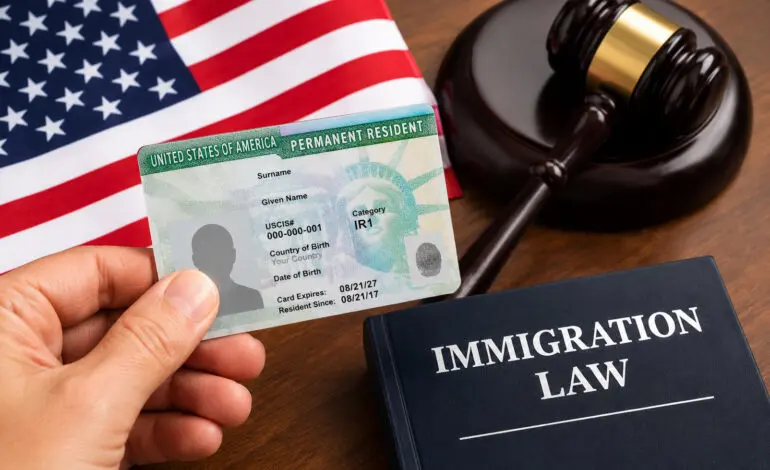

WASHINGTON, D.C. — A recent U.S. Supreme Court ruling is drawing widespread attention among immigrant communities after expanding the federal government’s authority to scrutinize some lawful permanent residents returning to the United States from international travel when they have pending criminal charges or legal issues that could affect their immigration status.
The decision, issued during the Court’s current term in Blanche v. Lau, was approved by a 6-3 majority, and immigration attorneys say it could significantly influence how U.S. Customs and Border Protection (CBP) and immigration officials handle certain green card holders at U.S. ports of entry in the years ahead.
Although social media posts have suggested that any green card holder facing criminal charges could now be deported, immigration experts caution that the ruling is far narrower. It does not mean lawful permanent residents automatically lose their immigration status because they have been charged with a crime. Instead, it gives federal immigration authorities broader discretion to determine whether a returning permanent resident should be treated as an applicant for admission under the Immigration and Nationality Act.
Case began at a U.S. airport
The case centered on Muk Choi Lau, a Chinese citizen who became a lawful permanent resident of the United States in 2007. Lau later faced federal charges related to trafficking counterfeit goods and trademark violations.
While the criminal case was pending, Lau traveled to China. Upon his return to the United States, immigration officials did not admit him as a routine returning permanent resident. Instead, they initiated immigration proceedings based on the nature of the pending criminal allegations.
Lau challenged the government’s actions, arguing that immigration authorities should not be permitted to subject a lawful permanent resident to removal proceedings before a criminal conviction had been secured. The legal dispute eventually reached the U.S. Supreme Court.
Broader authority for immigration officials
The central question before the Court was whether immigration officials must wait until a criminal case results in a final conviction before taking action against a returning lawful permanent resident, or whether credible legal grounds and reasonable evidence are sufficient to initiate immigration proceedings.
The Court ruled in favor of the federal government, concluding that immigration authorities are not always required to wait for a final criminal conviction before taking certain immigration actions against a returning permanent resident.
The majority held that Congress granted the executive branch broad authority to enforce immigration laws and protect the nation’s borders, allowing officials greater flexibility when determining whether a returning permanent resident may be inadmissible under federal immigration law.
Green card is not absolute protection
The ruling does not mean that every green card holder with pending criminal charges will be detained, deported or denied entry into the United States.
However, it does give immigration officers expanded authority to closely examine permanent residents who have pending criminal cases or legal issues that may affect their eligibility to remain in the country.
In practical terms, a criminal case may begin affecting a person’s immigration status before the criminal proceedings have concluded.
Immigration attorney: Criminal charges can trigger immigration consequences
In an interview with The Arab American News, immigration attorney Farah Hobballah, founder of Hobballah Legal Group, said the decision highlights an important legal reality that many lawful permanent residents do not fully understand.
“Many people assume immigration consequences begin only after a criminal conviction,” Hobballah said. “This decision makes clear that is not always the case. For lawful permanent residents who travel abroad, a pending criminal case may create immigration problems even before the criminal matter has been resolved.”
She explained that the cases most likely to create immigration concerns generally involve allegations of fraud, theft, controlled substances, domestic violence and offenses classified under immigration law as crimes involving moral turpitude.
“Many people believe the seriousness of the offense alone determines whether it affects immigration status,” she said. “In reality, what matters most is how the offense is classified under federal immigration law.”
Seek legal advice before traveling
Hobballah strongly advised any lawful permanent resident with an open criminal case or unresolved legal matter to consult an experienced immigration attorney before leaving the United States.
“I encourage anyone with a pending criminal matter to speak with an immigration attorney before traveling internationally,” she said. “I’ve worked with many people who believed that having a green card meant international travel would not be a problem, only to discover that an unresolved criminal case completely changed their situation.”
She said she expects the Supreme Court’s ruling to result in increased scrutiny of some permanent residents returning from overseas.
At the same time, Hobballah emphasized that permanent residents who have no criminal history or pending legal matters should not expect the ruling to affect their travel.
Important implications for Michigan’s Arab American community
The decision is particularly significant for Michigan’s Arab American community, where thousands of lawful permanent residents travel regularly to Lebanon, Iraq, Yemen, Palestine, Jordan and other countries to visit relatives, attend family events or manage business affairs.
Although the ruling is unlikely to affect the overwhelming majority of green card holders, immigration attorneys say it serves as an important reminder that criminal matters do not always remain confined to criminal court.
In some cases, they can quickly become immigration cases as well.
Legal experts say the Supreme Court’s ruling is clear: Lawful permanent residents with pending criminal charges should not assume that possessing a green card alone will shield them from additional scrutiny upon returning to the United States. Seeking qualified legal advice before international travel may now be more important than ever.



Leave a Reply