




Middle East Weekly Briefing: September 11–17, 2026
War on Iran
-
Trump signals that the seven-month Iran war may be approaching an end
President Trump said on September 16 that the conflict was “hopefully” nearing its conclusion. He is expected to meet leaders of the six Gulf Cooperation Council countries during the upcoming U.N. General Assembly to discuss the war and possible postwar arrangements. Negotiations remain stalled, however, and Iran continues to link reopening the Strait of Hormuz to the lifting of the U.S. naval blockade.
Why it matters: Trump’s statement is the clearest recent signal of possible diplomatic movement, but no ceasefire framework or negotiating schedule has been announced. Reuters -
U.N. investigators cite possible U.S. war crimes in Iran
A U.N.-backed fact-finding mission said it had “reasonable grounds” to believe two U.S. strikes in Iran constituted war crimes. The report examined the bombing of the Shajareh Tayyebeh Primary School in Minab and a strike on a sports complex and residential area in Lamerd, which together reportedly killed at least 178 civilians, many of them children. The mission separately accused Iranian authorities of crimes against humanity in suppressing anti-government protests.
Why it matters: The findings significantly increase legal and diplomatic scrutiny of both Washington’s military campaign and Tehran’s domestic repression. The U.S. and Iran dispute the allegations. Reuters, Associated Press -
U.S. sanctions target Iran’s alleged cryptocurrency network
The U.S. Treasury sanctioned the BitBank cryptocurrency exchange, its software developer and several associates of Iranian financier Babak Zanjani. Washington alleges that the network processed hundreds of millions of dollars in payments connected to the safe passage of ships through the Strait of Hormuz and channeled money to the Islamic Revolutionary Guard Corps.
Why it matters: The action represents a new effort to pressure Iran’s wartime finances and disrupt its alleged use of cryptocurrency to bypass sanctions. The accusations remain U.S. government claims. Reuters -
Russia and China end independent monitoring of U.N. sanctions on Iran
Russia and China vetoed a Security Council resolution extending the mandate of the independent expert panel assigned to monitor violations of U.N. sanctions on Iran. Western governments warned that ending the panel would make sanctions evasion more difficult to document.
Why it matters: The veto deepens divisions at the Security Council and weakens independent oversight at a critical stage of the nuclear and regional confrontation. Reuters
Yemen and the Red Sea
-
Saudi-Houthi fighting sharply escalates
Saudi Arabia and Yemen’s Ansar Allah movement, commonly known as the Houthis, exchanged airstrikes, missiles and drones as the Yemeni conflict intensified. Saudi strikes hit areas of Hajjah and Taiz, while Houthi attacks reached Saudi territory. Falling debris from an intercepted drone reportedly killed a Yemeni resident and wounded two others in Taif province—the first reported civilian death in Saudi Arabia during the latest escalation.
Why it matters: The violence risks reopening a full-scale Saudi-Houthi war and further expanding the regional conflict. Reuters, Associated Press -
More than 100,000 Yemenis displaced by renewed fighting
The latest escalation has displaced more than 100,000 people, with some Yemenis attempting dangerous boat crossings to Djibouti. Humanitarian agencies face mounting pressure in a country already devastated by years of war and economic collapse.
Why it matters: The displacement signals the beginning of another major humanitarian emergency and could increase refugee movements across the Red Sea. Reuters -
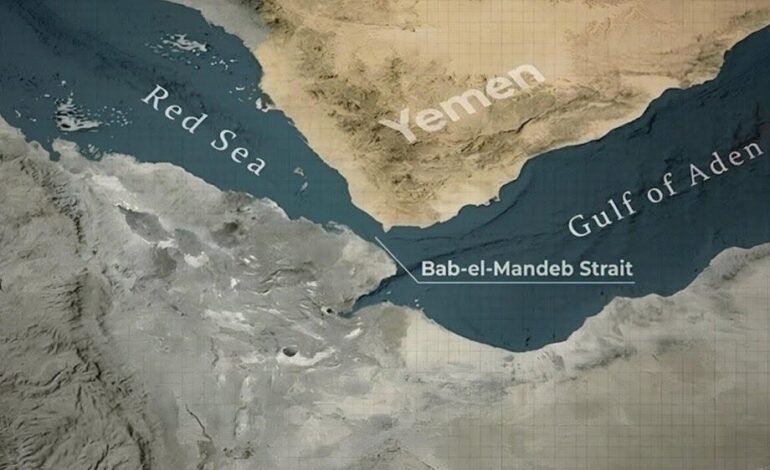
Houthi advances place Bab el-Mandeb and international shipping under their control
Houthi forces have reportedly seized Yemen’s entire Red Sea coastline, including territory overlooking the Bab el-Mandeb Strait. Italy announced preparations for a naval mission to protect its merchant shipping and critical undersea infrastructure.
Why it matters: With the Strait of Hormuz already affected by the Iran war, disruption at Bab el-Mandeb could place both major maritime gateways to the region’s energy and commercial routes under simultaneous pressure. Reuters on Yemen, Reuters on Italy -
China privately urges Iran to restrain the Houthis
China reportedly asked Iran to use its influence over the Houthis after Saudi Arabia appealed to Beijing. China is particularly concerned about attacks on energy infrastructure and shipping routes that supply its economy. Iran reportedly responded by linking regional stability to ending the U.S.-Israeli war against Iran.
Why it matters: Beijing’s intervention illustrates how the Yemen front is becoming inseparable from the Iran war and the global struggle over energy security. Reuters
War on Lebanon
-
Paris talks focus on Lebanon’s security after UNIFIL
French President Emmanuel Macron, Lebanese President Joseph Aoun and Jordan’s King Abdullah II convened talks in Paris on September 17 to discuss Lebanon’s security needs and the future of southern Lebanon after UNIFIL begins its withdrawal in January 2027. Military officials are examining alternatives that could include an international or European-led mission supporting the Lebanese Armed Forces.
Why it matters: UNIFIL’s departure could produce a major security vacuum while Israeli forces remain in southern Lebanon and Hezbollah continues to reject disarmament. Reuters, Associated Press -
Israeli withdrawal-for-Hezbollah disarmament framework remains stalled
A U.S.-brokered framework calls for an Israeli withdrawal from Lebanese territory, the disarmament of Hezbollah and expanded deployment of the Lebanese Army. Implementation has stalled amid continued Israeli strikes, Hezbollah’s refusal to surrender its weapons and concerns that the Lebanese military lacks sufficient personnel, equipment and funding.
Why it matters: The failure to implement the agreement keeps Lebanon vulnerable to another large-scale confrontation and increases the risk of internal political or sectarian instability. Associated Press -
Israel says it destroyed Hezbollah tunnels in southern Lebanon
The Israeli military announced that it had demolished tunnels beneath the strategic Ali al-Taher ridge and warned that any Hezbollah attempt to rebuild military infrastructure would provoke an immediate response.
Why it matters: The operation indicates that Israeli military activity inside Lebanon is continuing despite diplomatic negotiations. Details about the tunnels and the scale of the operation are Israeli military claims requiring independent verification. -
Planned U.S. bomb sale to Israel carries implications for Lebanon and Gaza
The Trump administration is preparing a proposed $2.8 billion munitions sale to Israel that reportedly includes 40,000 2,000-pound bombs—20,000 MK-84s and 20,000 BLU-117s. Congressional committees have been informally notified.
Why it matters: Israel has used comparable heavy munitions in Gaza and Lebanon. The proposed transfer could sustain its capacity for large-scale bombing and will likely provoke renewed scrutiny in Congress. The sale had not been formally completed as of September 17. Reuters
War on Gaza and the West Bank
-
Collapse of bomb-damaged Gaza building kills 21
A residential building previously damaged by Israeli bombing collapsed in Gaza City, killing 21 people and injuring others. Palestinian rescuers pulled 45 people from the rubble despite severe shortages of equipment. Children accounted for a large share of the casualties. More than 110 people had reportedly been sheltering in the structure.
Why it matters: The disaster demonstrates that Gaza’s destroyed buildings remain a continuing source of death even when they are not under active bombardment. Reuters, Associated Press -
Reconstruction remains largely frozen
More than two million Palestinians continue to live in damaged buildings, overcrowded shelters or tents. Reconstruction has made little progress because Israel continues restricting the entry of construction materials and heavy machinery, citing concerns that Hamas could divert them for military use. The U.N. says many additional buildings are in danger of collapse.
Why it matters: Gaza’s humanitarian emergency is evolving from immediate wartime destruction into a prolonged crisis of unsafe housing, displacement and preventable deaths. Reuters, U.N. OCHA -
Washington again denies Mahmoud Abbas a visa for the U.N. General Assembly
The Trump administration denied Palestinian Authority President Mahmoud Abbas and other senior Palestinian officials visas to attend the U.N. General Assembly in New York. Abbas is expected to participate by video after the U.N. authorized remote participation.
Why it matters: The decision further limits Palestinian diplomatic access while strengthening perceptions that Washington is using its host-country position to shield Israel from international pressure. Associated Press -
Israel expands the E1 settlement project in the West Bank
Israel issued a tender for another 2,167 housing units in the E1 area, bringing the broader plan to 3,401 units. The project would separate occupied East Jerusalem from surrounding Palestinian communities and further divide the West Bank. Israeli Finance Minister Bezalel Smotrich openly described the development as a way to block the creation of a Palestinian state.
Why it matters: Although outside Gaza, E1 is one of the week’s most consequential Palestinian developments and could permanently alter the territorial basis of any future political settlement. Reuters
Takeaway
The week’s defining development is the growing integration of the region’s wars. The Iran conflict is no longer confined to Iran and Israel: it is driving sanctions battles at the U.N., intensifying Saudi-Houthi fighting, threatening both Hormuz and Bab el-Mandeb, shaping Lebanon’s security negotiations and reinforcing U.S. military support for Israel. Meanwhile, Palestinians in Gaza continue to die from the enduring physical destruction of the war even as reconstruction remains blocked.



Leave a Reply