





DEARBORN — On Wednesday, as absentee voting begins across Michigan, the Arab American Political Action Committee (AAPAC) released its list of endorsed candidates in executive, legislative, judicial and education races for the November 3 election. The organization also announced its support for five ballot proposals and its opposition to another proposal concerning revision of the state constitution.
The announcement followed an expanded meeting of AAPAC’s endorsement committee held via Zoom, during which members voted on candidates who had requested the endorsement of the leading political organization, founded in 1998.
AAPAC officials urged Arab American voters in the Detroit area and throughout Michigan to turn out in large numbers to build on the achievements of August’s primary elections and translate them into unprecedented historic gains at both the state and federal levels.
Under the slogan “Your Voice Is Our Voice”, the committee said in a statement that its endorsements reflect the genuine needs and aspirations of the Arab American community and other communities throughout the Great Lakes State. The slate, it said, supports qualified candidates capable of representing working families and defending their rights, strengthening inclusive political representation in leadership, executive and judicial bodies, and building partnerships with allied groups to preserve gains achieved through decades of political work.
AAPAC’s rules require candidates to submit written requests for endorsement. The committee then conducts interviews to examine their qualifications, platforms and positions on issues affecting the Arab American community’s concerns and interests. Candidates must secure approval from two-thirds of committee members to receive an official endorsement.
Candidates previously endorsed by the committee, as well as those with established records of public service and strong relationships with the Arab American community, are exempt from interviews.
Historic elections
AAPAC President Osama Siblani explained that the September 30 endorsement announcement represents another step in the organization’s continuing work as “a leading platform for community participation.”
He noted that the committee renewed its support for candidates it had endorsed in August’s primaries, describing them as “a diverse group of capable and qualified officials and candidates who can support the prosperity of our local communities and our state as a whole.”
Siblani said the selection of candidates from different backgrounds and ethnicities followed a “fully democratic” process in which “each member has one vote.” Members voted based on the candidates’ platforms, political positions and relationships with the Arab American community, as well as their visions and future plans for strengthening unity and diversity in Michigan.
He emphasized that the endorsed slate represents “the best choice” for the Arab American community and other communities across the state.
“We are straightforward about our political choices, and we stand with unwavering pride and determination to safeguard the interests and aspirations of our Arab American community,” he said.
Siblani urged voters in the Detroit area and throughout Michigan to place their trust in AAPAC-endorsed candidates and “vote for them in large numbers” in November.
He said AAPAC will launch a comprehensive campaign in the coming days to educate voters about the importance of the upcoming election and encourage participation through absentee voting by mail, early in-person voting or voting on Election Day.
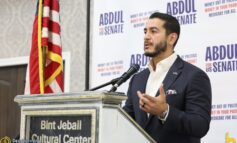
Siblani described November’s election as a pivotal moment for the Arab and Muslim communities in the United States, offering an exceptional opportunity to elect Democratic candidate Abdul El-Sayed as the first Muslim senator in U.S. Senate history.
He said El-Sayed is facing an extensive and malicious smear campaign because of his Arab and Muslim background, stressing that standing beside him and supporting his campaign is “a duty in confronting attempts to marginalize and exclude our community.”
According to Siblani, this election also offers an important opportunity to strengthen Arab American representation at the State Capitol in Lansing. That could come through electing Abbas Alawieh as the first Arab and Muslim senator in Michigan’s State Senate history, and through doubling Arab representation in the State House by reelecting Alabas Farhat in District 3 and electing Jalal Abdallah in District 15.
The following candidates received AAPAC’s endorsement for November’s general election.
Benson for Michigan governor
AAPAC endorsed Michigan Secretary of State Jocelyn Benson, a Democrat, to succeed Gov. Whitmer.
In addition to her distinguished professional and political career, Benson maintains strong relationships with the Arab American community. She received AAPAC’s endorsement in her previous campaigns for secretary of state in 2018 and 2022, as well as in August’s Democratic gubernatorial primary.
Siblani said the endorsement reflects AAPAC’s confidence in Benson’s experience and commitment to serving all Michigan communities, including Arab Americans.
Gilchrist for secretary of state
AAPAC endorsed Lt. Gov. Garlin Gilchrist for secretary of state in November.
The endorsement of the Democratic candidate reflects AAPAC’s commitment to supporting leaders with extensive experience in government administration, protecting voting rights and modernizing public services, as well as his close relationship with the Arab American community.
Gilchrist has served as Michigan’s lieutenant governor since 2019. His accomplishments include leading criminal justice initiatives, expanding affordable housing opportunities and improving the infrastructure of government services, drawing on his background in software engineering.
Gilchrist maintains a strong friendship with the Arab and Muslim communities in Metro Detroit. He was among the few officials in Michigan, and across the United States, who dared to describe Israel’s crimes in Gaza as “genocide.”
Savit for state attorney general
AAPAC announced its support for Democratic candidate Eli Savit in Michigan’s attorney general race, urging voters to turn out strongly for him in November as a candidate who represents competence and legal integrity.
Unlike Benson and Gilchrist, Savit is receiving AAPAC’s endorsement for the first time, drawing on his extensive professional and political record as Washtenaw County prosecutor.
Under Michigan’s constitution, the governor, secretary of state and attorney general are elected to four-year terms and may be reelected once.
Michigan Supreme Court
AAPAC endorsed the reelection of Justices Megan Cavanagh and Noah Hood to the Michigan Supreme Court for additional eight-year terms.
Both are seeking to remain on the state’s highest court. Cavanagh serves as chief justice and has an extensive record of improving court efficiency and facilitating public access to justice.
Hood serves as a Supreme Court justice after previously serving on the Court of Appeals and in the circuit courts. He is known for his careful commitment to protecting constitutional rights and ensuring transparency and the rule of law.
Michigan Court of Appeals
AAPAC endorsed Arab American Judge Mariam Saad Bazzi to continue serving on the Michigan Court of Appeals, First District, for a full six-year term following her appointment last year by Gov. Whitmer.
Saad Bazzi has an extensive legal record marked by integrity, fairness and the application of the law, alongside her dedication to community service. She served on the Dearborn Board of Education from 2015 to 2017 and was active in AAPAC, which she previously led as president.
Before her appointment to the Michigan Court of Appeals, Saad Bazzi served as a Wayne County Circuit Court judge and previously worked as an assistant prosecutor in the county.
El-Sayed for U.S. Senate
AAPAC renewed its endorsement of Abdul El-Sayed in the U.S. Senate race against Republican Mike Rogers, who is supported by Donald Trump and various pro-Israel lobbying groups.
El-Sayed, 42, is of Egyptian descent and previously headed the health departments of Wayne County and Detroit. He also received AAPAC’s endorsement when he ran for Michigan governor in 2018, finishing second in the Democratic primary behind Whitmer.
With support from Arab American voters and AAPAC, El-Sayed advanced through August’s primary, defeating Democratic establishment candidate and U.S. Rep. Haley Stevens, who received record funding from the American Israel Public Affairs Committee (AIPAC) and political lobbying groups supporting the occupying state.
El-Sayed is running as a progressive candidate, pledging to provide government-funded healthcare for everyone and remove political money and corporate influence from Washington’s political corridors.
He previously expressed his appreciation for AAPAC’s endorsement.
“I am honored to receive the endorsement and trust of the Arab American Political Action Committee, which has worked for decades to ensure that all communities in Michigan enjoy the dignity, freedoms and opportunities we all deserve in the wealthiest country in the world,” he said in a statement.
Tlaib, Dingell and McKinney for Congress
AAPAC endorsed the reelection of Democratic U.S. Reps. Debbie Dingell and Rashida Tlaib, representing Michigan’s Sixth and 12th Congressional Districts, respectively, praising their legislative records and commitment to Metro Detroit communities.
In Congress, Dingell has continued the legacy of her late husband, longtime congressional dean John Dingell, by working to secure vital investments in roads, bridges, clean water, public transportation and high-speed Internet, alongside her support for workers, veterans and older adults.
Siblani expressed pride in continuing to support Dingell.
“AAPAC is proud to support leaders who understand the importance of partnership, respect for our communities and a commitment to serving the people of Michigan,” he said. “Debbie has embodied these values throughout her career, and we are honored to support her for another term in the U.S. House of Representatives.”
AAPAC also endorsed Palestinian American U.S. Rep. Rashida Tlaib for a fourth two-year term, praising her progressive legislative record of defending workers’ rights, social justice and immigrant rights, advocating for peace and investing in families rather than financing foreign wars.
Tlaib made history in 2008 as the first Muslim woman elected to the State House of Representatives. In 2018, she became one of the first Muslim women elected to the U.S. House, alongside Somali American U.S. Rep. Ilhan Omar of Minnesota.
Since entering Congress in early 2019, Tlaib has emerged as one of its most prominent progressive voices, focusing on affordable housing, environmental justice, healthcare and support for workers, while defending human rights and the rights of Palestinians and immigrants.
Siblani said the endorsement reflects the committee’s appreciation for Tlaib’s political career and principled support for Palestinian rights.
“Rashida has never forgotten who sent her to Washington or what public service means,” he said. “She has been a bold voice defending workers, immigrants, justice and peace.
“She has courageously stood up to political pressure to defend the dignity of our communities,” he added. “We are proud to support her and urge voters in the 12th District to reelect her so she can continue serving the American people.”
The new candidate AAPAC hopes to send to the U.S. House is Democrat Donavan McKinney in the 13th Congressional District, who defeated incumbent U.S. Rep. Shri Thanedar in August.
AAPAC praised the progressive candidate’s commitment to the environment, public education, healthcare for all, affordable housing and public transportation. Through his service in the State House, he helped secure funding for violence reduction initiatives, improvements to public schools and community centers, and the replacement of lead pipes in water systems.
McKinney, who received AAPAC’s endorsement in August, grew up on Detroit’s northeast side, raised by his mother and grandmother. He graduated from Detroit Public Schools and became the first member of his family to earn a college degree.
If he wins as expected in November, McKinney will become Michigan’s only African American member of Congress.
Siblani said the endorsement reflects AAPAC’s commitment to candidates who remain faithful to marginalized communities, including Detroit’s African American community, which shares historic ties with Arab Americans and common goals of economic justice, political representation and support for public education.
Abbas Alawieh for the State Senate
In Michigan’s Second State Senate District, AAPAC decided to continue supporting Arab American candidate Abbas Alawieh following his notable victory in August’s primary.
The young candidate has an extensive record of community and political activism and organizing in Metro Detroit, through which he gained recognition as an advocate for workers and marginalized groups. He also played a leading role in organizing the “Uncommitted” movement during the 2024 presidential election.
Alawieh, who belongs to the Democratic Party’s progressive wing, is among the few candidates who reject corporate donations, affirming his commitment to independent leadership and grassroots support.
Siblani said the endorsement reflects AAPAC’s support for Alawieh’s record of community leadership, commitment to principled public service and campaign focus on engaging voters who feel disillusioned with politics and disconnected from government.
The State Senate consists of 38 members representing 38 districts across the state. No Arab American candidate has previously won a seat in the chamber.
Farhat and Abdallah for the State House of Representatives
AAPAC endorsed Alabas Farhat’s reelection to represent District 3 in the State House, recognizing his effective performance during his continuing legislative service in Lansing since his first election to represent Dearborn in 2022.
The committee urged voters to continue supporting the young lawmaker, who has demonstrated notable leadership on budget issues, public policy and bridging partisan differences.
Last year, he was named the “most effective Democratic lawmaker” in the State House in a survey conducted by MIRS News, which specializes in coverage of the Legislature in Lansing.
AAPAC also endorsed Jalal Abdallah’s campaign for the District 15 seat in Dearborn Heights. His election would strengthen Arab representation in the State House, which currently includes one Arab lawmaker, Farhat.
The committee urged voters to support the Democratic candidate, who is undertaking his first election campaign with a legal and academic background. Abdallah works as an attorney and studied history at the University of Michigan-Dearborn, giving him a deep understanding of legislative issues and the needs of the area’s diverse communities.
His priorities include improving infrastructure services, investing in public school development, creating new career and hands-on learning pathways for students, and responding to the aspirations and concerns of Dearborn and Dearborn Heights residents to ensure they have effective and influential representation in Lansing.
The State House consists of 110 members representing 110 districts across the state.

Makled for the University of Michigan Board of Regents
AAPAC endorsed Amir Makled for the University of Michigan Board of Regents, urging voters to turn out strongly for him to ensure effective representation that advances students’ and workers’ rights and strengthens education at one of the state’s most prestigious universities.
Makled, an Arab American attorney who defended university students supporting Palestine, won the Democratic Party convention nomination last summer over incumbent Regent Jordan Acker, a supporter of Israel.
Akeel for the Wayne State University Board of Governors
AAPAC endorsed Shereef Akeel to represent the community’s aspirations for stronger Arab and Muslim participation in university and academic life.
Akeel is running for Wayne State University’s Board of Governors on the strength of his long and distinguished career as an attorney specializing in civil rights and public freedoms, as well as his commitment to improving the academic environment and investing in young people’s educational future.
Like Makled, Akeel won the Democratic Party convention nomination with overwhelming support from young and progressive delegates.
Elections for the governing boards of Michigan’s major universities are held statewide.
Three choices for the Michigan State Board of Education, but only vote for two
Although voters may select only two candidates, AAPAC endorsed three candidates for the Michigan State Board of Education, providing voters with an additional choice.
The committee urged the reelection of incumbent Democratic members Tiffany Tilley and Judith Pritchett, while also endorsing Arab American candidate Wissam Charafeddine, who is running as a Green Party candidate.
The three candidates are competing with seven others for two seats carrying full eight-year terms.
The Michigan State Board of Education, which oversees the state’s public schools, consists of eight members, as do the governing boards of the major universities.
Renewed confidence in Wayne County’s executive
As it has in all his previous campaigns for Wayne County executive, AAPAC expressed great pride in endorsing Warren Evans for a fourth four-year term leading Michigan’s largest county.
Since first taking office in early 2015, Evans, who maintains a close relationship with the county’s Arab American community, has demonstrated exceptional leadership in overcoming economic and administrative challenges and building alliances among communities across the county’s 43 cities and townships.
Over the past 12 years, he succeeded in rescuing the county from the brink of financial collapse and transforming it into one of the most stable and growing counties.
Under his administration, Wayne County regained fiscal discipline and strengthened essential public services. His record reflects successful policies in good governance, intelligent financial management and a steadfast commitment to serving the county’s approximately 1.77 million residents, including the highest concentration of Arab Americans of any U.S. county.
“Wayne County has become stronger, more prosperous and better prepared for the future thanks to Warren Evans’ sound leadership and sustainable vision, which has placed residents’ interests above all else,” AAPAC said in its endorsement statement.
Dearborn Board of Education
The Dearborn school district has two separate races for four seats on its Board of Education.
AAPAC endorsed Ali Kamel Bazzi for an open seat carrying a partial two-year term, while endorsing three candidates for three other seats carrying full six-year terms.
In the second race, AAPAC supports Nasri Sobh, Mallak Anani and Mohamed Ali Mahmoud, based on their qualifications and plans to improve curricula and strengthen the educational environment at Dearborn Public Schools and Henry Ford College.
Crestwood Board of Education
AAPAC endorsed Billy Amen’s reelection to the Crestwood Board of Education in Dearborn Heights.
Amen is seeking a new six-year term. The Crestwood board election includes two separate races: one for a seat carrying a partial two-year term and another for two seats carrying full six-year terms. Amen and three other candidates are competing in the latter race.
Ann Arbor Board of Education
AAPAC renewed its endorsement of Arab American Rima Mohammad to retain her seat on the Ann Arbor Board of Education for a full four-year term.
The endorsement recognizes her record of improving public education, defending students’ and teachers’ rights, and ensuring a safe and inclusive school environment that accommodates all backgrounds and cultures in the district.
The Ann Arbor board election includes two races for five open seats: one for four seats carrying full four-year terms and another for one seat carrying a partial two-year term.
Dearborn Heights Charter Commission
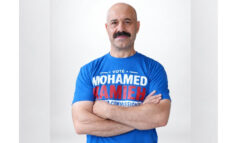
AAPAC endorsed four Arab American candidates for the Dearborn Heights Charter Commission, which will be formed if city voters approve revisiting the local charter.
The endorsed candidates are Mohamed Hamieh, Dana Mohammad, Sam Sakka and Elyana Hussain.
A total of 11 candidates are competing for the commission’s nine seats to review the Dearborn Heights charter, which has not undergone an update since its initial adoption when the city was established in 1963.
Ballot proposals
YES to building and renovating Dearborn schools
AAPAC urged voters residing in the Dearborn School District to vote “yes” on a tax proposal authorizing $1.51 billion in bonds to build and renovate all district school buildings over 20 years, without increasing the current total tax rate for Dearborn homeowners.
The proposal includes funding to build six new schools serving kindergarten through eighth grade, along with comprehensive renovations to all other schools, including the three high schools: Fordson, Dearborn and Edsel Ford.
Projects include renovating athletic fields and restrooms, creating modern learning spaces dedicated to science, technology, engineering, arts and mathematics, equipping all schools with ventilation and air-conditioning systems, and improving safety through secure entrances.
Although the proposal asks voters to approve an additional property tax levy of 3.14 mills for 20 years, property owners would not feel that increase because it would coincide with the expiration of existing taxes, leaving the overall rate at 26.30 mills.
Homeowners in Dearborn Heights neighborhoods within the Dearborn school district would see a modest increase of just 0.96 mills.
YES to reviewing the Dearborn Heights charter
AAPAC expressed support for the proposal to review the Dearborn Heights charter, emphasizing the need to modernize it to meet contemporary requirements.
If a majority of city voters approve the proposal, the winners of the Charter Commission election will begin preparing proposed revisions for submission to voters in a subsequent referendum.
If voters reject the charter review proposal, the commission election will automatically be nullified.
YES to funding historical museums
AAPAC endorsed the ballot proposal for the Southeast Michigan Public Historical Museums Authority, urging voters to vote “yes” on a measure that would provide funding for the Charles H. Wright Museum of African American History, the Detroit Historical Museum and the Dossin Great Lakes Museum.
A portion of the funding would also support smaller local museums and historical institutions throughout Wayne and Oakland Counties.
AAPAC explained its support for the tax proposal as part of its backing for initiatives that enrich the region’s cultural and educational life and serve its residents.
The proposal would impose a limited property tax of 0.2 mills on all real estate within Wayne and Oakland Counties for 10 years, through 2035.
The sustainable funding would support the operation of public museums and historical institutions and the development of educational programs for students and visitors, ensuring the continued operation and maintenance of these institutions and the preservation of the region’s local historical heritage.
YES to funding the Detroit Zoo
As part of its commitment to developing Metro Detroit’s tourist attractions, AAPAC endorsed a proposal to renew the property tax dedicated to the Wayne County Zoological Authority, which oversees the Detroit Zoo in Royal Oak.
The proposal would renew the existing 0.1-mill tax for an additional 10 years, through 2035, without imposing a new tax increase on county property owners.
The sustainable funding would ensure continued advanced animal care, maintenance and modernization of educational and recreational facilities, and support for wildlife conservation programs.
In return for this limited tax, Wayne County residents would continue receiving designated benefits, including discounted tickets and free admission days throughout the year, alongside support for school trips and educational programs.
NO to revising Michigan’s constitution
Voters throughout Michigan will vote in November on Proposal 1, a referendum held every 16 years on whether to review and rewrite the state constitution through a comprehensive constitutional convention.
AAPAC decided against endorsing the proposal and urged voters to vote “no” to avoid opening the door to sweeping changes that special interests and political money could impose at the expense of fundamental rights protected by the current constitution.
In addition to political disputes, approval would require organizing a large convention at substantial taxpayer expense. It could also create legal and economic instability lasting for years until a new constitution is drafted and adopted.
YES to restricting political money
AAPAC endorsed Proposal 2, which will appear on ballots statewide and aims to restrict political contributions from utility companies such as DTE Energy and Consumers Energy, as well as companies holding major government contracts.
Proposal 2 does not identify specific companies. Instead, it applies a general standard to any company holding, or seeking, contracts with state or local governments worth more than $250,000 annually, encompassing more than 900 companies across various sectors.
The prohibition would also extend to immediate family members and individuals with close and substantial ties to the owners of those companies.
The proposal’s primary aim is to combat “pay-to-play” practices, described as bribes paid in advance to elected officials.


Leave a Reply