



The November 3 general election carries extraordinary and unprecedented significance for Arab and Muslim Americans in Michigan. The historic breakthroughs and substantial political gains achieved in August’s primaries have brought these communities to a decisive democratic moment — an opportunity to consolidate their electoral power and shape political representation in Michigan for years, perhaps decades, to come.
This election takes on added importance after Arab and Muslim American voters demonstrated their strength in the Democratic primary, helping Abdul El-Sayed secure the party’s nomination despite the enormous sums poured into his opponent, Haley Stevens’, campaign. El-Sayed won by approximately 15,000 votes, propelled by unprecedented turnout in cities with large Arab and Muslim populations — even though participation in Dearborn, for example, did not exceed 27 percent.
It is worth recalling the remarkable results achieved Tuesday by Palestinian voters in the occupying state of Israel. Despite intense political pressures, they turned out at a historic rate of 80 percent. That participation now threatens to remove Israeli Prime Minister Benjamin Netanyahu from power and, for the first time in decades, has moved Arab lawmakers from the margins of Israel’s governing equation to its center, with neither traditional political camp securing a decisive majority.
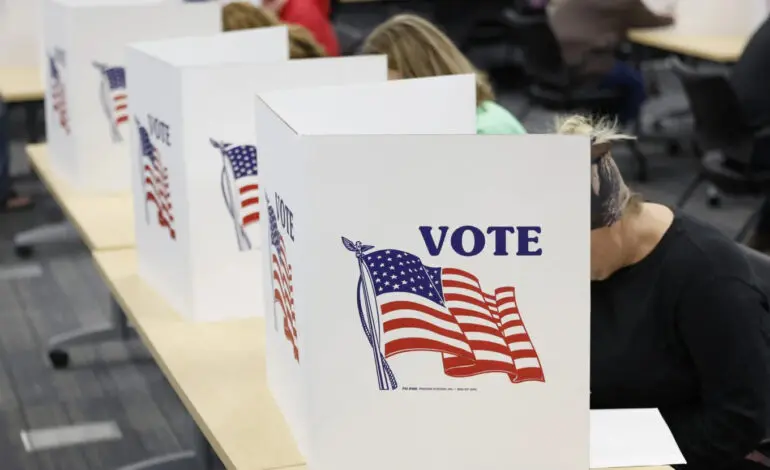
Imagine what could happen if 80 percent of Arab and Muslim American voters in Michigan cast their ballots on November 3. The result could be nothing less than a political earthquake: sending the first Muslim senator to the U.S. Capitol despite the Republican campaign machinery assembled behind Mike Rogers and led personally by President Trump, Vice President J.D. Vance and the Israeli lobby. None of them has hesitated to demonize Arab and Muslim Americans in ways that threaten to undermine this country’s democratic values.
Defeating Rogers is no longer a distant aspiration or an improbable prospect. It is a tangible possibility reflected in recent polls showing him trailing El-Sayed, whose bold ideas and measured performance have attracted national attention. His political courage in defending just causes and confronting powerful lobbies and entrenched interests has distinguished his campaign.
If El-Sayed is willing to wage these fierce battles as a candidate, when electoral calculations might be expected to constrain him, his arrival in the Senate would represent far more than a change of faces. It would mark a fundamental shift in political influence. His election would give just causes a legislative champion and create a historic opening to challenge the dominance of established lobbies and help reshape the rules of politics in Washington.
A victory on November 3 would be more than a passing electoral triumph. It would be a defining event, dismantling historic barriers facing future generations of Arab and Muslim Americans.
Perhaps that is precisely what frightens Republicans and pro Israeli lobbyists. His victory in the Democratic primary sent them into a frenzy, and they have continued attacking him around the clock using the ugliest and most degrading political tactics. These attacks come from the highest levels of American political leadership, from the very people entrusted with safeguarding the Constitution and defending democratic values.
As El-Sayed repeatedly says on the campaign trail, seeking public office in America should not be this hard.
His Senate campaign recalls a defining struggle in American political history: John F. Kennedy’s presidential campaign in 1960. Kennedy faced widespread suspicion and attacks because of his Catholic faith. Political opponents and conservatives accused him of divided loyalties, claiming that his election would place American decision-making under the authority of the pope in Rome.
Today, American democracy faces that test again. Worse tactics are being used to exploit an Arab American candidate’s identity and cultural background to question his patriotism and belonging. These attacks expose the enduring political fear of breaking traditional barriers. They also demonstrate that securing genuine pluralism in America’s legislative institutions still requires intellectual, political and popular struggle.
In August, El-Sayed broke through a ceiling long described as impenetrable and opened a breach in the wall of conventional politics. A victory on November 3 would be more than a passing electoral triumph. It would be a defining event, dismantling historic barriers facing future generations of Arab and Muslim Americans.
His arrival in the Capitol would challenge the legacy of marginalization and affirm these communities’ right to full participation in national life and decision-making. It would transform their electoral weight from a source of seasonal leverage into an enduring force shaping the political future of Michigan and the country.
An overwhelming turnout is the strongest answer to those who marginalize us and question our belonging and American identity.
At this crossroads, we at The Arab American News urge all Michigan voters to go to the polls and make their voices heard. Support candidates committed to keeping their promises and equipped to address the difficult challenges facing our local communities and the state we and our children call home.
We especially urge African American voters to turn out in large numbers for Abdul El-Sayed and the other candidates endorsed by the Arab American Political Action Committee (AAPAC). The endorsements of this newspaper and AAPAC are rooted in a broad public interest and extend beyond Arab and Muslim candidates.
They include outstanding African American leaders, notably Lt. Gov. Garlin Gilchrist II for secretary of state and Donavan McKinney for the U.S. House of Representatives. They also include Eli Savit, who is Jewish, for attorney general. These endorsements affirm a consistent standard: competence, a commitment to social justice and dedicated service to every part of our society.
As in previous election cycles, The Arab American News endorses AAPAC’s slate of candidates in local, national and judicial races, along with its recommendations on ballot proposals in Dearborn and across Michigan. The complete list appears on page 19.
On November 3, we will be more than voters participating in a routine election. We will have a real opportunity to make history and rewrite the rules of political representation in this state.
Do not let this precious opportunity slip away. Do not allow apathy or inaction to squander the gains our community has built over decades.
An overwhelming turnout is the strongest answer to those who marginalize us and question our belonging and American identity. It is the only way to turn our community’s aspirations from deferred hopes into a political reality that commands respect — and builds a future for generations to come.
Leave a Reply