June 2011 - sahtak
7
E
ating a Mediterranean diet may prevent or even reverse
metabolic syndrome, a cluster of risk factors for heart dis-
ease and diabetes, according to a new study.
The Mediterranean diet includes an abundance of fruits, veg-
etables, beans, nuts, olive oil, poultry and fish, with very little red
meat. Scientists believe that eating this way has antioxidant and
anti-inflammatory effects on the body.
"This study reinforces guidelines over the past 10 years, stress-
ing the need to reduce consumption of refined carbohydrates and
saturated fats" from meat and dairy products, Dr. Robert S.
Rosenson of the Mount Sinai School of Medicine in New York
told Reuters Health. He was not involved in the work.
Metabolic syndrome is a recent catchall for unhealthy traits
that spell bad news for the heart, such as belly fat, high blood
pressure, low levels of "good" HDL cholesterol, elevated fat lev-
els in the blood (triglycerides), and high blood sugar. The condi-
tion is diagnosed when a person has at least three of those risk
factors.
Reviewing 35 clinical trials, Dr. Demosthenes B. Panagiotakos
at Harokopia University in Athens, Greece, and his team found
that faithfully eating a Mediterranean diet can improve each of
those traits.
For instance, those who stuck with the Mediterranean diet as
compared to eating their regular foods or a low-fat diet trimmed
their waistlines by about 0.43 cm (0.16 inches) on average.
They also showed slashed their blood pressure by 2.35 points
on the top reading, and their fasting blood sugar by 3.89 mil-
ligrams per deciliter.
While these benefits may seem small, Dr. Elizabeth Mayer-
Davis, who was not involved in the research, said they show a
Mediterranean diet might be beneficial.
"So it's reasonable to recommend the Mediterranean diet to
patients," she said. But she added that "we can't say that this diet
reduces the risk of diabetes."
Nor does the study, published in Journal of the American Col-
lege of Cardiology, show that the diet cuts the risk of death from
heart disease, which has been linked to metabolic syndrome.
Mayer-Davis, professor of nutrition at the University of North
Carolina at Chapel Hill, also said she was concerned that cost
could be a barrier to adopting a diet that emphasizes fresh foods,
olive oil and fish.
"This speaks to the need to improve availability of these kinds
of foods to people who don't have a lot of extra money to spend,"
she told Reuters Health.
Olive oil is an important part of the Mediterranean diet be-
cause it is a so-called monounsaturated fat, which "protects" lev-
els of HDL cholesterol.
However, it can cost a lot more than other cooking oils on su-
permarket shelves. Rosenson said that when he suggests this diet
to his patients, he makes the point that the much cheaper canola
oil is also high in monounsaturated fats.
Dr. Robert Eckel, a former president of the American Heart
Association who reviewed the study for Reuters Health, noted
that the Mediterranean diet "is part of a dietary pattern consistent
with guidelines from the AHA, the USDA, and other bodies, that
overall is consistent with reduced risk for cardiovascular disease,
stroke and diabetes."
In other words, he added, "there's nothing really new here."
He noted that people often misconstrue the concept of a
Mediterranean diet as simply adding olive oil. "If they continue
eating a lot of saturated fat and refined carbohydrates, they're
mistaken in what the dietary pattern is all about," he said.
Eckel, of the University of Colorado Denver School of Med-
icine, also had several criticisms of the new review. For instance,
he pointed out that the comparison diets and other lifestyle mod-
ifications varied broadly, and some studies were very short.
"Follow-up in the clinical trials varied from 1 month to 5 years
- it's hard to make conclusions after 1 month!"
— Reuters
Mediterranean diet may thwart
heart disease, diabetes
Diet has beneficial antioxidant and anti-inflammatory effects on the body
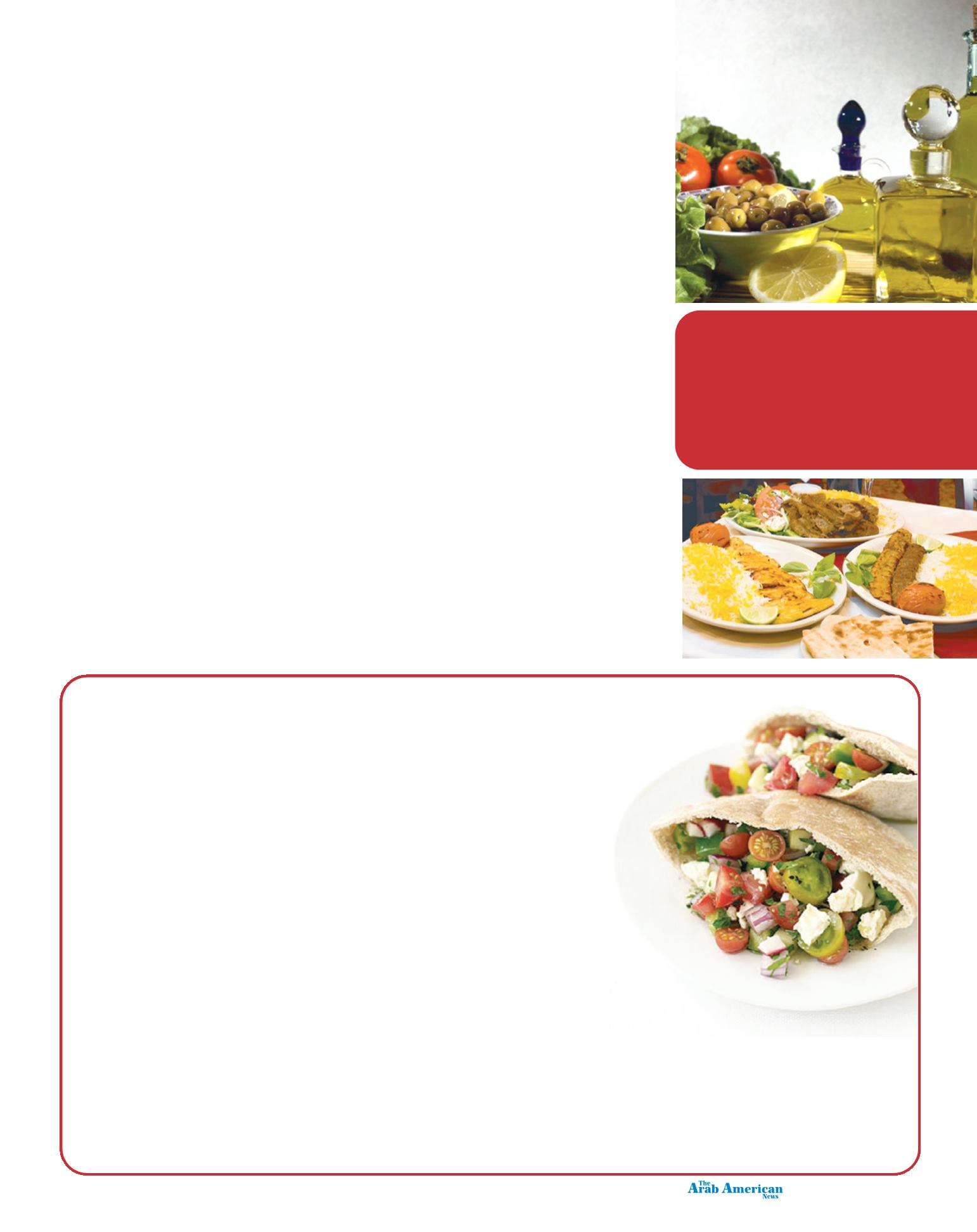
The Mediterranean diet includes
an abundance of fruits, vegetables,
beans, nuts, olive oil, poultry and
fish, with very li le red meat. Scien-
sts believe that ea ng this way has
an oxidant and an -inflammatory
effects on the body.
Pu ng it all together...
The Mediterranean diet is a delicious and healthy way to eat. Many people who switch to this
style of ea ng say they'll never eat any other way. The Mayo Clinic offers some specific steps to
get you started:
Eat your veggies and fruits — and switch to whole grains.
An abundance and variety of plant foods
should make up the majority of your meals. They should be minimally processed, and try to pur-
chase them when they're in season. Strive for seven to 10 servings a day of veggies and fruits. Switch
to whole-grain bread and cereal, and begin to eat more whole-gain rice and pasta products. Keep
baby carrots, apples and bananas on hand for quick, sa sfying snacks. Fruit salads are a wonderful
way to eat a variety of healthy fruit.
Go nuts.
Keep almonds, cashews, pistachios and walnuts on hand for a quick snack. Choose natural
peanut bu er, rather than the kind with hydrogenated fat added. Try tahini (blended sesame seeds)
as a dip or spread for bread.
Pass on the bu er.
Try olive or canola oil as a healthy replacement for bu er or margarine. Use it in
cooking. A er cooking pasta, add a touch of olive oil, some garlic and green onions for flavoring. Dip
bread in flavored olive oil or lightly spread it on whole-grain bread for a tasty alterna ve to bu er.
Try tahini (blended sesame seeds) as a dip or spread for bread too.
Spice it up.
Herbs and spices make food tasty and are also rich in health-promo ng substances. Sea-
son your meals with herbs and spices rather than salt.
Go fish.
Eat fish once or twice a week. Fresh or water-packed tuna, salmon, trout, mackerel and herring are healthy choices. Grilled fish tastes good and requires li le
cleanup. Avoid fried fish, unless it's sauteed in a small amount of canola oil.
Rein in the red meat.
Subs tute fish and poultry for red meat. When eaten, make sure it's lean and keep por ons small (about the size of a deck of cards). Also avoid
sausage, bacon and other high-fat meats.
Choose low-fat dairy.
Limit higher fat dairy products such as whole or 2 percent milk, cheese and ice cream. Switch to skim milk, fat-free yogurt and low-fat cheese.
Raise a glass to healthy ea ng. If it's OK with your doctor, have a glass of wine at dinner. If you don't drink alcohol, you don't need to start. Drinking purple grape juice
may be an alterna ve to wine.


