10
sahtak - June 2011
4 herbal teas that may
change your health
Whether you're battling allergies or a stom-
achache, relief may be just a sip away. "Herbal
teas contain compounds and antioxidants with
specific healing properties," says Christy Westen,
founder of Simply Vibrant in Rockville Center,
New York. Use these four brews to treat what
ails you.
Herbal Tea to Fix Allergies: Stinging Nettle
"This flowering shrub is an anti inflammatory,"
says Westen. "It may inhibit the production of histamines, substances that
trigger allergy symptoms."
Herbal Tea for Stress Relief: Chamomile
According to a University of Pennsylvania study, people who took a daily
supplement of this herb felt less anxious than those who didn't.
Chamomile contains a compound called chrysin, which experts believe
has a relaxing effect on the nervous system.
Herbal Tea for Better Sleep: Valerian
Research suggests that this herb increases levels of gammaaminobutyric
acid, a brain chemical that helps induce relaxation and sleep.
Herbal Tea for a Stomach Ache: Peppermint
Not only does this beverage freshen your breath, but it can also aid with di-
gestion, says Westen. "It relaxes the stomach muscles and eases bloating."
#6: Honey
A rise in blood sugar can reduce the production of orexin in
the brain. Orexin is a recently discovered neurotransmitter
that's been linked to wakefulness. Try drizzling a small
amount of honey in your chamomile tea. A different route
to sleep: Keep dessert low in sugar.
#5: Chamomile Tea
This herbal tea lacks the caffeine found in traditional teas,
and it has a calming effect on the body. Also, a warm liquid
before bed can make you sleepy by raising body heat.
#4: Garbanzo Beans (Chickpeas)
High-fiber garbanzo beans are rich in vitamin B6, which
your body uses to produce serenity-boosting serotonin. Try
adding garbanzo beans to salads, soups and stews when you
need sleep.
#3: Dried Tart Cherries
A handful of dried cherries not only provides the requisite
serotonin-boosting carbs, it's also one of few food sources of
melatonin, which has been found to promote better sleep and
lessen the effects of jet lag. Plus, tart cherries are packed with
age-fighting antioxidants.
#2: Halibut
Halibut is packed with two building blocks for better sleep:
tryptophan and vitamin B6, which has a mild flavor and meaty
texture that appeals to finicky seafood eaters. Other foods high
in tryptophan include poultry, beef, soybeans, milk, cheese, yo-
gurt, nuts and eggs.
#1: Nonfat Popcorn
The carbohydrates in nonfat popcorn help bring the amino
acid tryptophan into your brain, where it's used to make a
sleep-inducing neurotransmitter called serotonin. Since eating
a heavy meal within two hours of bedtime can keep you
awake, low-calorie popcorn (just 93 calories in three cups
popped) is a great late-night snack.
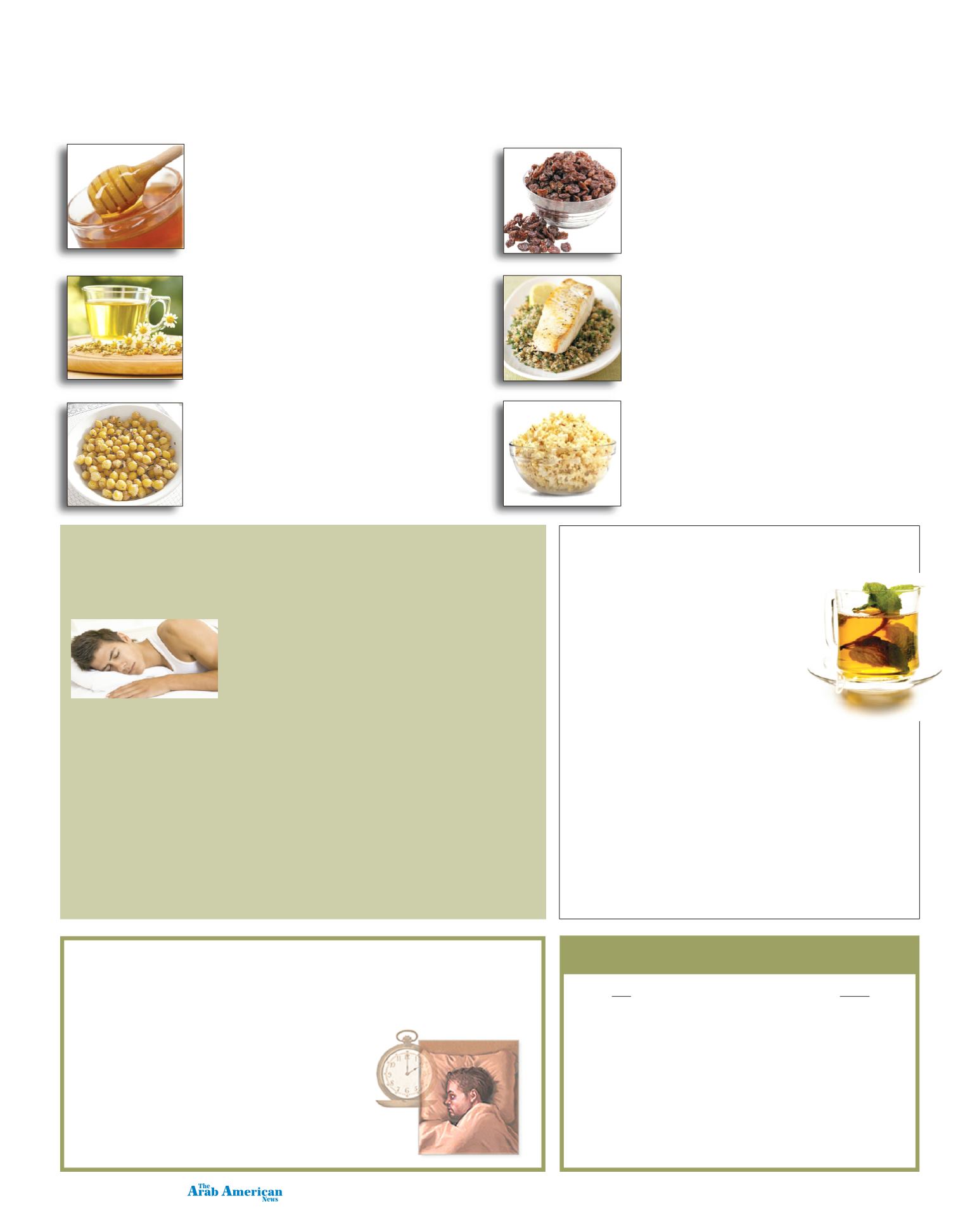
The best foods for deep sleep
Can't sleep? Forget sleep aids! Snack on these 6 healthy foods that promote deep sleep to kick sleep problems to the curb.
How to get a good night's sleep
Spending the night tossing and turning makes for a miserable morning. Your inability to fall or stay
asleep can be due to a variety of stress-induced factors. Find out what you can do to keep these inter-
ferences at bay.
Time Your Meals
Eating late could be the cause of a restless night. Aim to have din-
ner at least two hours before you head to bed. If you're hungry and
are craving a light snack, foods with tryptophan, like whole-grain,
low-sugar cereal or a small peanut butter sandwich, release sero-
tonin into the brain, making you relaxed. According to The Mayo
Clinic, there is little evidence to prove that warm milk before bed-
time has any sleep-enhancing effects, so you can skip this old tip.
Develop A Routine
It's important that you get your body on a sleep schedule-even on weekends. Maintaining a consistent
sleep-wake cycle should help you fall asleep more regularly. To help you craft a habit of sleep-prepa-
ration activities, try reading a book (not in bed), or relaxing stretch poses.
Cherish Your Bed
Resist the urge to plop on your pillows with work. It's important to reserve your bed for sleeping only.
If you find yourself unable to fall asleep after 20 minutes, get out of bed and restart an element from
your sleep-prep routine. Return to your sheets when you're tired and ready to give it another try.
Skip The Naps
Afternoon naps—if you feel you have to take one—should be limited to less than 30 minutes. Anything
longer than that will take away from your evening snooze.
Sleeping problems... Know when to see a sleep doctor
If you’ve tried the tips above, but are still struggling with sleep problems, you may
have a sleep disorder that requires professional treatment. Consider scheduling a visit
with a sleep doctor if, despite your best efforts at self–help, you are still troubled by
any of the following symptoms:
• Persistent daytime sleepiness or fatigue
• Loud snoring accompanied by pauses in breathing
• Difficulty falling asleep or staying asleep
• Unrefreshing sleep
• Frequent morning headaches
• Crawling sensations in your legs or arms at night
• Inability to move while falling asleep or waking up
• Physically acting out dreams during sleep
• Falling asleep at inappropriate times
Age
Hours
Newborns (0-2 months)
12 - 18
Infants (3 months to 1 year)
14 - 15
Toddlers (1 to 3 years)
12 - 14
Preschoolers (3 to 5 years)
11 - 13
School-aged children (5 to 12 years)
10 - 11
Teens and preteens (12 to 18 years)
8.5 - 10
Adults (18+)
7.5 - 9
Average Sleep Needs


