




Israel’s far-right government decides to expand war to fully occupy Gaza as Lebanon faces crisis over Hezbollah disarmament proposal pushed by the U.S., Saudi Arabia and Israel.
Occupation of Gaza
After 10 hours of deliberations, Israel’s Security Cabinet — in the early hours of Friday, August 8 — approved Prime Minister Benjamin Netanyahu’s proposal to fully occupy the Gaza Strip, amid apparent approval from Donald Trump that resembled a “green light.” The decision came despite broad public opposition and strong objections from the military leadership over the risk of killing Israeli prisoners still held by the Palestinian resistance, in addition to losing more officers and soldiers.
Israeli army chief Herzi Halevi’s replacement, Eyal Zamir, reiterated his opposition to expanding the ground offensive, but Netanyahu insisted on seizing military control over the entire Strip. He claimed there was no intention to retain Gaza after the war, saying the goal was solely to topple Hamas rule and hand over governance to Arab forces unaffiliated with the movement, according to an interview with Fox News.
Despite thousands protesting outside the Cabinet meeting hall, urging the government “not to sacrifice their sons and daughters” and to seek a negotiated solution, the political-security cabinet approved a maneuver to first deepen the occupation of Gaza City, despite Zamir’s objections. He warned that such an operation could take two years, endanger soldiers’ lives and jeopardize the safety of Israeli prisoners. The “Generals’ Forum” within the Democrats party, led by Yair Golan, also voiced strong opposition to occupying Gaza, warning of “dire consequences.”
Media leaks indicated that Netanyahu’s plan is one of the largest Israeli military operations in decades, involving the capture of Gaza City and central refugee camps, and pushing residents toward the so-called “Al-Mawasi Humanitarian Zone” in Rafah in the south. Military assessments suggest the plan could require four to five months of intense fighting, while completely eliminating Hamas could take “additional years.”
Netanyahu and his far-right allies intensified pressure on Zamir, with some close to the prime minister hinting at his dismissal if he continued resisting political directives. Ministers from the far-right declared that the “full occupation” of Gaza was now the preferred option, labeling any military opposition to it as “overstepping authority.”
Meanwhile, NBC News quoted U.S. officials as saying satellite images show Israel massing forces for a possible ground invasion of Gaza, with troop movements and formations suggesting a major imminent operation. Israel’s military currently controls most of Rafah in the south and parts of the Gaza Governorate and the north, but has failed to end resistance operations, which continue inflicting near-daily losses.
Israel’s Channel 12 reported that Trump “does not oppose” Netanyahu’s plan. However, the same channel later quoted an American official as saying that “Washington rejects any permanent annexation of land in Gaza”, stressing that U.S. support for Israel “does not include altering the Strip’s legal status.” This indicates that Washington may back the full occupation as long as it is not permanent.
Trump declined to say whether he supports or opposes Israel’s potential military takeover of Gaza, stating that his administration’s focus is on increasing food access to the besieged Palestinian territory.
The Palestinian resistance factions affirmed their readiness to confront invading forces and inflict heavy losses if Israel proceeds with the occupation plan, vowing to foil Netanyahu’s scheme as they did the “Gideon’s Chariots” operation launched by the Israeli military in May, during which more than 40 soldiers were killed and dozens wounded, according to the army’s own admissions.
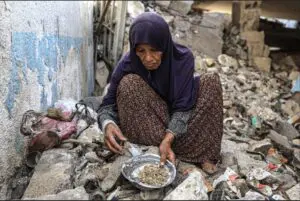
A family living in a makeshift tent in Yarmouk camp in the Gaza Strip, where they pick out food scraps among waste material, on Wednesday, August 6. – Photo by Anadolu
Humanitarian crisis
On Thursday, a team of United Nations experts condemned Israel’s escalation of its campaign of extermination against Palestinians in Gaza, urging the international community to end its “complicity” in the face of Israeli atrocities, as ceasefire talks remained stalled.
The experts stated that Israeli displacement orders targeted the last bastions of international humanitarian response in Gaza, along with direct attacks such as the deadly recent airstrike on the Palestinian Red Crescent Society. They said Israel has used starvation as a brutal weapon of war, constituting a crime under international law.
They warned that more than 500,000 people — a quarter of Gaza’s population — face famine, while the rest are at emergency levels of hunger. All 320,000 children under 5 are at risk of acute malnutrition.
The experts stressed that Israel’s unlawful restrictions on humanitarian aid have created “living conditions that effectively lead to the physical destruction of the Palestinian people in Gaza”, calling it “an act punishable under international law as genocide, alongside the mass killing and mass starvation of Palestinians in the Strip.”
They noted that Israel is working to “exterminate the population of Gaza by all possible means”, pointing to the killing of more than 1,000 Palestinians by Israeli forces while they queued for humanitarian aid. Seventy percent of these deaths occurred at sites established by the so-called Gaza Humanitarian Foundation, backed by the U.S. and Israel. These casualties add to nearly 60,000 killed and 140,000 wounded since the war began 22 months ago.
The experts further warned that displacement orders have forced all surviving Gaza residents into no more than 12 percent of the Strip’s land area.
Disarming Hezbollah
In a clear sign of U.S.–Saudi control over Lebanon’s ruling authority, President Joseph Aoun and Prime Minister Nawaf Salam reversed course on the issue of the resistance’s weapons by approving the objectives of U.S. envoy Thomas Barak’s disarmament proposal, under the banner of “restoring state sovereignty over all its territory.” This move ignored the internal risks of embroiling the army in such a mission, as well as the external dangers of leaving Lebanon entirely exposed to Israeli occupation and extremist factions expanding in unstable Syria.
Despite ministers from the Amal Movement and Hezbollah walking out of the Cabinet session, Salam’s government tasked the Lebanese Army with preparing an implementation plan for disarmament before early 2026, postponing discussion of the U.S. paper’s details until after the army submits its plan by August 31.
The day after the decision — which Hezbollah condemned as “a grave mistake that strips Lebanon of the weapon of resistance against the Israeli enemy, and one it will consider and treat as if it doesn’t exist” — Amal demanded its reversal “to correct the course of affairs.” Tensions rose after four Shi’a ministers (a fifth, Yassine Jaber, was abroad for undisclosed reasons) withdrew from the second Cabinet session to continue discussing the “U.S. paper” Thursday, accusing Prime Minister Salam of acting as if he were a U.S. administrator by insisting on voting on it.
Parliament Speaker Nabih Berri said the stage was “very sensitive and requires a positive approach and ample time for discussion and negotiation.” However, Shi’a ministers saw no responsiveness to their demands; instead, Salam and anti-resistance forces acted like victors and tried to rush through Barak’s proposal.
“We withdrew after our request to postpone discussion of U.S. envoy Tom Barak’s paper until after the Lebanese Army submits its plan on August 31 was rejected,” Labor Minister Mohammad Haidar said, adding that “the decision in the session was to proceed with studying the paper’s objectives and deciding on them, which created clear differences that prompted us to withdraw.”
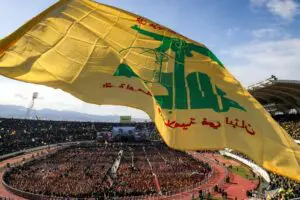
Mourners attend the funeral of slain Hezbollah leaders Hassan Nasrallah and Hashem Safieddine at the Camille Chamoun Sports City Stadium on the outskirts of Beirut on February 23. – File photo
After the Cabinet approved the U.S. paper’s objectives despite the loss of sectarian legitimacy due to the Shi’a absence, the U.S. envoy posted on X:
“Congratulations to Lebanese President Joseph Aoun, Prime Minister Nawaf Salam and the Council of Ministers for taking this historic, bold and correct decision this week to begin full implementation of the November 2024 cessation of hostilities agreement, U.N. Resolution 1701, and the Taif Accord.”
Salam wrote on X that the paper includes “the gradual elimination of the armed presence of all non-governmental actors, including Hezbollah, across all Lebanese territory — south and north of the Litani River — while providing support to the Lebanese Army and Internal Security Forces.”
Without U.S. guarantees, Salam said the paper aims to “ensure the sustainability of the cessation of hostilities, including all violations by land, air and sea, through systematic steps leading to a permanent, comprehensive and guaranteed solution”, including Israeli withdrawal from five disputed points and resolution of border and prisoner issues through indirect negotiations.
To support reconstruction, Salam said, the U.S. side proposed “holding an economic conference involving the United States, France, Saudi Arabia, Qatar and other friends of Lebanon to support the Lebanese economy and reconstruction so that Lebanon becomes once again a prosperous, viable country as called for by President Donald Trump.”
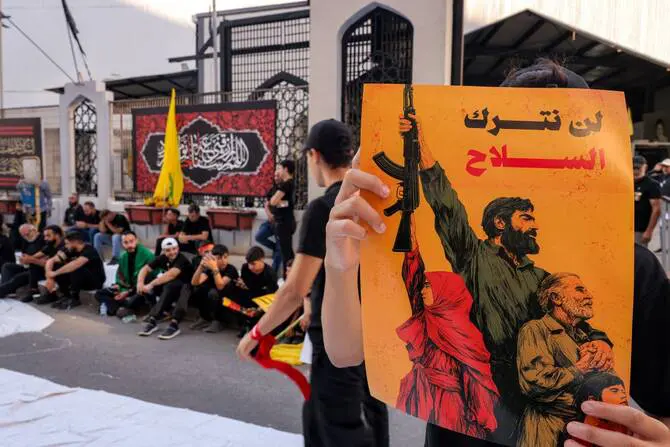
Amid popular anger over the government’s capitulation to U.S.–Saudi dictates, marches swept through Beirut’s southern suburbs, the capital and various areas, including Nabatieh and Tyre in the south, and Hermel in the Beqaa, rejecting the Cabinet’s decision to disarm the resistance. Cars and motorcycles paraded with Hezbollah and Amal flags and images of Sayyed Hassan Nasrallah and Imam Musa al-Sadr, chanting slogans against the government, the United States and the Israeli occupation.
This domestic dispute comes as Israel continues its aggression against Lebanon, having targeted various areas with near-daily airstrikes over the past week.
The repercussions of Salam’s decision extended to the region, especially Iran.
“This is not the first time there has been an attempt to disarm Hezbollah and neutralize the resistance’s weapons,” Foreign Minister Abbas Araghchi said, adding that the reason is, “clear — the other side has seen firsthand the power of the resistance’s weapons and the impact they can have on battlefield equations.”
Araghchi stressed that, “any decision on this matter ultimately belongs to Hezbollah. We support them from a distance, but we do not interfere in their decisions.”
Before the Cabinet’s move, Hezbollah Secretary-General Sheikh Naim Qassem said the resistance would not agree to any new agreement, warning that Israeli security would collapse within an hour if it launched a large-scale attack on Lebanon.
Qassem emphasized that the party had fully adhered to the ceasefire agreement reached last November, with no violations against Israel or in coordination with the Lebanese state, stressing that “Israel is the one that overturned the agreement and violated it thousands of times.” The ceasefire was brokered by former President Biden’s administration just weeks before leaving office in coordination with the Trump transition team, while the Trump administration shows no responsibility for its implementation.



Leave a Reply