


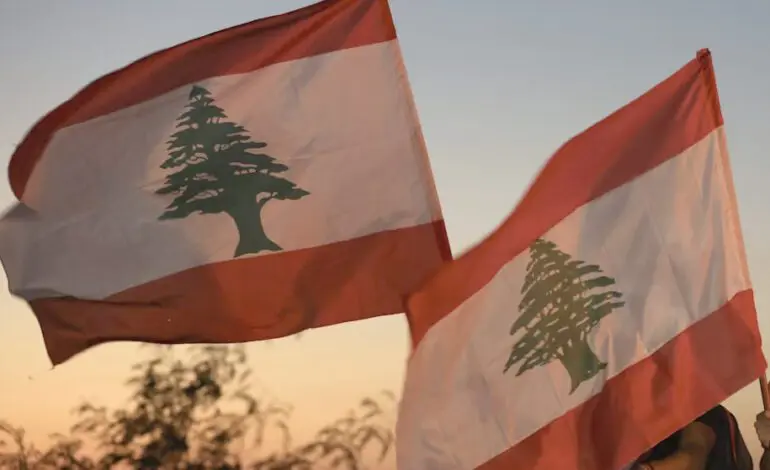

Lebanon prides itself on being a democracy, but for countless citizens, that ideal exists only on paper. No community feels this disconnect more deeply than the Shi’a. Though they are widely believed to be the country’s largest sect — perhaps even its true majority — they remain excluded from genuine political power and access to basic state resources. This exclusion is not only unjust; it is one of the main reasons Lebanon remains unstable and why Hezbollah continues to wield such influence.
The country’s political framework, written into the constitution and reinforced by decades of sectarian deals, no longer reflects the reality of the population it governs. Article 24 guarantees half of parliament’s seats to Christians, who now likely make up only about 15 percent of the population, while the other half is divided among Muslims and smaller groups. This setup traps power in the hands of a minority and leaves the majority with little voice.
The Taif Accord of 1989 — often praised as a turning point — did not solve this imbalance. It merely shifted the old 6:5 Christian-to-Muslim ratio to an even 50-50 split, ignoring demographic realities. It locked in the same old arrangement: a Maronite president, a Sunni prime minister and a Shi’a speaker of parliament — ensuring that Lebanon remained trapped in sectarian balance instead of moving toward true democracy. Far from correcting historical injustices, Taif institutionalized them, leaving Shi’as underrepresented in both political influence and state resources.
When the state fails its citizens, others inevitably step in.
As a result, Shi’a-majority areas — the Bekaa Valley, South Lebanon and the southern outskirts of Beirut — have been left behind, forgotten by the very state that claims to represent them. Roads are broken, hospitals are understaffed, schools are lacking and jobs are scarce. When the state fails its citizens, others inevitably step in. Hezbollah filled the void, providing social services, security and political support. Its rise is not only about ideology or Iranian backing; it is a direct response to inequality and neglect.
Yet the West often looks at Hezbollah only through the lens of weaponry, treating it as a security threat rather than a symptom of political exclusion. Sanctions and pressure may target the organization, but they do nothing to address why it holds such sway. As long as the Shi’a majority feels marginalized, Hezbollah’s weapons will continue to be viewed by many as a shield rather than a menace. Real change cannot come from coercion; it must begin with equality, inclusion and citizenship.
The potential for change is immense. If Lebanon were to hold genuine, nonsectarian elections, and if the Shi’a vote united behind a single political movement, Hezbollah or a coalition it leads could potentially form a government on its own. That is precisely why the political elite resist reform — they benefit from keeping Shi’as politically weak. Reform that reflects population realities would shift power, giving Lebanon a chance at a fair and functioning democracy.
True political equality for the Shi’a, and for all Lebanese, is not a threat to coexistence; it is the only way to safeguard it.
Hezbollah could even help lead that shift. By focusing more on civic reform and less on militarization, it could become a political movement built on participation rather than arms. By championing fair elections, constitutional reform and serious investment in long-neglected regions, Hezbollah could strengthen the state itself and make armed militias increasingly unnecessary. Political legitimacy would replace military dependence, giving the entire country a more stable foundation.
Foreign actors, especially the United States, also need to rethink their approach. For decades, U.S. policy toward Lebanon has focused almost exclusively on containment: imposing sanctions, backing rival factions and trying to isolate Hezbollah. Yet none of these measures confront the root problem — the political and social exclusion of the Shi’a from meaningful political representation. Supporting constitutional reform, equal representation and fair governance is not interference; it is an investment in democracy, human rights and long-term stability. Once citizens are given a genuine voice, the rationale for armed militancy begins to weaken.
Lebanon cannot continue operating under a framework where sect identity outweighs citizenship. The country’s chronic paralysis, corruption and recurring crises all stem from this imbalance. True political equality for the Shi’a — and, by extension, for all Lebanese — is not a threat to coexistence; it is the only way to safeguard it. When power is distributed based on population and merit, trust in the state is restored, resentment declines and armed factions lose their relevance.
Reform can no longer wait. Each year spent under the current arrangement deepens division and weakens the nation’s ability to recover. Lebanon has the intelligence, creativity and civic spirit to rebuild, but not while bound to outdated sectarian quotas. Equal representation is not a concession to one group; it is the bedrock of a just and durable political order. Without it, any effort to fight corruption, revive the economy or secure stability will remain superficial and short-lived.
The moment for action is now. Equal representation, constitutional reform and civil rights for Lebanon’s Shi’as are not abstract ideals — they are practical solutions to the country’s most pressing challenges. By supporting these reforms, both domestic actors and international partners can help Lebanon overcome decades of sectarian injustice, reduce militancy and build a future in which every citizen counts. The choice is clear: reform and inclusion or decline and decay. Lebanon’s survival and the possibility of lasting peace depend on the courage to choose the former.
– Jamal I. Bittar is a university professor and opinion writer focused on Middle East politics and U.S. foreign policy. He is based in Toledo, Ohio. The views expressed are solely his own and do not represent those of any institution with which he is affiliated.
Leave a Reply