



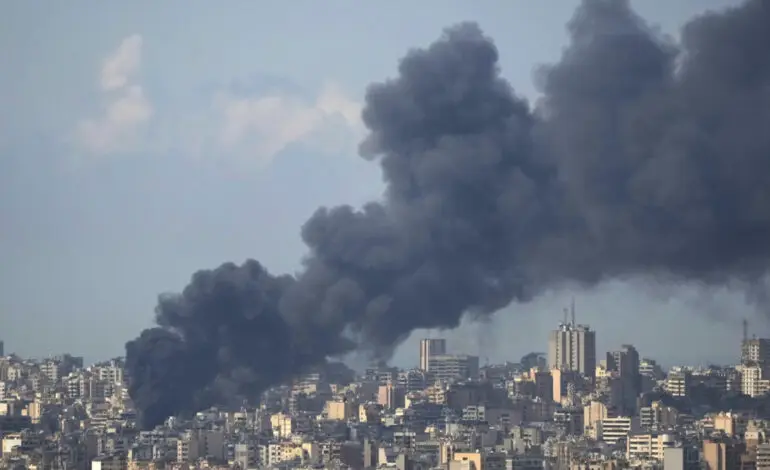

A fragile 10-day ceasefire between Israel and Lebanon took effect Thursday evening, offering a temporary halt to more than a month of devastating war between Israeli forces and Hezbollah, even as the broader U.S.–Israel confrontation with Iran continues to expand militarily, diplomatically and economically across multiple fronts.
The truce began on Thursday, April 16, at 5 p.m. Eastern time, midnight in Lebanon, following what President Trump described as “excellent” conversations with Lebanese President Joseph Aoun and Israeli Prime Minister Benjamin Netanyahu. The agreement came after weeks of intense fighting that has killed more than 2,196 people, injured more than 7,185 and displaced more than 1.2 million people within Lebanon, representing roughly 20 percent of the country’s population, according to reports from the Lebanese Ministry of Public Health.
Ceasefire terms expose deep divisions
While the ceasefire represents the first coordinated pause since the escalation began on March 2, its structure underscores how fragile it remains.
Under U.S.-backed terms, Israel is permitted to act against what it defines as “imminent threats”, even during the truce, a provision that Hezbollah has strongly rejected. The group insists any ceasefire must fully halt Israeli operations across all Lebanese territory and has warned that continued Israeli presence or strikes would justify renewed resistance.
Netanyahu made clear that the ceasefire does not signal a withdrawal from core military objectives. He confirmed that Israeli forces would maintain a security zone in southern Lebanon, estimated at 8–10 kilometers deep, and reiterated that Hezbollah’s disarmament remains a central condition for any long-term settlement.
At the same time, uncertainty persists over whether Israeli troops will withdraw from areas already seized during ground operations, leaving one of the most sensitive questions unresolved as the ceasefire begins.
First direct talks in decades, but mistrust remains
The ceasefire emerged from an unusual burst of diplomacy.
For the first time in decades, Israeli and Lebanese representatives held direct talks in Washington, facilitated by the United States. Trump has since proposed hosting both leaders at the White House in what could become the first high-level meeting between the two sides since 1983.
Yet behind the scenes, tensions remain high. Aoun had initially refused to engage directly with Netanyahu while Israeli strikes were ongoing, signaling deep political sensitivity inside Lebanon about negotiating under fire.
Even after the ceasefire announcement, Lebanese officials pushed back on suggestions of direct normalization, while Hezbollah has openly opposed negotiations altogether, viewing them as an attempt to impose political outcomes through military pressure.
Hezbollah reacts to ceasefire announcement
Hezbollah said in a statement that “any ceasefire must be comprehensive across all Lebanese territory and must not allow the Israeli enemy any freedom of movement.”
Israel offered no official comment on Trump’s announcement.
Hezbollah added that “Israeli occupation on our land grants Lebanon and its people the right to resist it, and this matter will be determined based on how developments unfold”, a stance that could complicate the ceasefire.
Israel has staged a ground invasion in southern Lebanon, where its forces have been engaged in fierce battles with Hezbollah forces in the border area. It is unclear whether Israel would withdraw some or all of its forces as part of the truce.
Lebanon now tied directly to Iran war negotiations with the U.S.
One of the most significant developments, and one largely absent in earlier phases of the conflict, is how closely the Lebanon front is now tied to the broader U.S.–Iran war.
Iranian Parliament Speaker Mohammad Bagher Qalibaf made clear that ending the war in Lebanon is now a condition in Tehran’s negotiations with Washington, elevating Lebanon from a secondary battlefield to a central bargaining chip in regional diplomacy.
Pakistan, which has emerged as a key mediator, is actively working to arrange further talks between the United States and Iran, potentially in Islamabad. However, no date has been set for the next round, and previous negotiations have failed to produce a durable agreement.
At the same time, a separate 14-day ceasefire between the U.S. and Iran — now at its midpoint — remains fragile and could expire within days unless extended.
U.S. expands war beyond the Middle East
Even as diplomacy struggles, Washington is widening its military and economic campaign against Iran.
U.S. forces have launched an aggressive maritime blockade targeting Iranian oil shipments and commercial activity, deploying thousands of personnel and naval assets to enforce restrictions on vessels entering or leaving Iranian ports. Officials say ships are warned, stopped and, if necessary, boarded.
The blockade now extends beyond the Gulf, with U.S. commanders indicating they are prepared to target ships “anywhere in the world” suspected of supporting Iran, a major escalation transforming the conflict into a global economic confrontation.
Early signs of enforcement are already visible, with multiple vessels reportedly turning back under U.S. orders in the first days of the operation.
Strait of Hormuz crisis threatens global economy
The confrontation at sea has pushed the Strait of Hormuz — through which roughly 20 percent of the world’s oil supply passes — to the center of the crisis.
Iran has previously threatened or attempted to restrict traffic through the strait in response to Israeli strikes in Lebanon, while the United States has warned it will use force to keep the waterway open.
International concern is mounting. China has warned that the blockade risks destabilizing global trade, while energy experts caution that prolonged disruption could trigger sharp increases in fuel prices, electricity costs and inflation worldwide.
War powers battle erupts in Washington
As the conflict expands, political tensions are also rising inside the United States.
The House of Representatives narrowly rejected a resolution that would have required Trump to withdraw U.S. forces from the Iran war absent explicit congressional authorization. The vote — 214 to 213 — highlighted deep divisions over the administration’s strategy and raised questions about how long Washington can sustain its growing military involvement.
Democrats warned of another prolonged Middle Eastern conflict without a clear exit strategy, while Republicans largely backed Trump’s approach as a necessary response to Iranian actions.
Human toll and regional risks
Across Lebanon, the humanitarian toll remains severe.
Israeli strikes have killed thousands and displaced more than a million people, while infrastructure damage continues to mount.
Meanwhile, Hezbollah attacks have also caused casualties inside Israel, and fighting in southern Lebanese areas — including key towns such as Bint Jbeil — has underscored how volatile the front remains even as the ceasefire begins.
European leaders have welcomed the truce but warned that it must be used as a pathway to a broader settlement.
A pause, not a turning point
Despite the ceasefire announcement, the fundamental dynamics driving the conflict remain unresolved.
- Israel insists on maintaining military freedom and a buffer zone in southern Lebanon.
- Hezbollah refuses disarmament and rejects any agreement that allows Israeli strikes and continued occupation of Lebanese land.
- Lebanon seeks sovereignty but remains politically constrained.
- The United States is expanding its military and economic pressure on Iran.
- Iran is linking Lebanon directly to its own negotiations with Washington.
The result is a ceasefire built on competing interpretations rather than shared commitments.
For now, the guns may quiet, briefly, along the Lebanese front. But from Beirut to Tehran to the Strait of Hormuz, the region remains locked in a widening confrontation where diplomacy is struggling to keep pace with escalation.


Leave a Reply