





The Middle East is no longer drifting toward instability — it is now fully inside it. What once appeared to be a collection of separate conflicts has merged into a broader regional crisis. Across the Middle East — from Gaza to the Strait of Hormuz — the coming decade is no longer a quest for peace, but a struggle for survival.
At the center of this transformation is the confrontation involving Iran, Israel and the United States. Since late February 2026, direct strikes on Iranian military and nuclear facilities have triggered retaliation across the region, including attacks on Israeli territory, U.S. military positions and commercial shipping routes. What distinguishes the current crisis isn’t merely its unprecedented scale, but the fundamental breakdown of long-standing geopolitical boundaries. For decades, regional powers relied largely on proxy groups to pursue their interests. Today, those conflicts are becoming increasingly direct.
What once appeared to be separate conflicts has merged into a broader regional crisis, transforming the Middle East from a search for peace into a struggle for survival.
Yet despite months of fighting, no side has achieved a decisive victory. Instead, the conflict has settled into a familiar Middle Eastern pattern: escalation followed by restraint, then escalation again. U.S.–Iran negotiations have stalled amid deep disagreements over sanctions relief and Iran’s nuclear program, with diplomatic efforts to sustain a ceasefire and reopen the Strait of Hormuz now in a fragile and uncertain state. Even if an agreement emerges, however, it is unlikely to resolve the deeper disputes that fueled the conflict in the first place. The region may be approaching a pause, but not a settlement.
Nowhere are the consequences more visible than in the Strait of Hormuz. One of the world’s most important energy chokepoints, the waterway has become a symbol of the region’s growing instability. Naval confrontations, tanker disruptions and missile threats have repeatedly shaken global markets. Oil prices have surged, supply chains have been disrupted and governments around the world have been reminded that events in the Middle East can still trigger economic shocks far beyond the region.
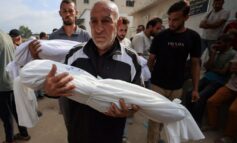
Meanwhile, the humanitarian situation continues to deteriorate. Gaza remains trapped in a cycle of destruction and emergency relief. Healthcare facilities have been overwhelmed, infrastructure has been severely damaged and large portions of the population depend on outside assistance. Even with an immediate end to hostilities, the region faces a grueling, years-long journey toward normalization. The challenge is no longer simply ending the violence. It is rebuilding societies that have endured years of war, displacement and economic collapse.
The challenge is no longer simply ending the violence. It is rebuilding societies that have endured years of war, displacement and economic collapse.
Lebanon faces a similarly bleak outlook. As clashes between Israel and Hezbollah drive widespread displacement and ruin, Lebanon’s economy continues its downward spiral. A U.S.-brokered ceasefire proposal aimed at halting attacks across the border briefly suggested that the conflict could be contained. But with continued cross-border strikes, drone deployments and military maneuvers demonstrate the volatile nature of the current status quo. Lebanon has effectively become the barometer of regional stability. If violence resumes there on a larger scale, broader diplomatic efforts involving Iran could quickly unravel.
Syria remains suspended in a state of permanent uncertainty. The large-scale battles that once dominated headlines have largely subsided, but the country remains divided among competing authorities and foreign powers. The war may no longer command global attention, but its consequences continue to shape everyday life. Like Lebanon, Syria has settled into a condition where crisis is no longer an emergency — it is the normal state of affairs.
Across the region, a deeper geopolitical shift is underway. The Gulf states, once viewed as a relatively unified bloc, are increasingly pursuing independent paths. Saudi Arabia, the United Arab Emirates and other regional powers are recalculating their relationships with both Washington and Tehran. The assumption that outside powers can guarantee regional stability no longer carries the same confidence it once did. As a result, governments are focusing more heavily on self-preservation, economic diversification and strategic flexibility.
The latest developments suggest that the Middle East may be entering a new phase — not one of peace, but one of managed confrontation. Diplomacy and conflict now exist side by side. Negotiators work to extend ceasefires even as military operations continue. Governments seek de-escalation while simultaneously preparing for future rounds of confrontation. The region continues to cycle through periods of confrontation and temporary calm, with each round leaving deeper political, economic and social scars.
The Middle East is entering an era in which survival itself has become the central political objective, while peace is no longer the expectation — it is the exception.
For much of the past decade, the region’s defining question was whether war could be avoided. Today, the more relevant question is whether instability itself has become the permanent condition. The answer increasingly appears to be yes.
In the coming decade, the prospect of sweeping peace treaties or major diplomatic milestones remains highly improbable. Instead, the Middle East is entering an era in which survival itself has become the central political objective. Stability, where it exists, will remain fragile. Conflict, where it erupts, will spread across borders. The region will remain trapped in a gray zone, where the line between outright war and stable peace is permanently blurred. In this new reality, peace is no longer the expectation. It is the exception.
– Jamal I. Bittar is a university professor and opinion writer focused on Middle East politics and U.S. foreign policy. He is based in Toledo, Ohio. The views expressed are solely his own and do not represent those of any institution with which he is affiliated.


Leave a Reply