



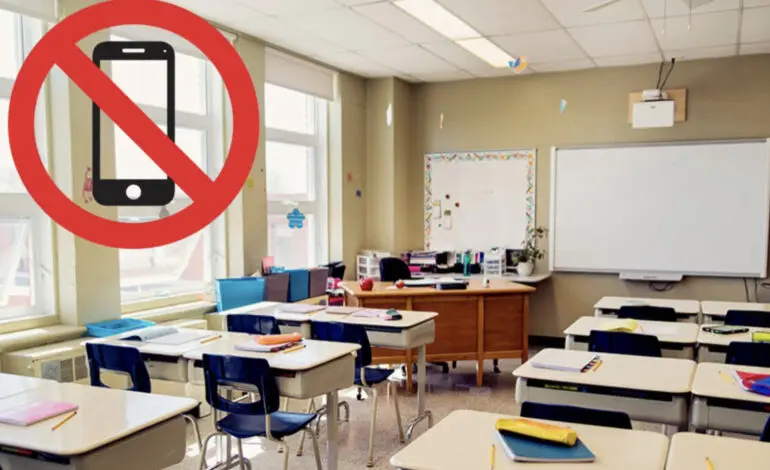

DEARBORN / DEARBORN HEIGHTS— Dearborn Public Schools updated its policy governing student use of cell phones and other wireless communication devices this summer in preparation for the new school year, bringing the district into compliance with a new Michigan law prohibiting students from using such devices during instructional time.
Public Act 2 of 2026, signed by Gov. Whitmer in February, requires public and charter schools to adopt policies prohibiting student use of wireless communication devices during instructional time beginning with the 2026–27 school year. Districts may impose additional restrictions based on students’ grade levels.
Under Dearborn Public Schools’ updated policy, students may not have wireless communication devices available during class unless a teacher expressly authorizes their use. Using a phone or another device outside permitted times or locations constitutes a violation of the Student Code of Conduct and may result in disciplinary action.
Dearborn Public Schools Superintendent Mike Esseily told The Arab American News that the policy is not limited to cell phones. It covers all wireless communication devices, including smartwatches and smart glasses.
The state law defines a wireless communication device as an electronic device capable of functions that include text messaging, voice communication, entertainment, navigation, Internet access, email and transmitting photographs or videos.
The law includes exemptions for medical needs, emergencies, special education services, accommodations under a student’s Individualized Education Program or Section 504 plan, teacher-authorized classroom assignments and school-owned devices.
Different rules by grade level
Under Dearborn’s updated guidelines, elementary school students may bring devices to school with parental permission, but the devices must remain turned off and stored away throughout the entire school day.
Middle school students face stricter rules. Their phones and other wireless devices may not be visible or readily accessible at any point during school hours, including lunchtime.
High school students may carry their phones but cannot use them during instructional time. Individual high schools may authorize limited use during designated periods, such as lunch.
Esseily said Dearborn’s policy complies with the state mandate while imposing tighter restrictions on middle school students and providing greater flexibility at the high school level.
The district’s official guidance states that using wireless devices outside authorized times and locations may result in consequences under the Student Code of Conduct.
Crestwood already had restrictions
In the Crestwood School District in Dearborn Heights, Superintendent Dr. Youssef Mosallam told The Arab American News that the district had implemented an appropriate cell phone policy even before Michigan adopted the statewide requirement.
Mosallam said phones may not be visible during instructional time or in school hallways, except during emergencies or under other exceptions permitted by state law.
At Crestwood High School, students must store their phones and other electronic devices away before entering the school. They may use them only inside the cafeteria during their designated lunch period.
Phones must be put away before students leave the cafeteria and may not be used in classrooms or hallways.
Crestwood’s districtwide Student Code of Conduct permits students in grades six through 12 to use cell phones during lunch but requires them to keep the devices put away in classrooms and hallways.
Students may use phones during class only when a teacher authorizes them for an educational purpose. Unauthorized visible or audible devices may be confiscated and repeated violations can lead to additional disciplinary action.
The updated local policies reflect a broader statewide effort to reduce classroom distractions while allowing individual school districts to determine how broadly the restrictions should apply beyond instructional periods.



Leave a Reply