



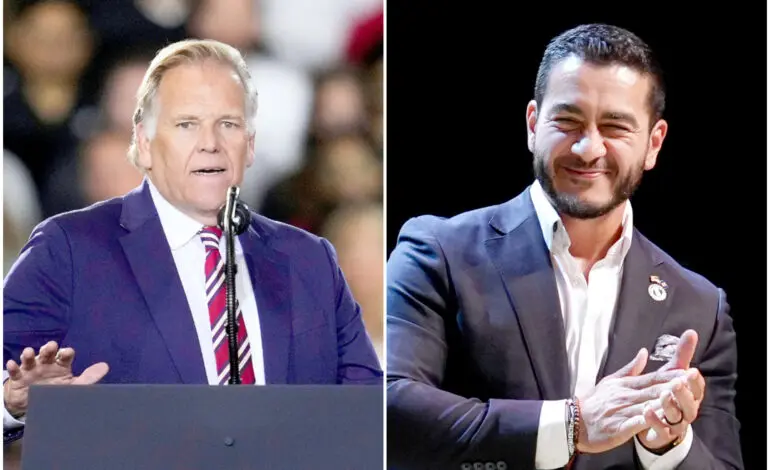

DEARBORN — While Democratic candidate Abdul El-Sayed risks losing support from a significant share of Jewish voters because of his opposition to Israel and the crimes it has committed against the Palestinians and the Lebanese, his Republican opponent in Michigan’s U.S. Senate race, Mike Rogers, faces a more complicated challenge: losing Arab American voters who helped President Trump carry the state in the 2024 presidential election.
Two years after Trump’s victory, the political landscape has shifted significantly. Many Arab Americans in Metro Detroit are distancing themselves from Trump and the Republican Party more broadly, expressing frustration over the continuing war with Iran and the slow progress of the Gaza peace process and complicit in the war crimes by the Israeli forces in Lebanon.
The shift puts Rogers in a difficult position against his Arab American opponent. Trump’s unfulfilled promises, coupled with attacks against El-Sayed that some community members view as racist and Islamophobic, are driving Arab American voters further away from the Republican Party.
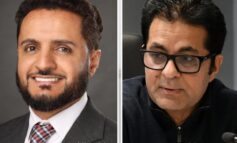
Some Arab American activists who supported Trump in 2024 but now say they have lost confidence in the Republican Party, including Albert Abbas and Sheikh Husham Al-Husainy.
“Trump promised to make America great again,” Abbas told Politico. “Did he do that? Did he put American interests first? It’s the complete opposite.”
Al-Husainy said he now supports El-Sayed after Trump abandoned his promise not to start new wars.
Politico also reported that Republicans who had hoped to build on their gains among Michigan’s Arab American voters are now seeing their support erode.
“We have lost all momentum,” said Hassan Nehme, a former vice chair of the Michigan Republican Party. “Republicans are in terrible shape in the area right now.”
Rogers, meanwhile, is attempting to appeal to Jewish voters through his sharp criticism of El-Sayed. But the strategy offers no guaranteed results among Jewish voters, who have traditionally supported Democratic candidates by wide margins.
With an estimated 400,000 Arab Americans and more than 100,000 Jewish residents in Michigan, the positions taken by the two communities could prove decisive in the November election.

Leave a Reply