



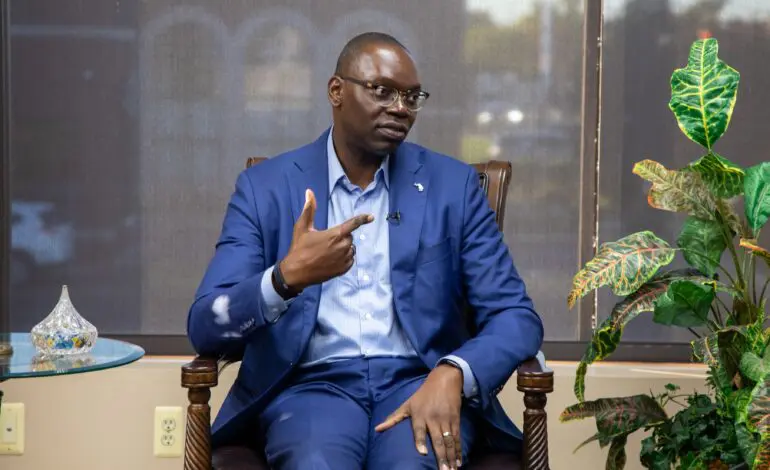

At a New Michigan Media roundtable hosted by The Arab American News, the Democratic secretary of state nominee outlined plans for campaign finance reform, driver’s license access and improved public services.
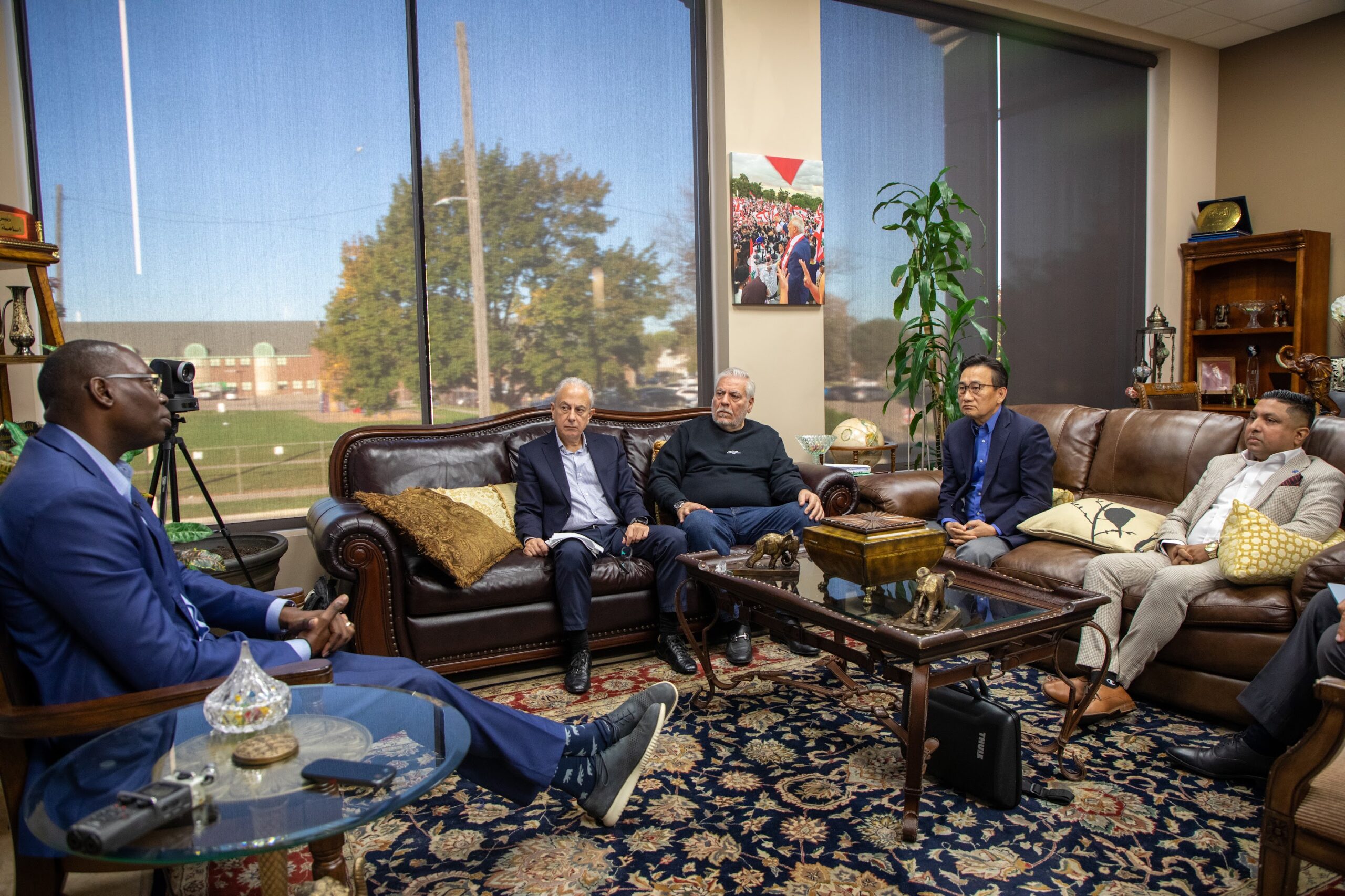
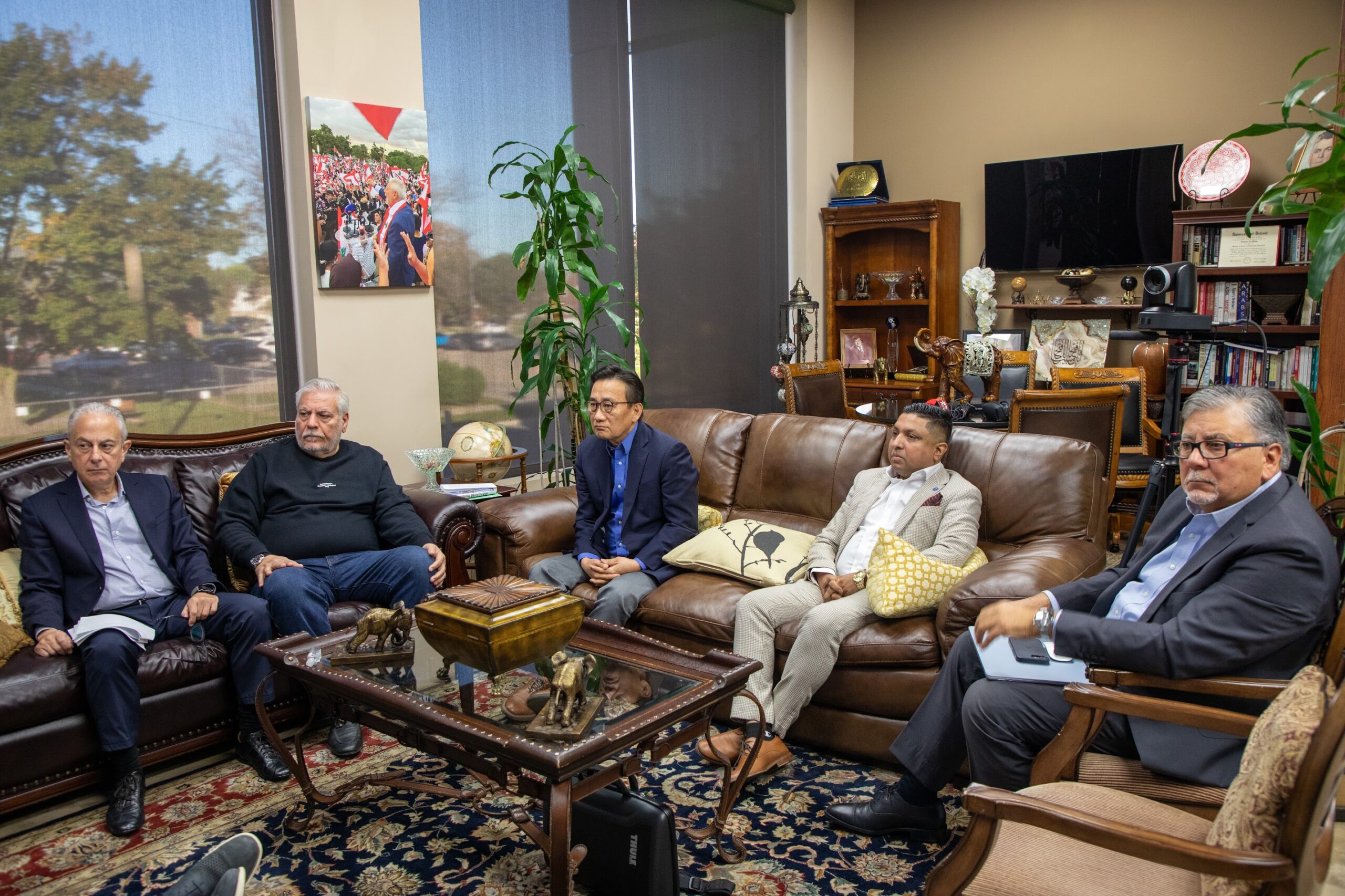
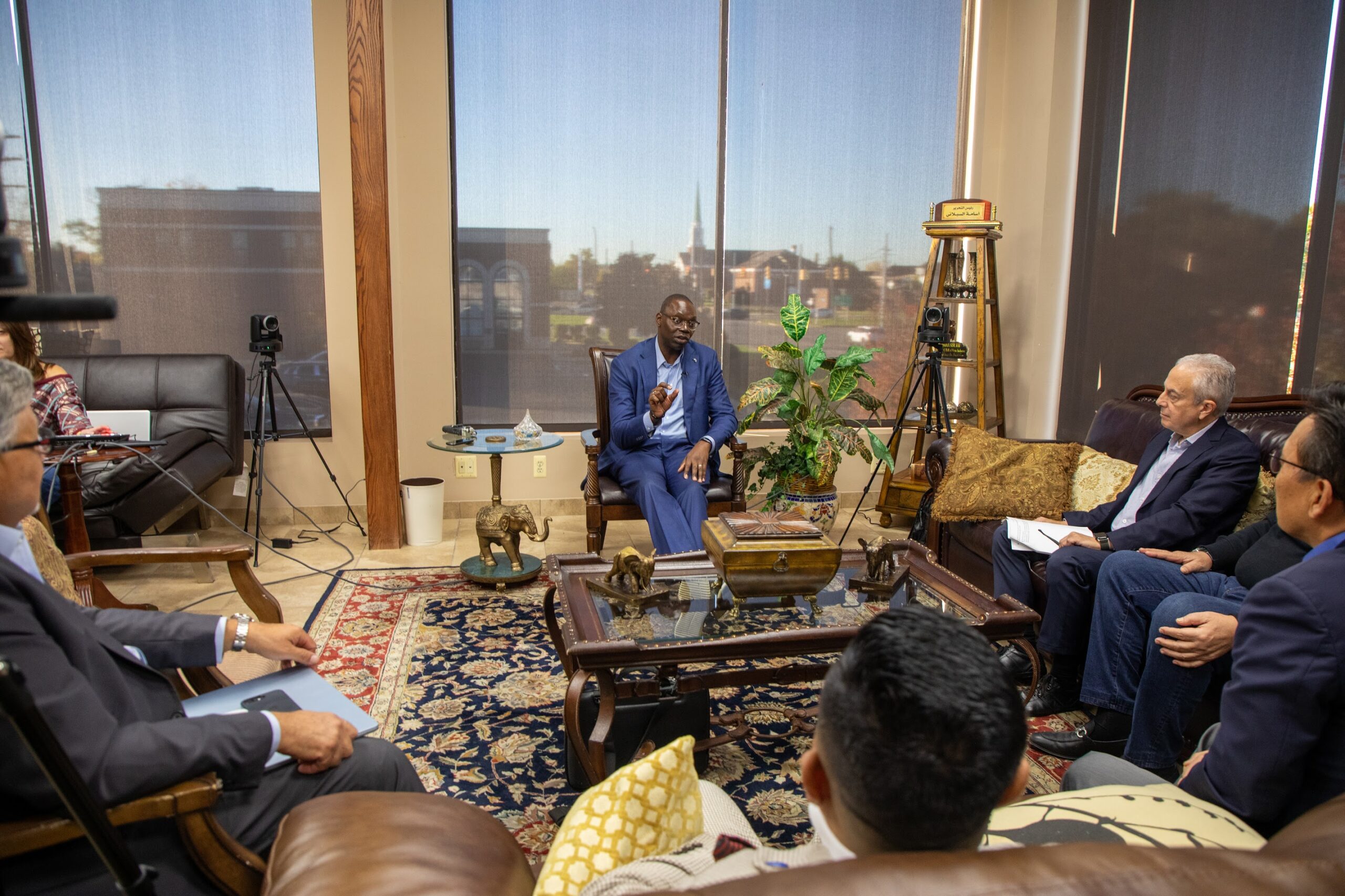
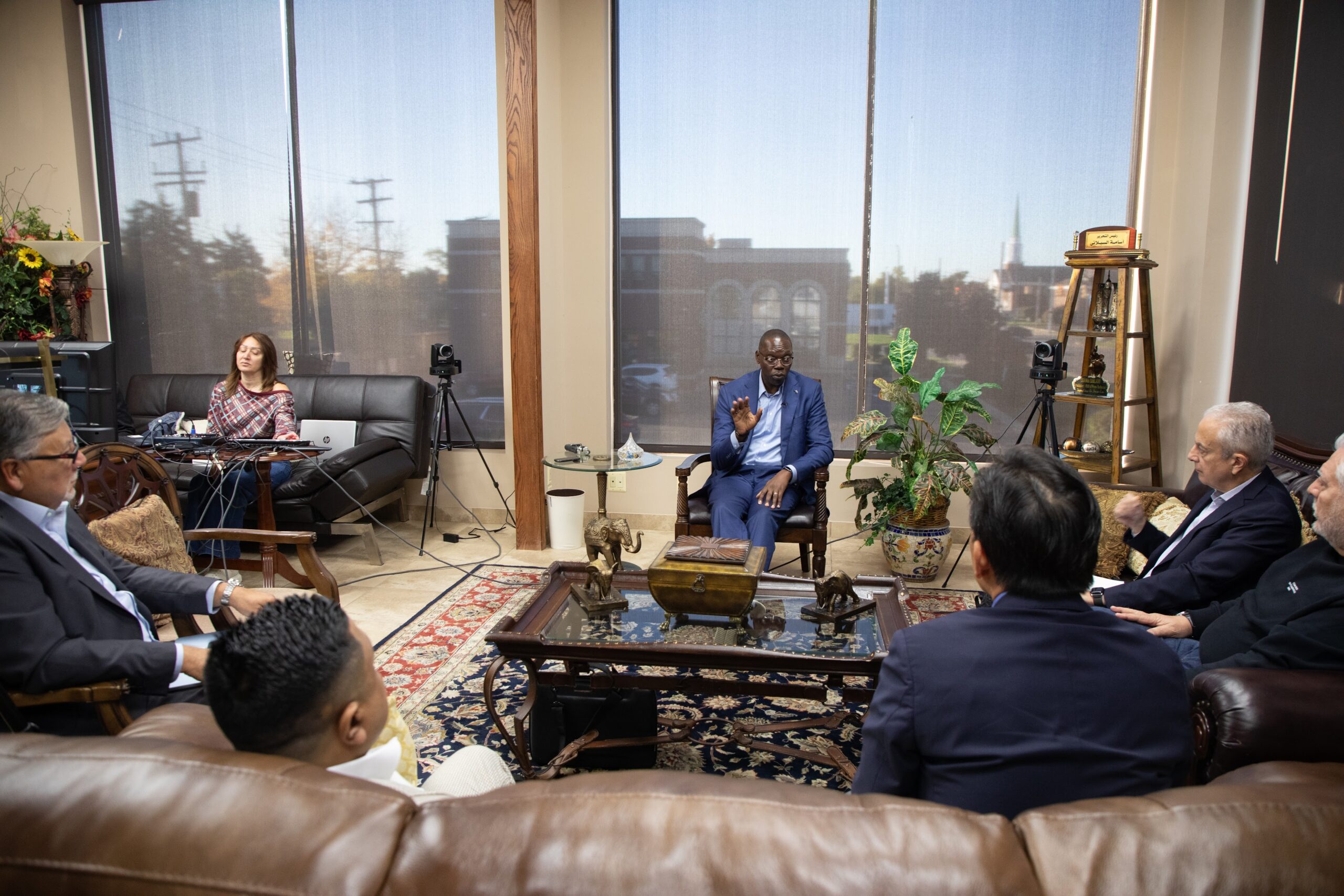
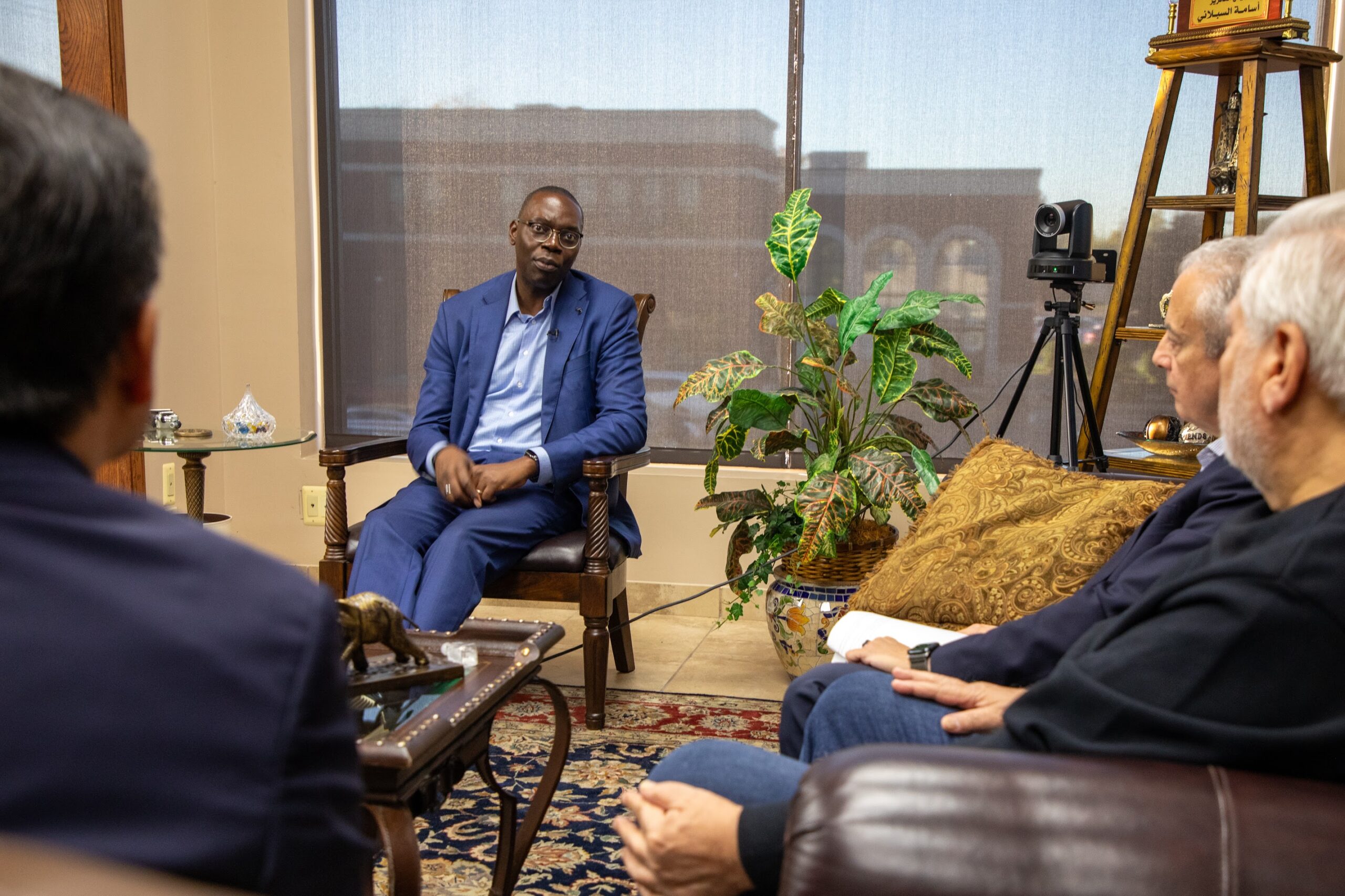
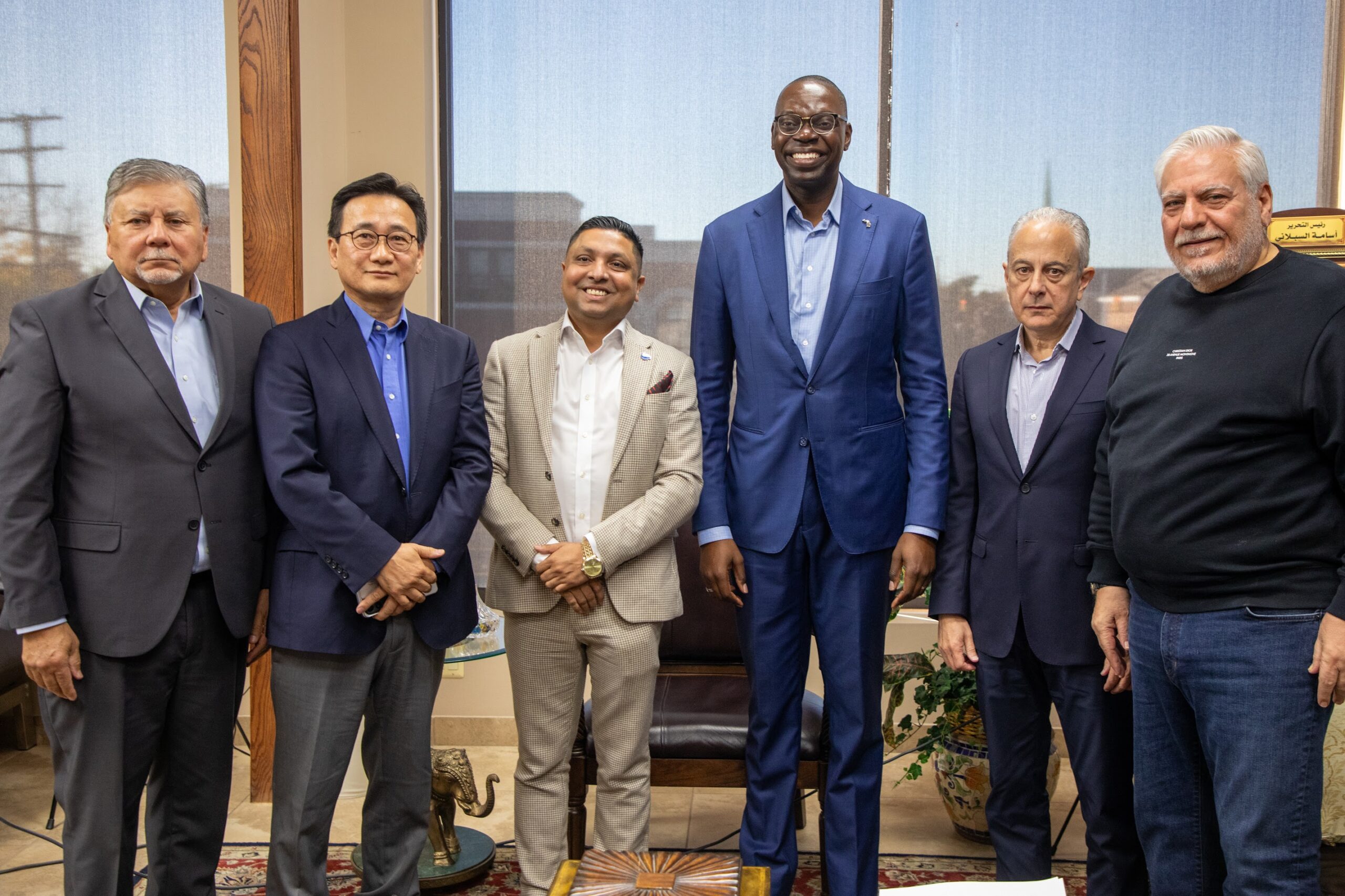
DEARBORN — Communities deserve direct access to candidates seeking their votes and clear answers about Michigan’s future. With that commitment, The Arab American News hosted candidate interviews organized by New Michigan Media, bringing together publishers and editors from the Latino Press, Michigan Korean Weekly, The Arab American News and the Bengali-language Bangla Sangbad.
Moderated by New Michigan Media Executive Director Dr. Hayg Oshagan, the interviews included Democratic U.S. Senate nominee Dr. Abdul El-Sayed; Democratic and Republican secretary of state nominees Garlin Gilchrist II and Anthony Forlini and Democratic attorney general nominee Eli Savit.
All Democratic and Republican candidates seeking those offices, along with the gubernatorial candidates, received the same invitation. Every participating candidate received equal interview time.
The effort reflects a commitment to meaningful questions, accountability and informed choices. The communities these newspapers serve are vital to Michigan’s future. Their questions deserve answers, and their votes must never be taken for granted.
Participating publishers included Osama Siblani of The Arab American News, Elias Gutierrez of the Latino Press, Tack Yong Kim of the Michigan Korean Weekly and Iqbal Ferdous of Bangla Sangbad.
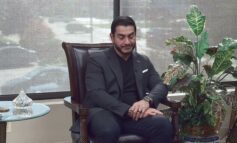
During his interview, Gilchrist pledged to resist federal interference in elections, protect personal information and expand language access. He also supported driver’s licenses regardless of immigration status and discussed a potential public option for auto insurance.
Completing his eighth and final year as lieutenant governor, Gilchrist emphasized his software engineering background as preparation for overseeing an office responsible for elections, licensing and vehicle registration. He faces Forlini, the Macomb County clerk.
Money in politics
Asked about restrictions on political funding, Gilchrist said wealthy donors and corporations contribute to public cynicism.
“I do believe that there is a corrupting and corrosive influence, especially of corporate money and dark money, in our politics,” he said.
He endorsed Proposal 2 and outlined his Stand Tall Agenda: transparency, accountability, limits and leveling the playing field.
His proposals include repairing the campaign finance website, requiring organizations providing political money to register in Michigan, ending anonymous donations and requiring disclosure before Election Day. He also advocated closing loopholes that allow contribution limits to be circumvented through multiple leadership political action committees.
Gilchrist proposed closer cooperation with the attorney general, potentially through a special task force, to address violations during campaigns.
“I don’t think it’s useful to find out that someone broke campaign finance law six months after they’ve won the election,” he said.
He would pursue the agenda through legislation, including bipartisan cooperation.
Protecting elections
Asked about proof-of-citizenship requirements and their implications for immigrant communities, Gilchrist emphasized that voting is reserved for citizens.
“Voting is for citizens,” he said. “It’s illegal for people who are not citizens to vote. It always has been, and it will continue to be.”
He called claims of widespread noncitizen voting “an invented distraction” and accused both his opponent and President Trump of promoting unfounded election-fraud fears.
Gilchrist promises accessible services and resistance to election interference
Gilchrist argued that intensified immigration enforcement and voting rhetoric could frighten communities and discourage eligible citizens from participating. He pledged not to cooperate with voter intimidation.
“I will make sure we can stop President Trump from hijacking our elections,” he said. “The United States Constitution says people of the states run their elections, not the federal government and not the president.”
Driver’s licenses and privacy
Asked about licenses regardless of immigration status, protections against sharing applicants’ information with immigration authorities and executive authority, Gilchrist reaffirmed his support for the Drive SAFE legislation.
He described licensing as a public safety measure that would expand access to driver’s education and training.
“People are going to drive,” he said. “You have to drive to get to work, to get to the doctor and to take your kids to school.”
He would advocate for the legislation but acknowledged the secretary of state’s limits.
Gilchrist backs driver’s licenses regardless of immigration status, expanded language access
“I don’t have the authority to implement that outright as secretary of state, but I will use my voice to make sure Michigan residents can be safe drivers,” he said.
He also backed legislation returning driver’s education to public schools.
On privacy, his response did not specify the judicial warrant requirement raised in the question.
“I will not share private personal data about Michiganders with the federal government or law enforcement when there’s not a reason to,” he said.
Gilchrist accused the Trump administration of seeking voter data to intimidate people and pledged protection against technology companies using information without consent.
Language access and services
Asked about language barriers and retaining bilingual employees, Gilchrist proposed reimagining the Language Access Task Force to address services at Michigan’s 131 branches, websites, kiosks and voting.
He cited differing needs in Dearborn, Dearborn Heights and Hamtramck, called for community participation and pledged to fight for higher employee wages.
When asked whether Arabic, Bangla and Amharic ballots should be available outside cities already providing those options, he agreed they should be.
“If you’re not able to vote on a ballot in a language you can understand, I think that’s a violation of your civil rights,” he said.
Gilchrist committed to developing statewide capacity to meet those needs. He also expressed openness to two-year vehicle registration renewals and recreation passports to improve convenience.
Asked about continued communication after the election, he committed to meeting consistently with New Michigan Media, without specifying a format.
Artificial intelligence and jobs
Gilchrist acknowledged immigrant communities’ anxiety about AI’s employment effects. He said preparation should include critical thinking, logical reasoning, teamwork and management alongside technical skills.
He cited Going PRO and other workforce programs he has supported, while acknowledging that training would fall outside his direct responsibilities as secretary of state.
He identified privacy as a more direct responsibility and advocated Michigan privacy legislation and accountability when AI products break the law.
Asked about residents with limited computer skills, he pointed to community training providers and said state support should help their services reach more people.
Auto insurance and driving records
Asked about premiums and old traffic violations, Gilchrist said his insurance costs quadrupled after moving from Washington, D.C., to Michigan more than 12 years ago.
“Our car insurance is expensive as hell,” he said.
He described a public insurance option as an idea under exploration, intended to improve affordability and reduce uninsured driving.
On records, he acknowledged insurers need some information but opposed practices that exploit residents.
“But I do not want people to be punished for life by one mistake,” he said.
He expressed a willingness to review license points and cited task force recommendations that he said helped restore more than 400,000 driver’s licenses. He also highlighted the Clean Slate automatic expungement, saying nearly 500,000 people had fully cleared criminal records.
Rejecting religious attacks and division
Asked about attacks on El-Sayed’s Muslim faith, Gilchrist called them “sad and dangerous.”
“There’s no religious test for citizenship in this country,” he said. “There should be no religious test for public service.”
He described attempts to impose such a test for racist or Islamophobic reasons as “disgusting.”
Addressing efforts to divide Arab Americans and African Americans, he described their relationship as broadly positive while acknowledging conflicts requiring attention and accountability.
He said his friendship with El-Sayed dates to 2015 and illustrates cooperation based on trust and mutual respect.
“The people who want us divided are the people who want us to fail,” he said. “The people who want us divided are the people who don’t want us here in the first place.”
Public service and trust
Reviewing his record, Gilchrist highlighted justice reforms, license restorations, expungement, broadband expansion and efforts to address COVID-19 health disparities. He also pledged to expand mobile secretary of state services.
Gilchrist said residents’ experiences with the secretary of state’s office shape their confidence in government and willingness to participate.
“I want everyone to feel like they have a place in the present and the future of Michigan,” he said. “They have a place and a voice in how our politics function, and they can vote without fear of intimidation or discrimination.
“So when I say ‘Stand Tall for Michigan’, I’m standing tall for all of that.”
Leave a Reply