



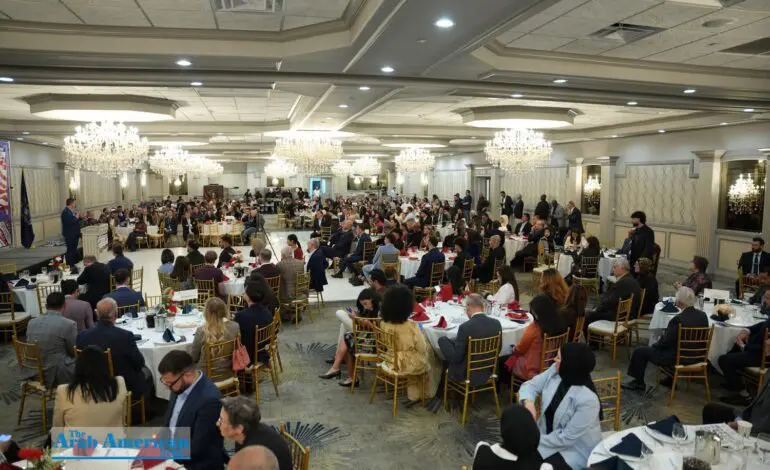

El-Sayed, Benson, Gilchrist and Savit join community leaders in Dearborn ahead of the November 3 election
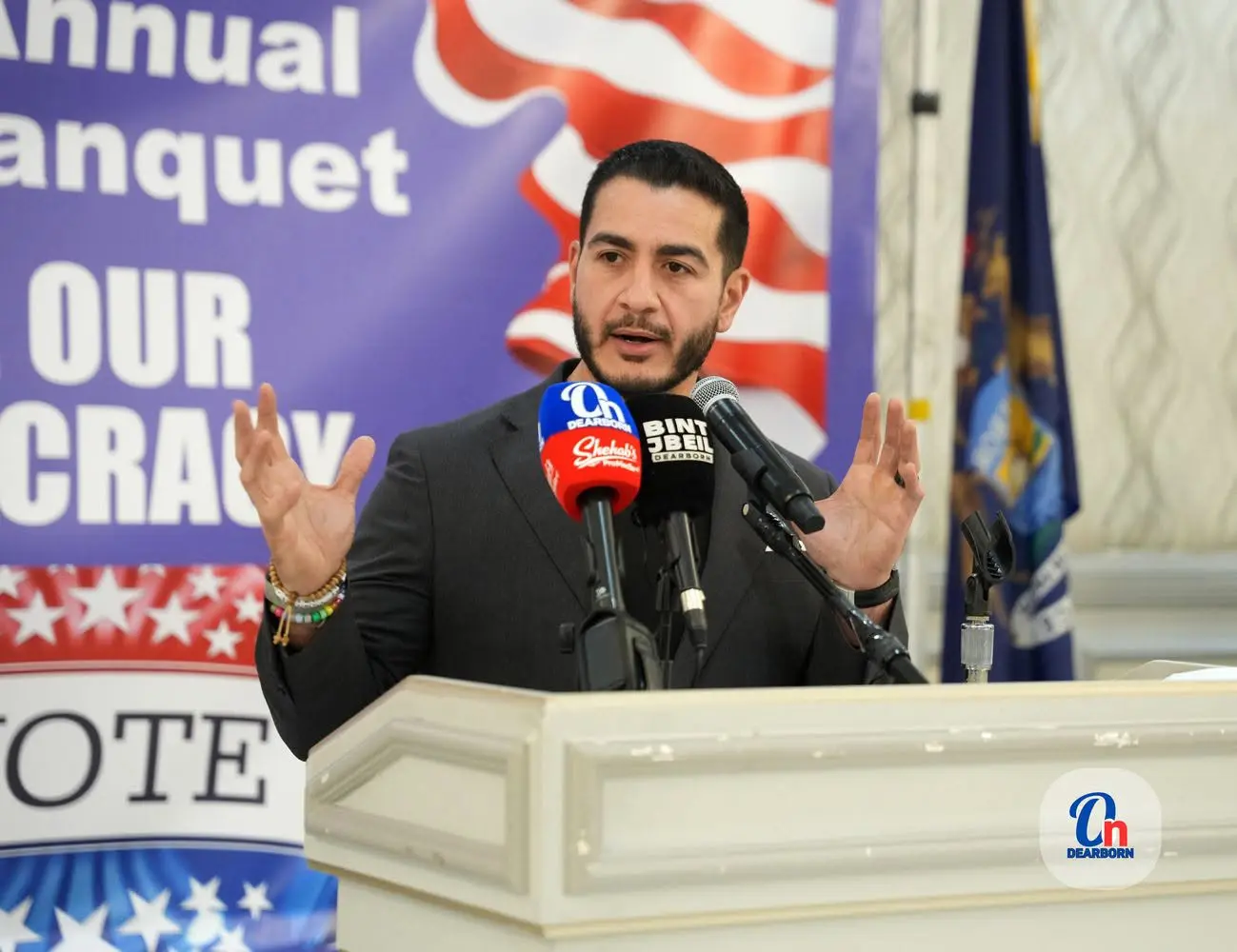
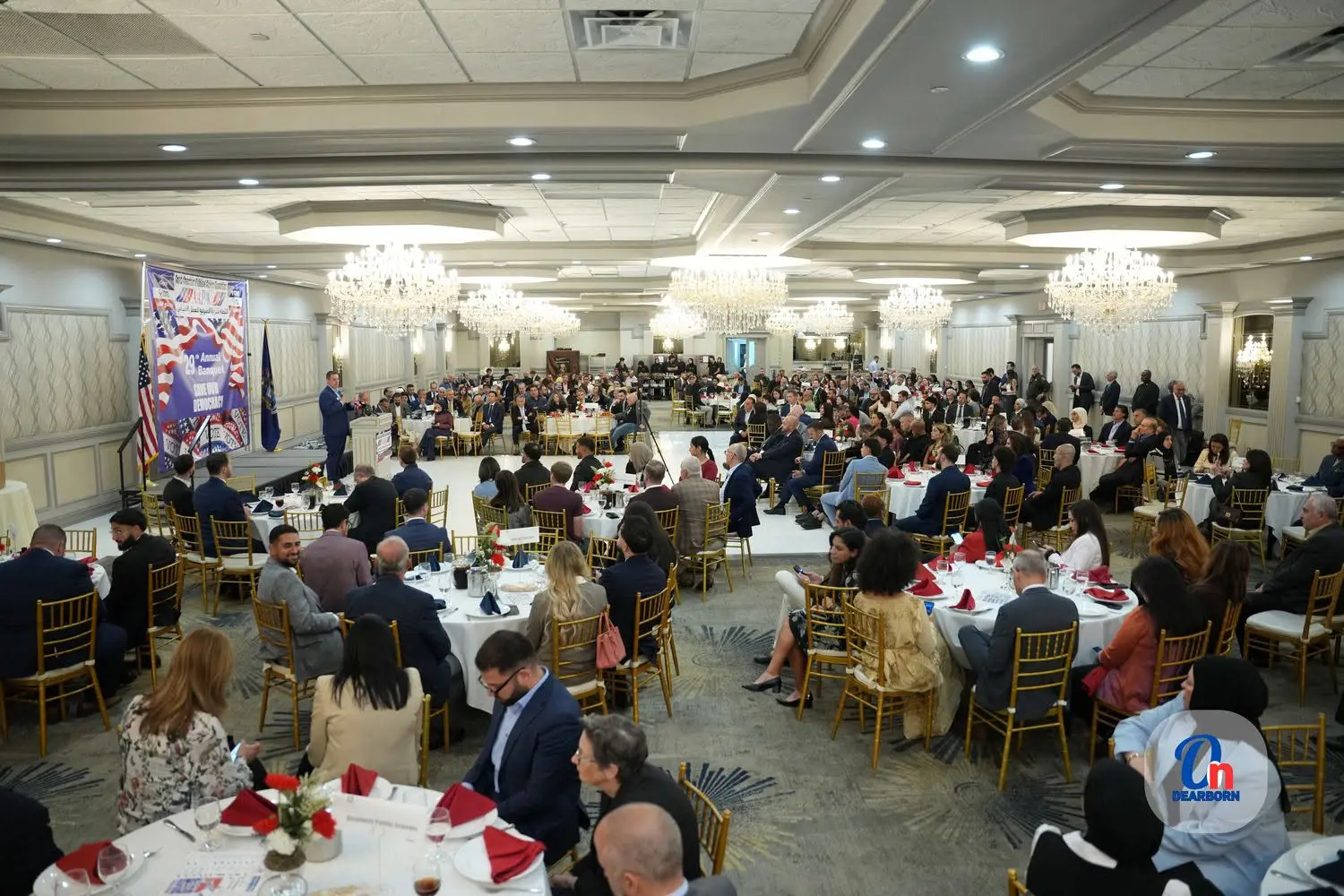
DEARBORN — Tears nearly filled Osama Siblani’s eyes as the president of the Arab American Political Action Committee (AAPAC) and publisher of The Arab American News introduced Arab American U.S. Senate candidate Abdul El-Sayed at the organization’s 29th annual banquet on Wednesday.
“As you know, I have waited a long time for this moment,” Siblani said to enthusiastic applause from nearly 500 attendees. “I am 72-years-old, and I have worked nonstop for 42 years, looking forward to a moment when I could feel proud. The moment I have been waiting for has arrived, and I know that, like me, you are proud of this man who has made us all proud. His name is Abdulrahman Mohamed El-Sayed, Michigan’s next U.S. senator!”
El-Sayed embraced the moment’s emotional and political significance, opening his remarks by emphasizing his full Arabic name.
“My name is Abdulrahman Mohamed El-Sayed, and that name is every bit as American as Mike or Donald or whatever JD stands for,” he said, referring to Vice President J.D. Vance.
“Osama, I want to thank you for your leadership and for bringing us together throughout these 42 years,” he told Siblani. “It is no coincidence that you have been doing this work for 42 years, and I will turn 42 on Saturday. We stand on the shoulders of giants, walking a path that you and so many others have made wider.”
El-Sayed also recognized Arab American Institute President and Founder James Zogby and other longtime advocates.
“I think of you, and I think of James Zogby, and I think of so many people who believed, when our community was much smaller, in full democratic participation for everyone, including people with names like ours and people from the countries so many of our parents came from,” he said.
Protecting our democracy
Held under the theme “Save Our Democracy”, the banquet brought elected officials, candidates, judges, diplomats and community leaders to Byblos Banquet Hall in Dearborn ahead of the November 3 general election.
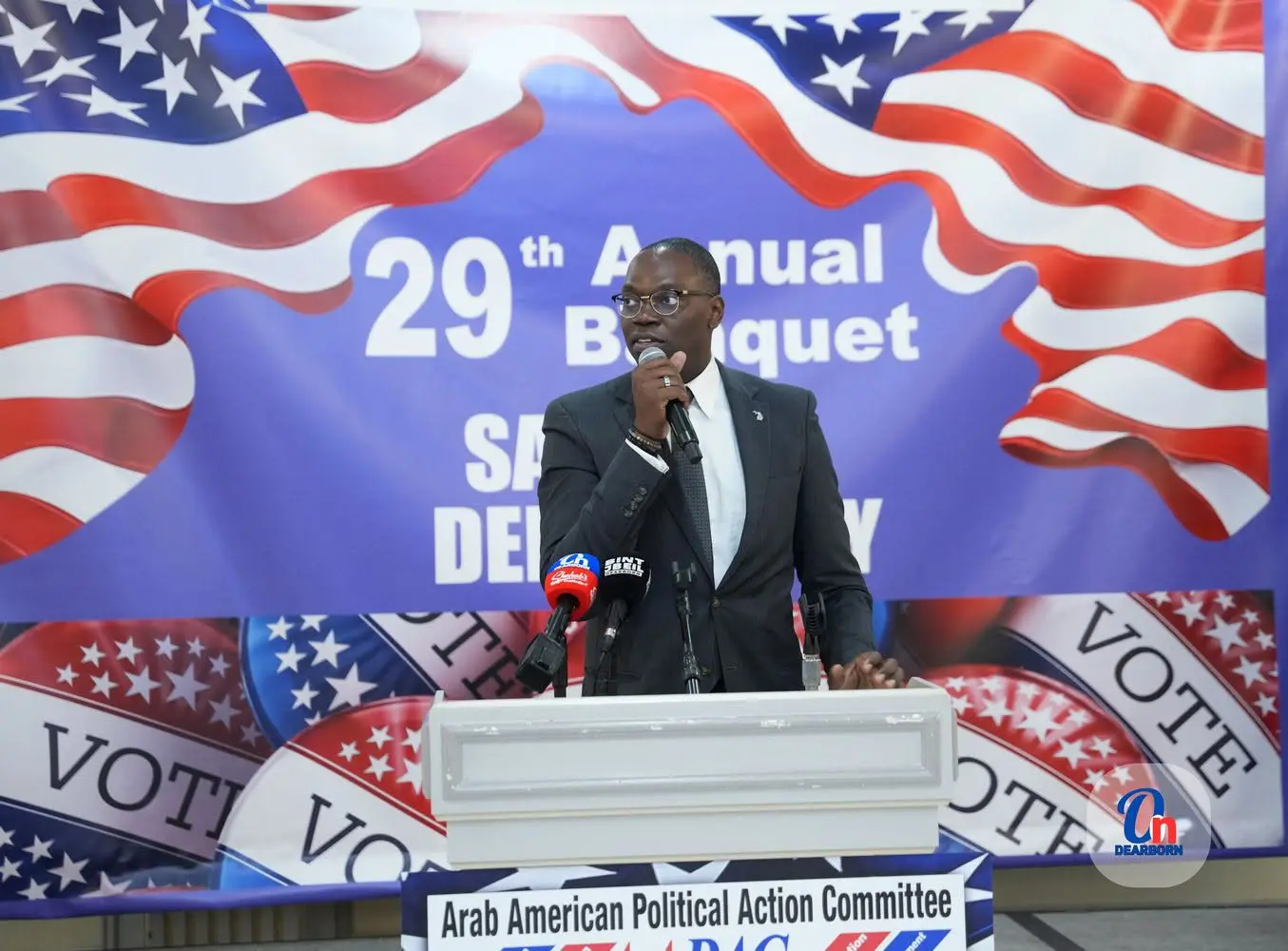
Attendees included AAPAC-endorsed Democratic nominees Jocelyn Benson for governor, Garlin Gilchrist II for secretary of state and Eli Savit for attorney general. Diplomatic guests included Malaysia’s ambassador to the United States, Japanese Consul General in Detroit representatives, Lebanese Consul General Ibrahim Charara and Jordanian Honorary Consul General in Michigan Odie Fakhouri.
Siblani described the election as a pivotal moment, warning against Trump’s and Republicans’ use of religious and ethnic divisions for electoral gain under the guise of patriotism.
He criticized Republican Senate nominee Mike Rogers’ campaign against El-Sayed, saying its rhetoric “makes broad segments of Americans feel like strangers in their own country.”
No American should have to defend the right to public service because of how they pray or where their family came from, Siblani said.
“When religion becomes a political weapon and ethnicity becomes a reason for suspicion, the danger extends beyond one candidate or one community. It threatens the promise of equal citizenship in the United States.”
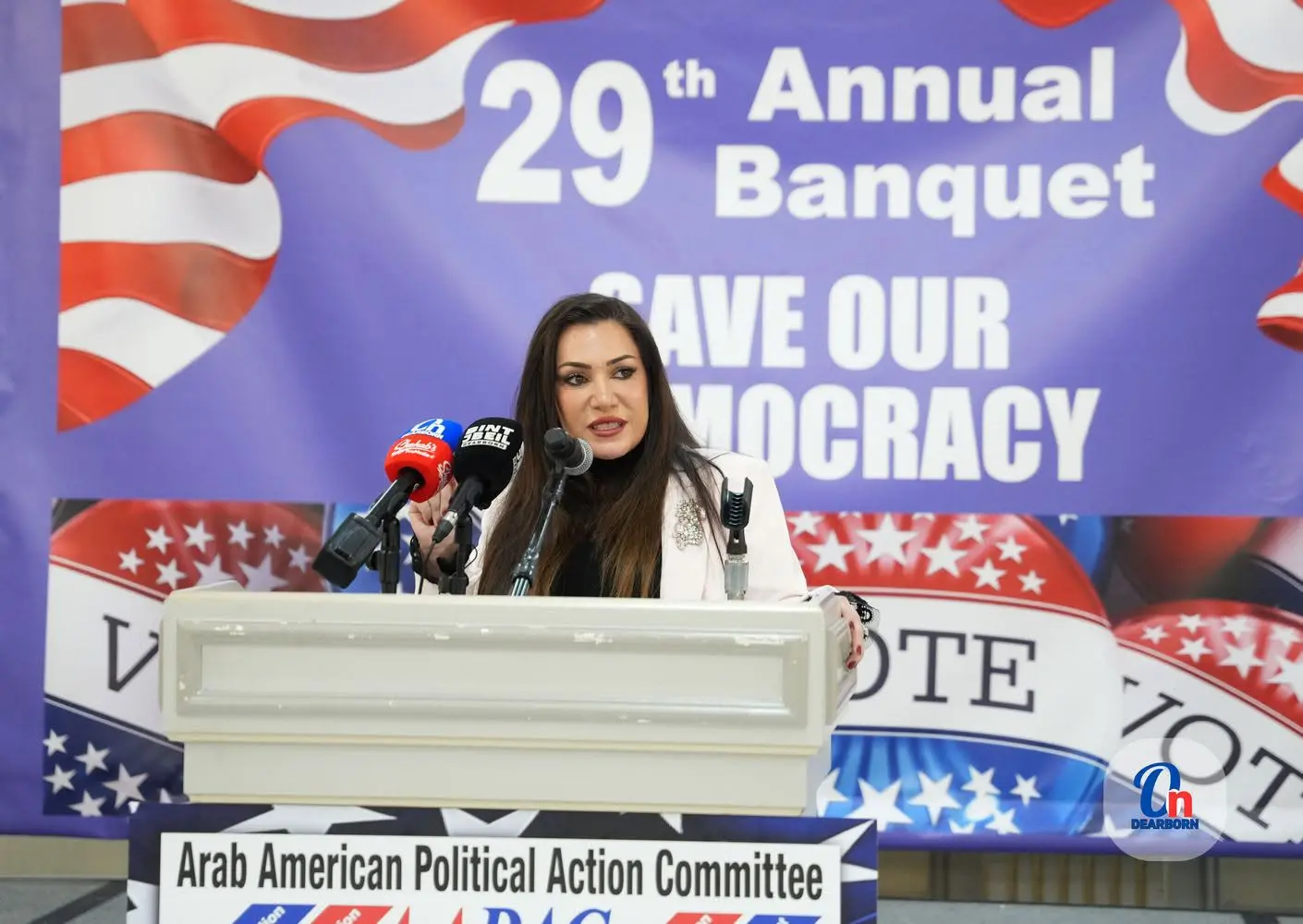
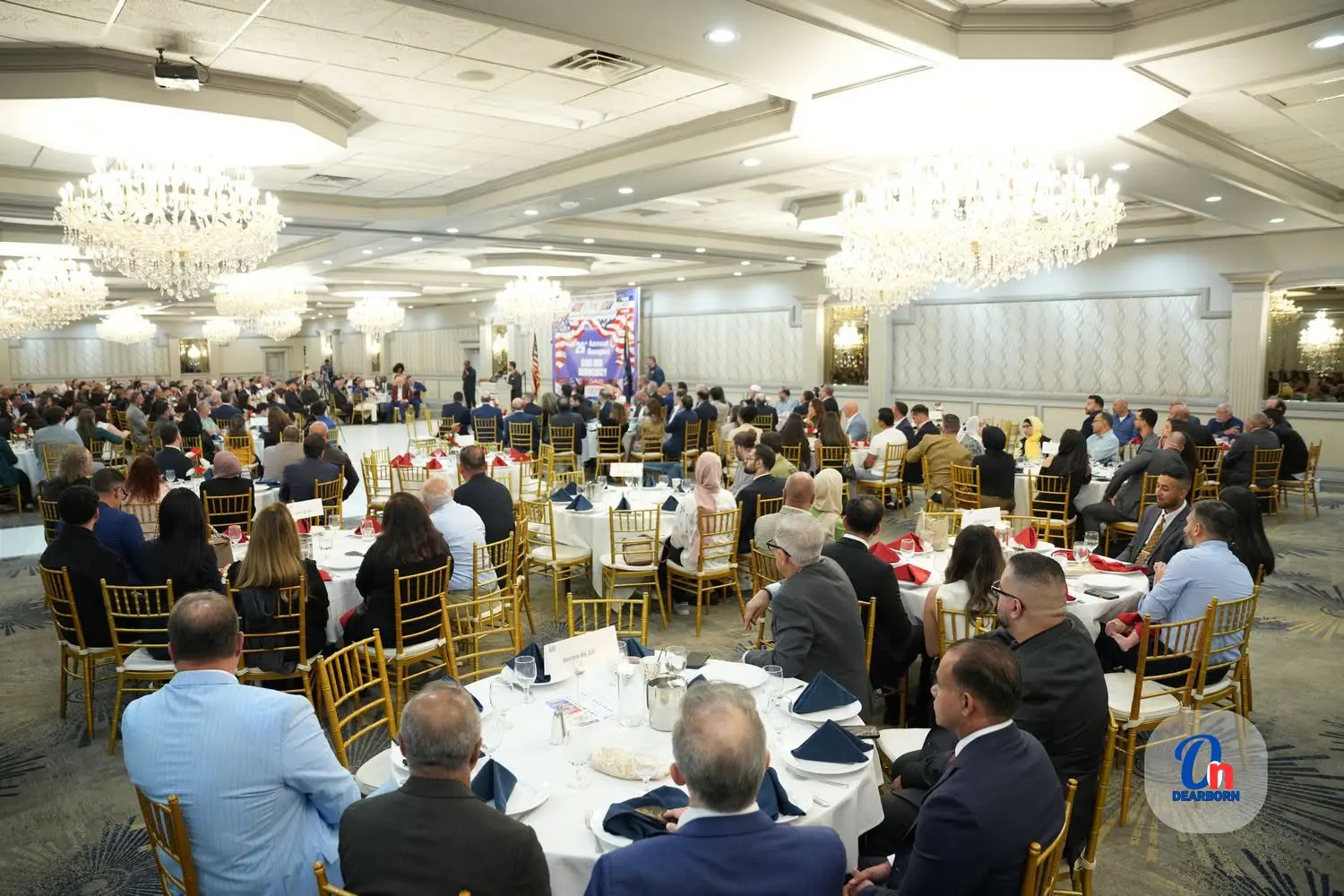
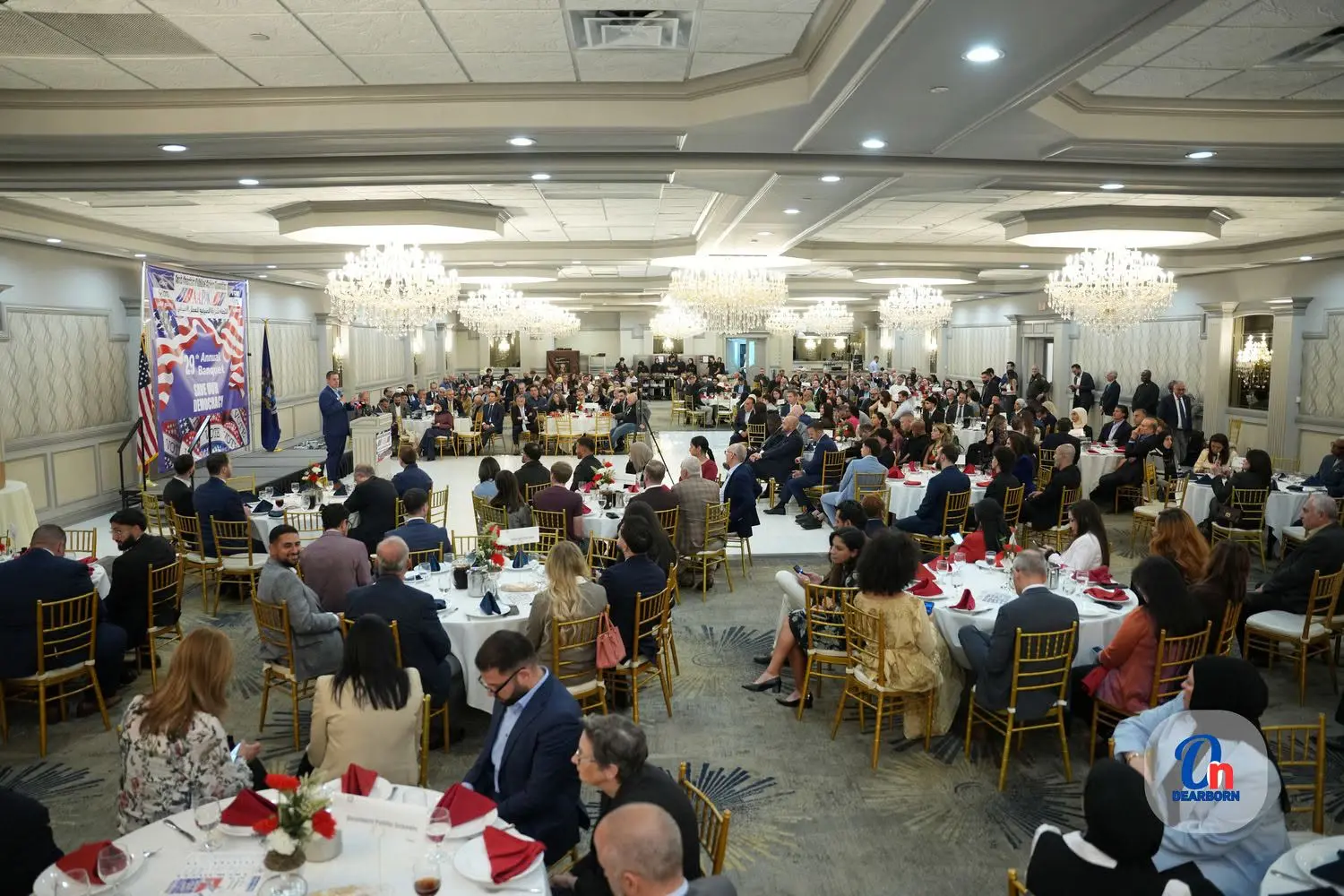
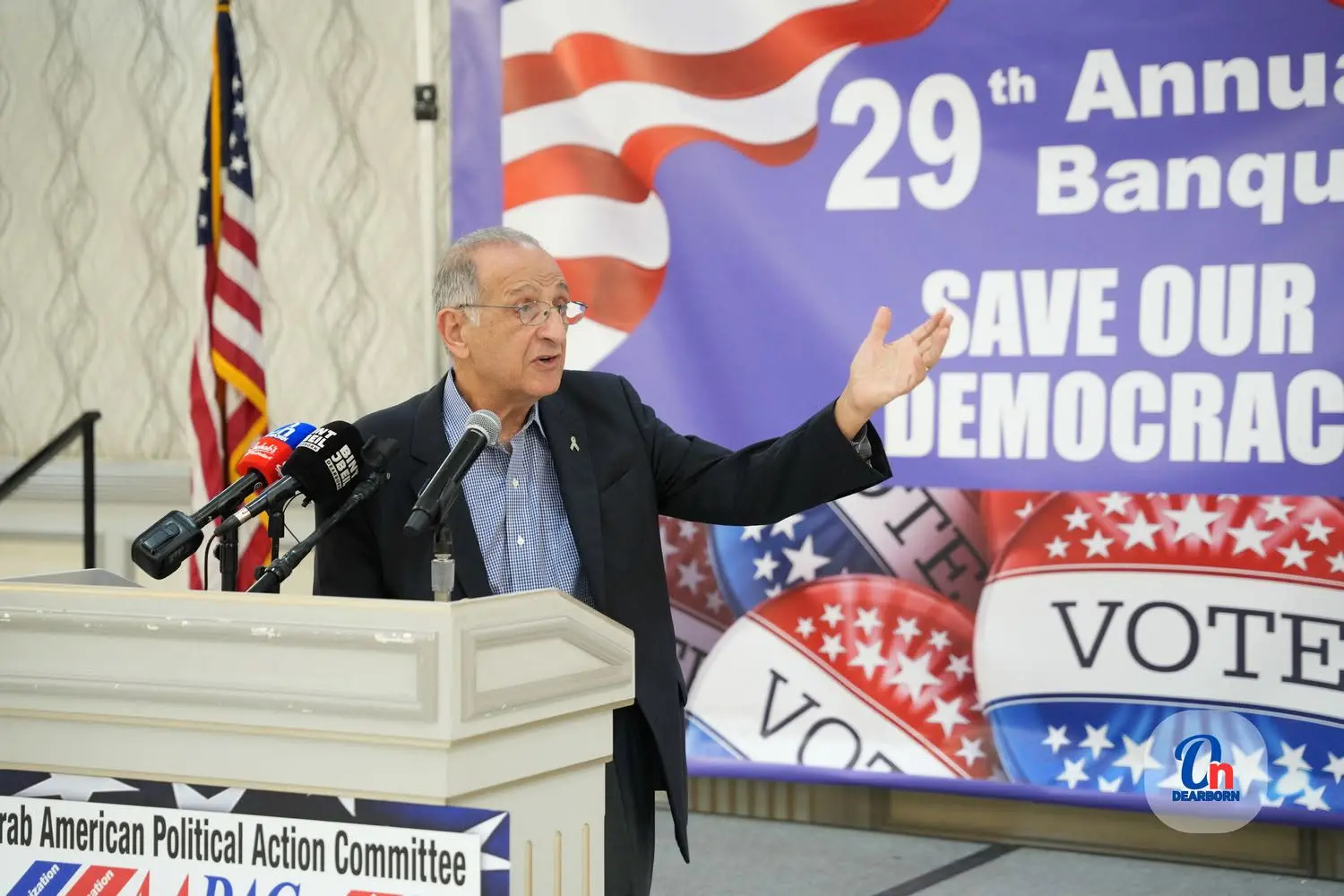
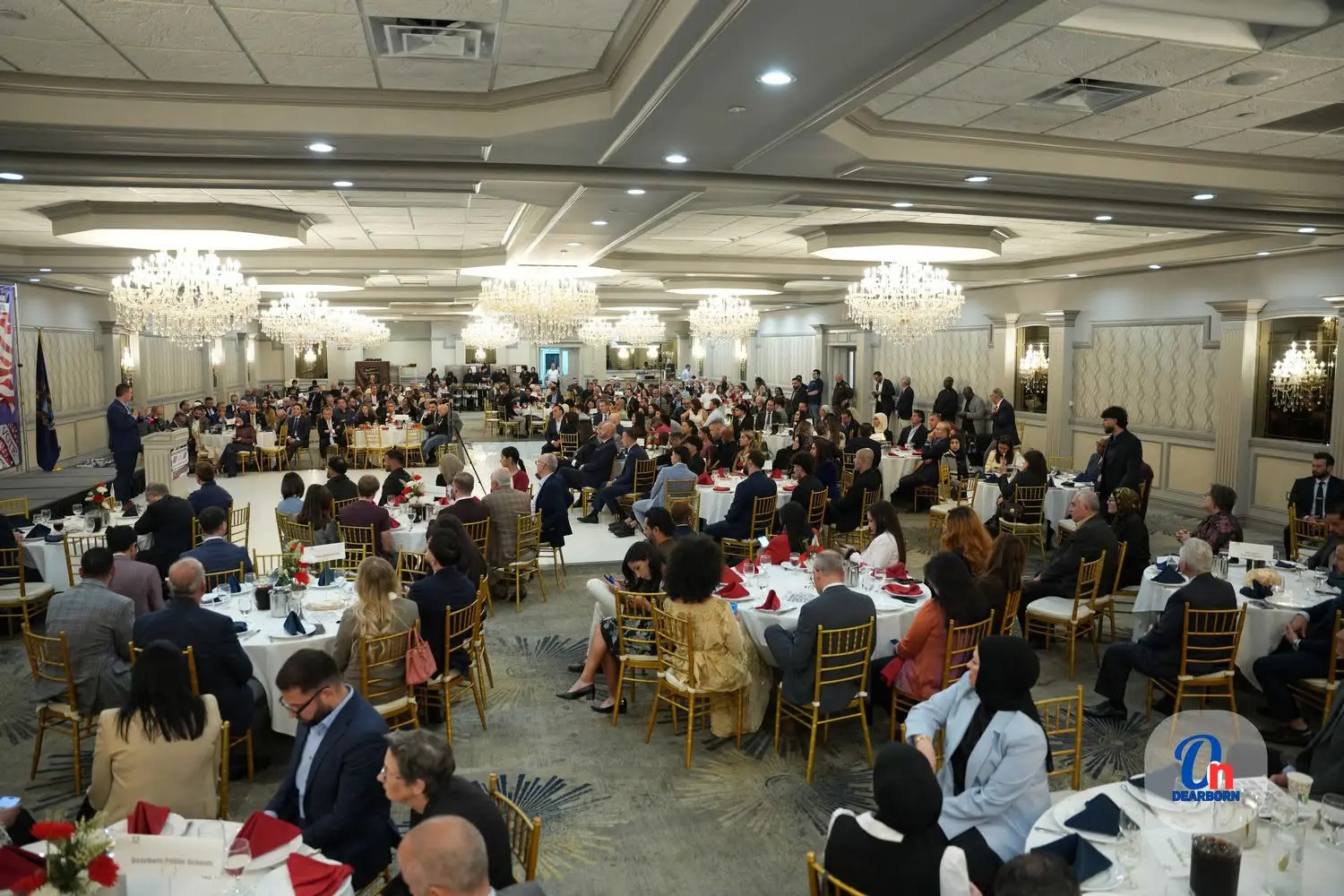
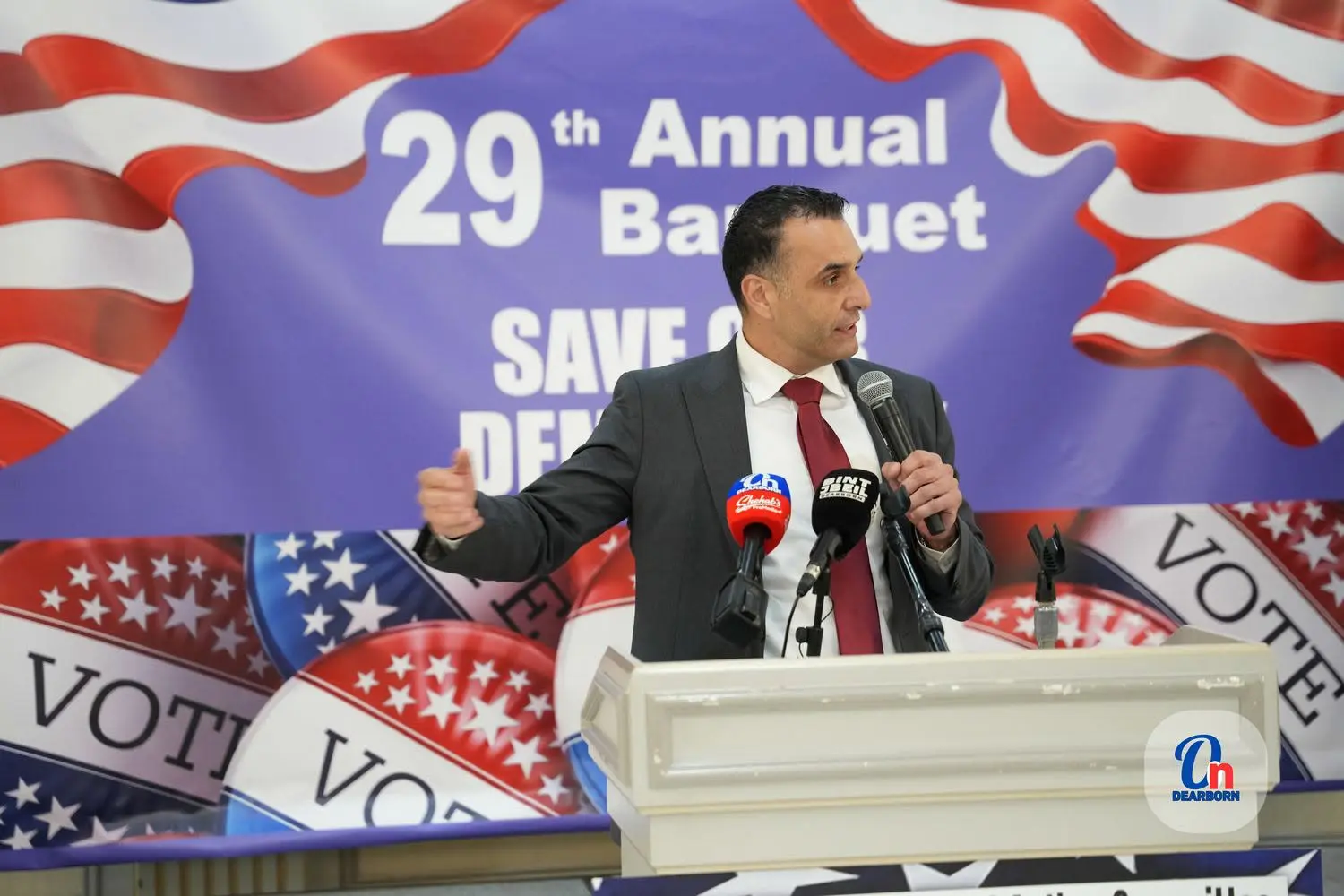
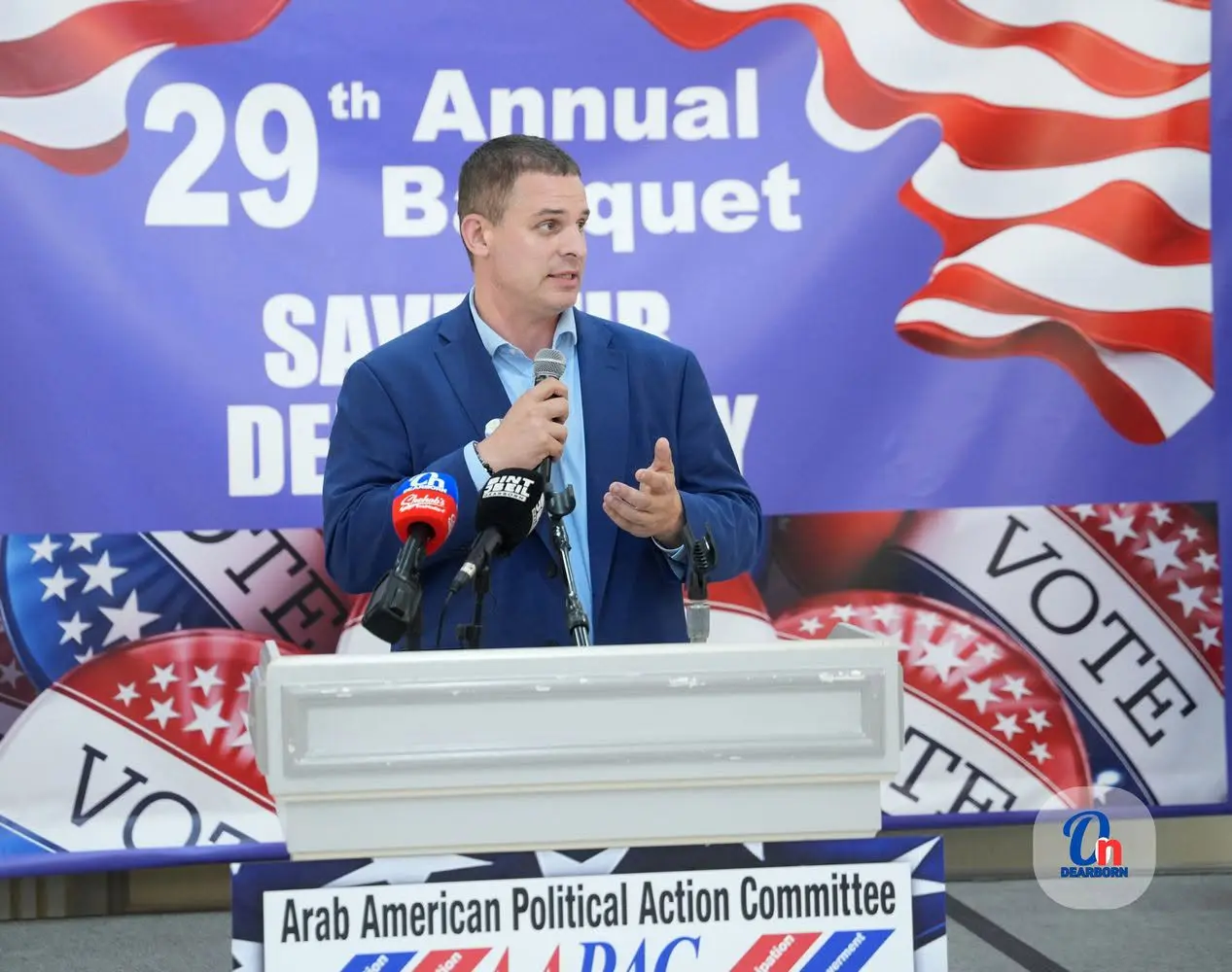
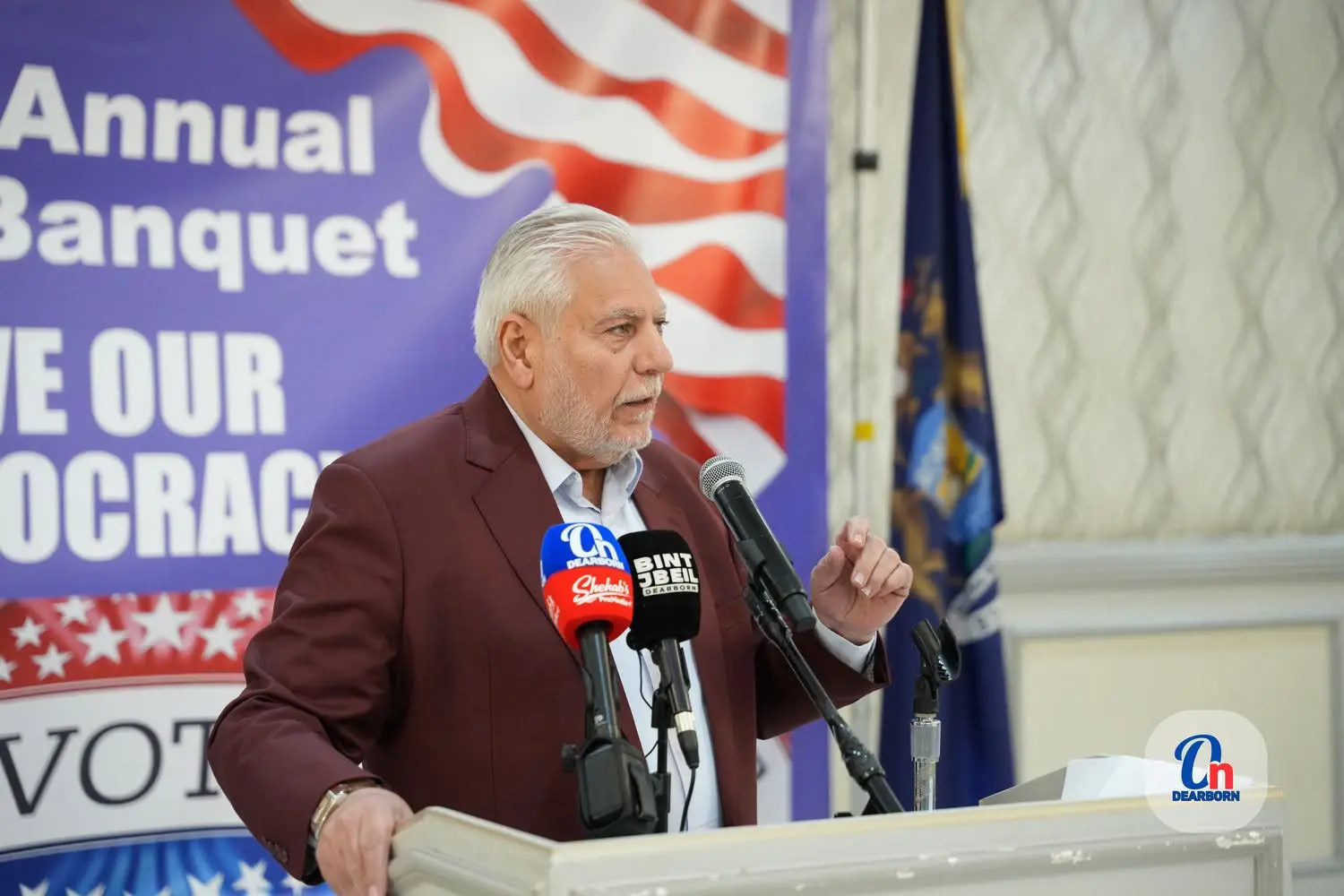
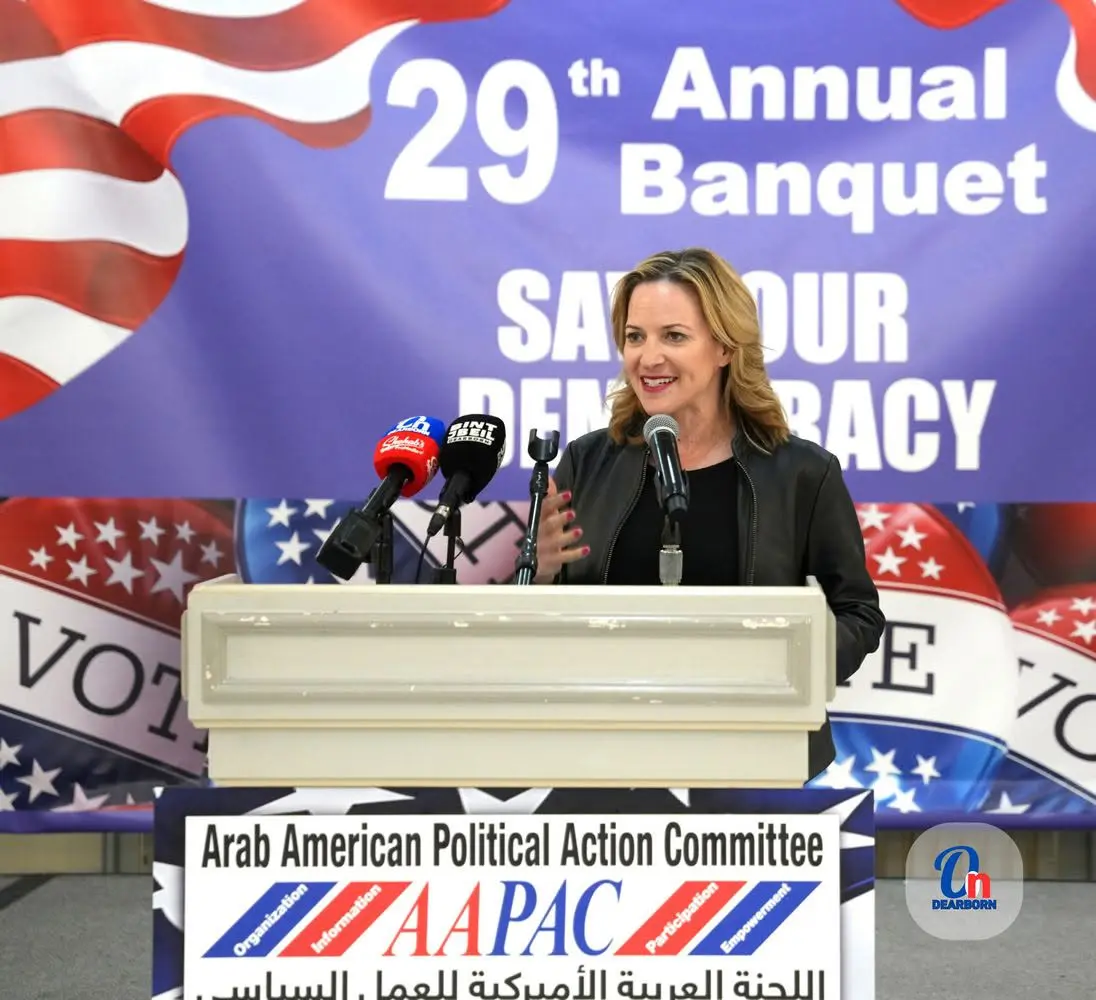
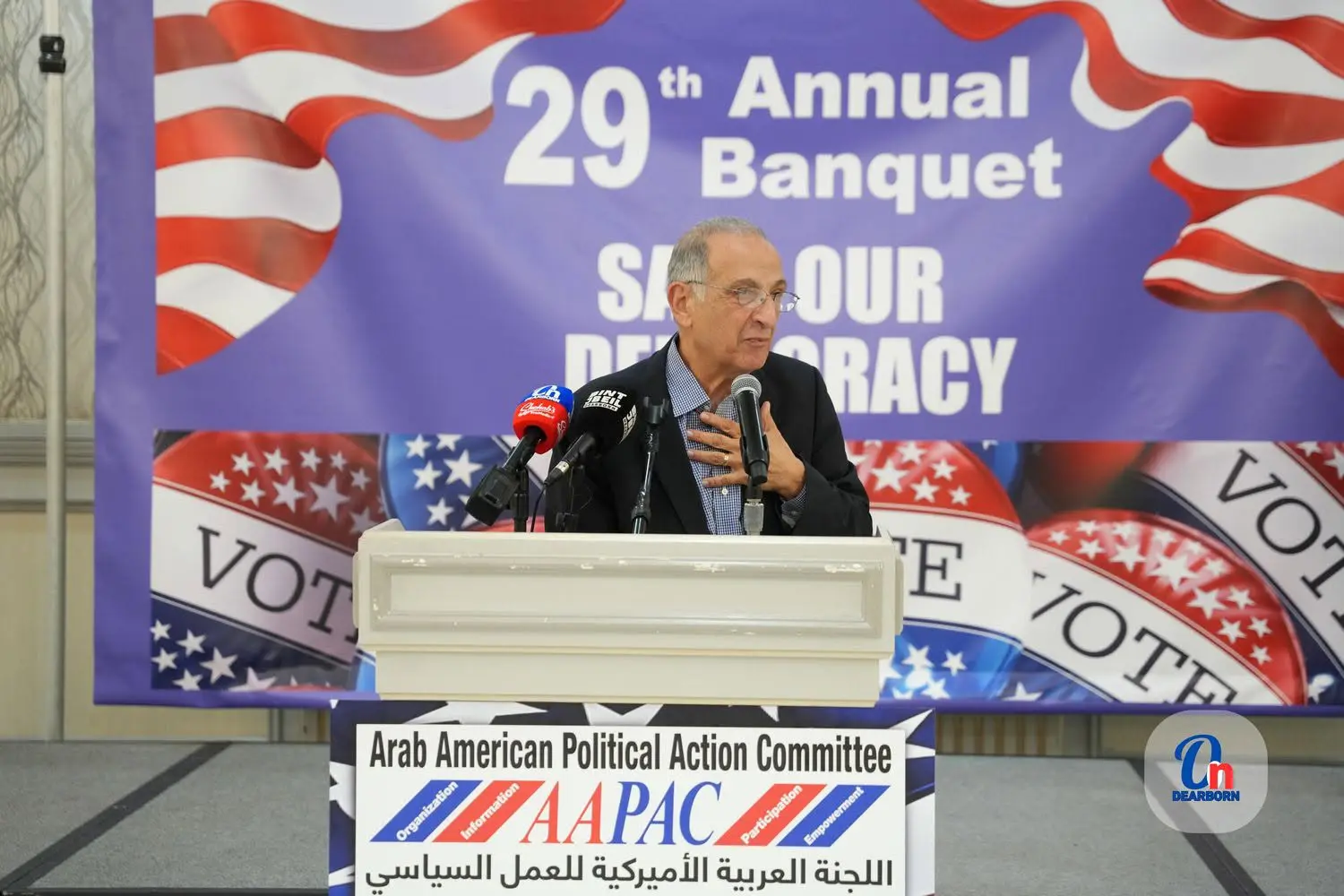
Siblani said he founded The Arab American News in 1984 to challenge stereotypes that distorted Arab Americans’ lives and denied their contributions. The newspaper, he said, has consistently defended the community’s rights and worked toward its full participation in public life.
He also rejected allegations directed at him because of his support for El-Sayed.
“Mike Rogers posted on X today that I, Osama Siblani, who supports Abdul El-Sayed, said I wanted to send all American Jews to Poland,” he said. “That is a big lie from a liar,” he added, criticizing the Washington Free Beacon, which he identified as the source of the allegation.
Siblani recalled becoming a U.S. citizen at a ceremony attended by President Reagan at Detroit’s Cobo Hall in October of 1984.
Reagan welcomed the new citizens’ heritage, he said, encouraging them to share their cultures and traditions with other Americans rather than abandon them.
Those values represent the America he believes in, Siblani said.
“Ronald Reagan is my president, not Donald Trump. That is the America I believe in, and that is the America I want for our children.”
He closed by urging decisive turnout, saying political hopes require participation, accountability and a sense of responsibility toward the country.
Arab Americans have come too far to let fear determine their future, he said.
“We belong to this country, the United States of America. We have helped build it, and together we can help change it for the better.”
El-Sayed: “Call me senator”
El-Sayed recounted the campaign he launched in April of last year and his earlier run for governor in 2018, saying he knew his name, faith and Arab background would become issues.
His cultural background, he said, had exposed him to two versions of America: an overwhelmingly welcoming country of decent people, and a small minority seeking to define the nation through narrow-mindedness and exploit differences to distract from shared concerns.
He said he had participated in more than 700 public events across 125 Michigan cities, finding that people “care less about how you pray and ask more about what you pray for. They care less about your name and more about whether you have bothered to learn theirs.”
People share hopes for peace, prosperity, opportunity and a better future for their children, he said.
El-Sayed discussed the pressure his campaign faced, including more than $70 million spent by influential interests during the August Democratic primary.
“They spent money on an unprecedented scale in American history to defeat us, but in the end, we defeated them,” he said.
Running for public office should not be so difficult because of someone’s religion or background, he argued. Nor should basic necessities be beyond reach.
“It should not be this hard to see a doctor, pay the rent or afford groceries and gas in the wealthiest and most powerful country in the world,” he said.
El-Sayed reaffirmed his campaign’s commitment to removing corrupt money from politics, putting money in people’s pockets and providing Medicare for All, describing those priorities as direct responses to working families’ needs.
Recalling his late grandmother, who never attended school despite her intelligence and wisdom, he said he was fighting for people denied rights and dignity by the political system.
He called for health care, good jobs, union representation, clean air and clean water, while rejecting the use of tax dollars to finance “dropping bombs on other people’s children, or sustaining apartheid, genocide or war.”
Responding to attacks by Trump and Vance, El-Sayed said a larger platform would only give him more opportunities to challenge policies he blamed for rising costs.
He expressed pride in his name and dismissed attempts to distort it or call him “Mohamed.” His concern, he said, was building a movement large enough to force Trump in November to call him “senator.”
El-Sayed also discussed the impact on children of advertisements targeting his Arab and Muslim background. He recalled how boxer Muhammad Ali had inspired him as a child through unapologetic pride in his identity.
“We still have a choice about how this fight ends,” he said. “We have a choice about what our children learn at the end of the night on November 3.”
He urged supporters to turn frustration into organizing through conversations, door-knocking and phone calls until voting ends.
A victory, he said, would demonstrate that people’s power can overcome entrenched interests and show future generations that their ambitions need not have ceilings.
He closed by urging strong turnout for himself and fellow Democratic nominees Benson, Gilchrist and Savit.
Benson: Continuing Arab American inclusion
Benson, Michigan’s secretary of state and Democratic nominee for governor, highlighted a relationship with the Dearborn-area Arab American community stretching back nearly three decades.
As a young lawyer working with Judge Damon Keith, she said, she recognized the injustice of Arab Americans’ exclusion from protections under the Voting Rights Act and wanted to work with community leaders Osama Siblani and Abed Hammoud to change it.
Benson highlighted efforts since taking office in January 2019 to provide Arabic election materials and bilingual election workers through partnerships with local leaders, including Siblani.
The goal, she said, was to ensure that no voter’s voice was erased.
She recalled visiting all 131 secretary of state branches, beginning in Dearborn, and being shocked to find no Arabic-speaking employee despite the many Arab American customers.
She said she responded by providing additional compensation to ensure that at least two Arabic-speaking employees would consistently be available at the Dearborn branch.
Benson described her approach as direct engagement and work behind the scenes to ensure Arab Americans receive their rights as full citizens, saying she would continue that approach as governor.
She urged voters to recognize their power to reject bigotry, division, chaos and harsh policies from Washington.
Michigan, she said, should offer affordability, health coverage and a safe environment “regardless of who someone is or where they pray.”
The election would shape the nation’s direction as well as Michigan’s future, she added.
“The road to the presidency in 2028 will run directly through Michigan,” Benson said, describing an opportunity to help build a more inclusive country.
Gilchrist: Arab and Black communities are connected
Gilchrist challenged narratives of division between Arab and Muslim Americans and African Americans in Metro Detroit.
He emphasized shared history and experiences, describing both communities as descendants of “those who survived.”
Recalling his grandmother’s guidance, he discussed turning discrimination and hardship into ambition and preparing younger generations to confront challenges.
Gilchrist pledged to make the communities’ connections visible in government.
“I look forward to representing all of Michigan in a way that shows our communities are far more connected than those trying to divide us believe,” he said.
Protecting diverse communities requires a healthy, responsive democracy, he argued. Political opponents, he said, fear communities organizing together and use intimidation and falsehoods to persuade people that they lack power.
November 3 offers an opportunity to demonstrate that solidarity can overcome hatred, he said.
“When we show up, participate and decide to have a voice, there is nothing we cannot stop, and no hatred, bigotry, racism or division we cannot defeat.”
Savit: Defending rights and rejecting targeting
Savit emphasized the election’s importance in defending democracy against what he described as a nationwide assault on fundamental rights.
He condemned racial profiling by Immigration and Customs Enforcement and the use of masked agents to seize and detain students over their views and calls for divestment from Israel.
Savit, who is Jewish, said such practices attack the First Amendment, due process and everyone’s rights.
No community should be targeted, he said, adding that attacks on one community’s rights threaten all others.
“I will stand against that every time as your next attorney general,” he said.
Savit also rejected the hatred and Islamophobia directed at Michigan during the election because it nominated El-Sayed for Senate.
He said efforts to divide communities were intended to weaken resistance to abuses coming from Washington.
Those efforts would fail in Michigan, he said, because residents share workplaces, neighborhoods, unions and picket lines.
“We will teach them again what solidarity means on November 3,” he said.
Savit expressed pride in running alongside El-Sayed, Benson and Gilchrist, saying victory would send a national message against federal abuses, hatred and division.
Overcoming discrimination
Before introducing Benson, AAPAC co-founder Abed Hammoud thanked supporters of the organization, founded in 1998 to empower Arab Americans and strengthen their participation in public life.
He recalled running for Dearborn mayor during the September 11, 2001, attacks and the harassment directed at his mother and campaign volunteers because of his Arabic name.
Some people told his mother to return to where she came from, he said. When she replied that she was American, they told her that a name such as Abed Hammoud meant she was not from here.
Hammoud praised Wayne County Prosecutor Kym Worthy for advancing diversity by hiring qualified people, highlighting Arab American attorneys Mariam Bazzi and Fadwa Hammoud.
Their service helped transform relations between Arab Americans and law enforcement, with similar progress later extending to the sheriff’s and county executive’s offices, he said.
He also recalled an exchange after becoming an assistant U.S. attorney in 2011. A colleague asked whether he had given his children “good American names.”
“Yes,” Hammoud replied. “Mustapha and Mazen!”
Maintaining the community’s names and cultural identity, he said, helped open doors for future generations.
Schools and political progress
Dearborn Public Schools Superintendent Mike Esseily urged voters to approve the district’s $1.51 billion bond proposal to rebuild and modernize schools over the next two decades.
He said district buildings average 71-years-old, with about one-third built nearly a century ago. Aging heating systems and boilers, some more than 60 years old, require costly repairs.
Responding to questions about the operating budget, Esseily said approximately 80–85 percent goes toward personnel.
Students “deserve better,” he said.
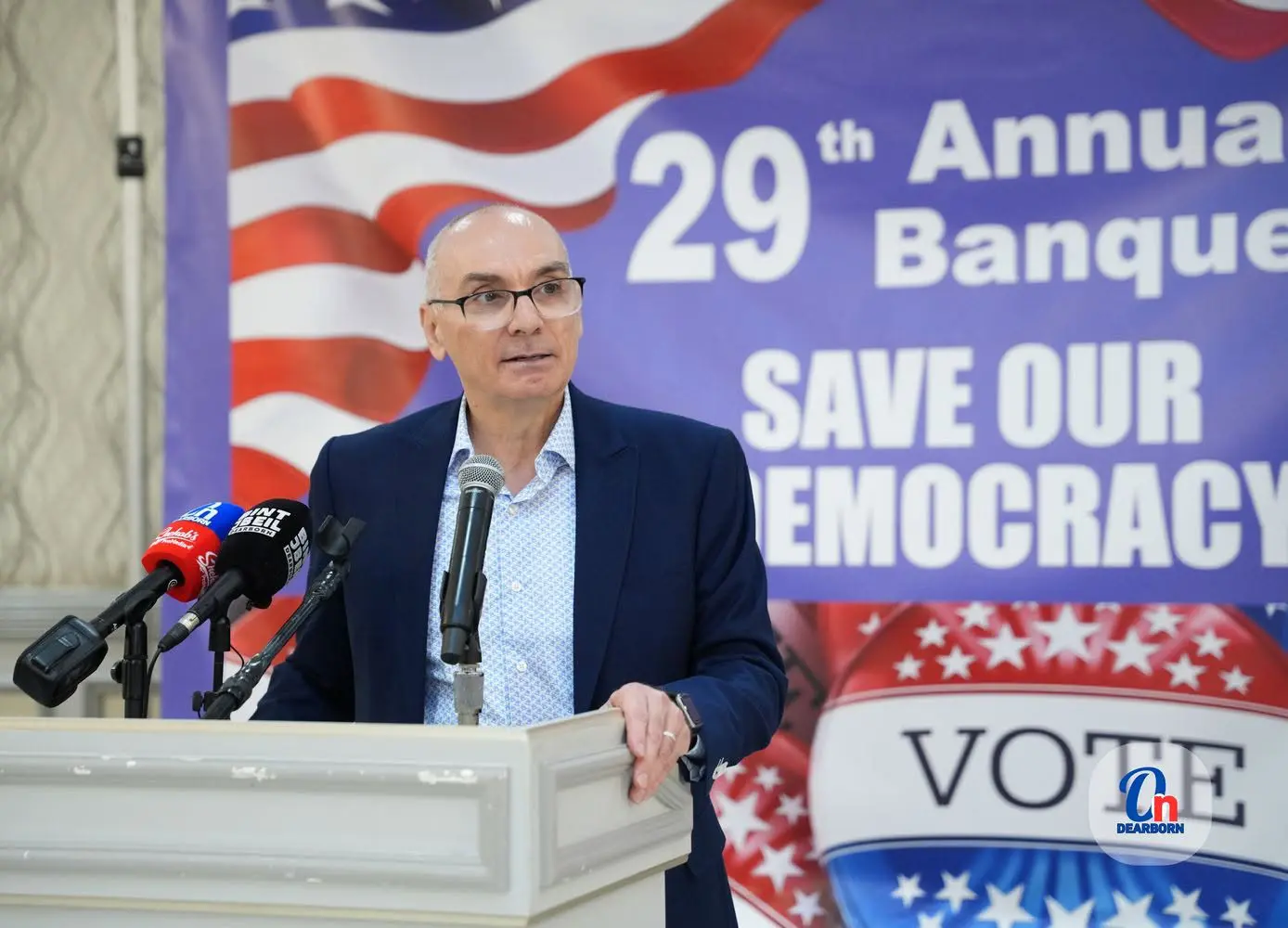
Zogby, president and founder of the Arab American Institute, reflected on more than five decades of visits to Dearborn.
He recalled the racist rhetoric surrounding former Mayor Michael Guido’s 1985 campaign and its references to the city’s “Arab problem.”
Over four decades, he said, the community moved from marginalization and limited electoral influence to electing its members to leadership positions.
“I am here to tell you, Mike Guido, wherever you are now, I don’t know, and I don’t want to judge where you should be, I know what to do about ‘Dearborn’s problem,’” Zogby said.
Looking at the endorsed candidates, he added, he could never have imagined so many elected officials from the community.
Zogby called the election the most consequential of his political life. An El-Sayed victory, he said, would break political taboos by demonstrating that a candidate can openly defend justice for Palestinians and Lebanon’s safety.
It would also show that hundreds of millions spent on falsehoods and attacks against a community cannot necessarily overcome voters’ will, he said.
El-Sayed would become the first Muslim U.S. senator, Zogby added, noting that five previous senators had Arab ancestry.
AAPAC’s endorsements
AAPAC Election Committee Chair Hussein Saad and Vice President Fadwa Hammoud presented the organization’s endorsed candidates and ballot recommendations.
For statewide offices, AAPAC endorsed Benson for governor, Gilchrist for secretary of state and Savit for attorney general.
Its judicial endorsements included Megan Cavanagh and Noah Hood for the Michigan Supreme Court and Mariam Saad Bazzi for the Michigan Court of Appeals.
For Congress, the organization backed El-Sayed for Senate and Debbie Dingell in the Sixth District, Rashida Tlaib in the 12th and Donavan McKinney in the 13th.
State legislative endorsements included Abbas Alawieh for Senate District 2, Alabas Farhat for House District 3 and Jalal Abdallah for House District 15.
AAPAC also endorsed Amir Makled for the University of Michigan Board of Regents; Shereef Akeel for the Wayne State University Board of Governors; Tiffany Tilley, Judith Pritchett and Wissam Charafeddine for the State Board of Education and Warren Evans for Wayne County executive.
Local school board endorsements included Ali Bazzi, Nasri Sobh, Mallak Anani and Mohamed Ali Mahmoud in Dearborn; Billy Amen in Crestwood and Rima Mohammad in Ann Arbor.
For the Dearborn Heights Charter Commission, AAPAC endorsed Mohamed Hamieh, Dana Mohammad, Elyana Hussain and Sam Sakka.
The organization recommended “yes” votes on the Dearborn school bond, historical museum funding, Detroit Zoo funding and the Dearborn Heights charter revision proposal and proposal 2.
It recommended voting “no” on proposal 1 calling a convention to review and rewrite Michigan’s Constitution.
Leave a Reply