



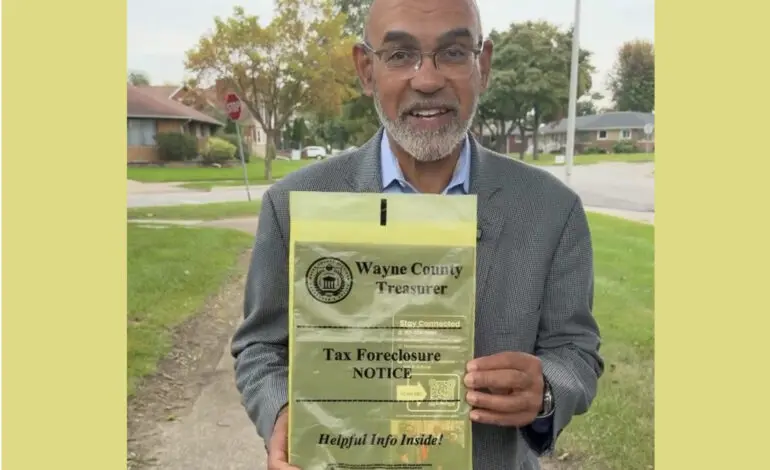

DETROIT — Wayne County property owners receiving yellow bags from the county Treasurer’s Office are being urged to review the enclosed notices and seek assistance to address overdue property taxes before they lose their homes or other property to foreclosure.
The countywide distribution, which began October 13, targets properties with unpaid taxes from 2024 or earlier that remained outstanding as of October 5, 2026, according to a release from the Treasurer’s Office.
The bags contain legally required show-cause hearing notifications, along with information about the foreclosure process, upcoming deadlines, payment options and resources available to help owners resolve their delinquent tax obligations.
The outreach explains overdue taxes, payment options and deadlines as properties with unpaid 2024 taxes face potential foreclosure in March 2027.
For properties with unpaid 2024 taxes, March 31, 2027, generally marks the final deadline to redeem the property and prevent foreclosure. Owners with older delinquent balances should contact the office to determine their property’s specific status and applicable deadlines.
The office, led by Wayne County Treasurer Eric R. Sabree, serves the county’s 43 communities. Its yellow-bag initiative is intended to connect property owners with assistance while they still have opportunities to address their debt.
Understanding the tax timeline
Michigan’s property tax foreclosure process unfolds over three years, with unpaid balances moving through delinquency, forfeiture and foreclosure.
Under the timeline outlined in the release, taxes become delinquent on March 1 of the year after they were billed. Unpaid taxes are then transferred to the Wayne County Treasurer’s Office for collection.
If the balance remains unpaid, the property enters forfeiture on March 1 of the following year, bringing additional interest and fees.
Forfeiture does not itself mean the owner has lost the property. It allows the government to pursue foreclosure if the delinquency is not resolved, while the owner retains an opportunity to redeem the property.
In the third year, the property faces foreclosure, with March 31 generally serving as the final redemption deadline. Michigan’s process includes notification requirements and administrative and judicial hearings before foreclosure becomes final.
For example, unpaid 2024 property taxes became delinquent on March 1, 2025 and entered forfeiture on March 1, 2026. Those properties may face foreclosure on March 31, 2027, if the delinquency remains unresolved, according to the release.
Payment plans and assistance
The Treasurer’s Office says property owners may have options that include establishing a payment plan, applying for assistance programs for which they qualify or contacting staff for guidance.
Available arrangements depend on the property owner’s circumstances and program requirements. The office offers payment plans and online services designed to help taxpayers address delinquent balances and prevent foreclosure.
The yellow-bag notices are intended to make sure recipients understand both the seriousness of their property’s status and the resources available to them. Owners should review the enclosed hearing notices and deadlines and contact the office to discuss their individual situation.
Year-round outreach
The yellow-bag distribution is part of the office’s broader foreclosure-prevention and taxpayer education efforts throughout Wayne County.
According to the release, staff members participate in local events across the county’s 43 communities. Other outreach includes “Ask the Treasurer” virtual events and a mobile unit that brings services into communities.
The office also plans to hold its 10th annual Veterans Resource Fair on Thursday, November 19.
Property owners seeking information about delinquent taxes, payment arrangements or assistance programs can call (313) 224-5990 or visit WayneCountyMI.gov/Treasurer.


Leave a Reply