



Lebanese Consul General Ibrahim Charara left the United States on Sunday, November 8, after the State Department declared him persona non grata over old social media posts attributed to him that allegedly praised the 1983 bombing of the U.S. Marine barracks in Beirut.
Charara denied responsibility for the posts and said they did not reflect his views. A source close to him said his former Twitter account had been hacked years earlier.
U.S. expels Lebanese Consul General in Detroit Ibrahim Charara over social media posts he denies authoring
The State Department gave Charara 48 hours to leave the country, approximately 14 months after he assumed his position in September 2025. The decision followed a November 2 report by the Washington Free Beacon, a conservative, right wing publication, examining posts dating to 2021 and featuring a photograph of Charara at a pre-election event in Dearborn.
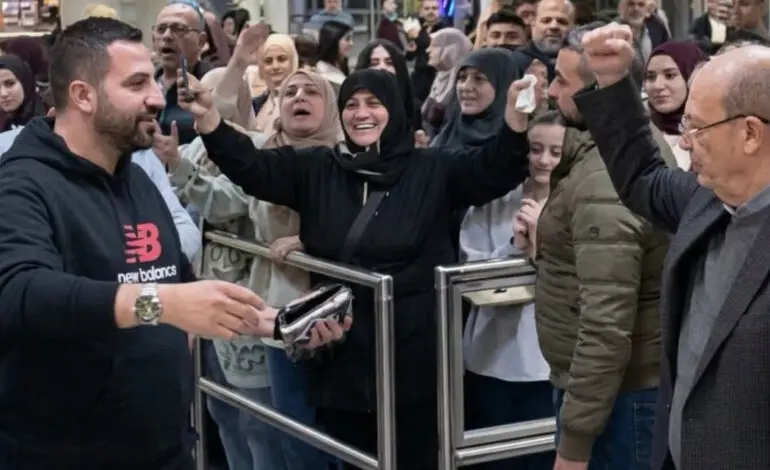
Members of the Lebanese American community gathered at Detroit Metropolitan Airport to see him off. He arrived in Beirut the following day.
Lebanon’s Foreign Ministry moved quickly to arrange temporary leadership of the mission, appointing former Ambassador to Mexico Sami Nmeir as acting consul general. Nmeir arrived in Detroit on Tuesday to assume responsibility for the consulate, whose Southfield offices serve Lebanese citizens across 14 states.
An election dinner and old posts
The decision, formally communicated to Lebanon’s embassy in Washington, followed the Free Beacon report criticizing Charara’s attendance at the Arab American Political Action Committee’s annual dinner in Dearborn.
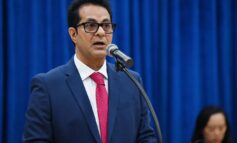
Charara appeared alongside Democratic U.S. Senate candidate Abdul El-Sayed at the October 28 banquet, which drew numerous politicians, diplomats and candidates ahead of the midterm elections.
The conservative publication resurfaced a post attributed to Charara concerning the 1983 attack on U.S. Marines and paired it with a photograph of him at the AAPAC dinner. Chuck Ross published the report November 2, one day before the election.
On November 6, following the election, the State Department declared Charara persona non grata over the disputed posts.
According to the Free Beacon’s account, an October 23, 2021 post marking the anniversary of the barracks bombing described the attack as “heroic resistance” that ended what it called the “American military occupation of Beirut with a single strike.”
The bombing killed 241 American service members during Lebanon’s civil war.
The report also cited a post attributed to Charara referring to the Marine barracks in Beirut and the Al-Tanf base in Syria, declaring opposition to what it characterized as occupation.
Charara disputes that he authored the posts.
While the Free Beacon questioned the nature of his attendance at the AAPAC dinner and suggested involvement in American electoral politics, the event also drew other diplomats. They included Malaysia’s ambassador to the United States, representatives of Japan’s consulate in Detroit and Jordan’s honorary consul in Michigan.
Posing for photographs with candidates, including El-Sayed, does not itself establish that Charara supported or participated in their campaigns.
Washington explains its decision
In comments carried by news organizations, a State Department spokesperson said the department continually reviews information concerning accredited foreign mission personnel, including potential national security concerns, and takes action consistent with U.S. law and international obligations.
The spokesperson condemned celebrating or justifying terrorist attacks and invoked the Americans and colleagues killed in the 1983 and 1984 attacks on U.S. embassy facilities in Beirut.
The department confirmed Charara’s designation as persona non grata, stating that “a visa is a privilege, not a right.”
U.S. Ambassador to Lebanon Michel Issa, speaking to Al Hadath, said celebrating the killing of Americans was fundamentally incompatible with expecting to enjoy the freedom, opportunities and protection provided by the United States.
Alongside the controversy over the posts, Lebanese media reports, including reporting by Annahar citing informed sources in Washington, said concerns also extended to Charara’s attendance at political events during the election season, which those sources characterized as inconsistent with diplomatic neutrality.
The State Department, however, did not confirm that those activities, including his attendance at the AAPAC dinner, were grounds for his removal.
The Vienna Convention on Consular Relations allows a host country to declare a consular officer persona non grata without providing a detailed explanation.
Charara denies responsibility
Charara denied that the circulating posts were written by him or represented his positions.
Sources close to the diplomat said his former Twitter account had been hacked years ago, that he stopped using it and that he subsequently moved to another account.
A source told L’Orient-Le Jour that Charara no longer had access to the old account or its associated email address and telephone number.
Sources close to Charara also said the expulsion decision came without warning and that he had received no previous objection concerning his diplomatic performance.
Relief work and consular services
Alongside his consular duties, Charara helped coordinate humanitarian initiatives supporting people displaced or otherwise affected by Israeli attacks on Lebanon.
On March 7, he convened a meeting at the Lebanese consulate in Southfield with religious leaders, representatives of Lebanese institutions and associations, and community and media figures from Michigan and other Midwestern states.
The meeting examined ways to support displaced families and coordinate relief efforts.
On March 22, Charara sponsored a solidarity event at the Bint Jebail Cultural Center in Dearborn, with participation from Arab American institutions and associations. The event raised funds for displaced people while the consulate worked to identify humanitarian needs and facilitate aid shipments to Lebanon.
On the administrative front, the consulate launched Lebanese biometric passport services on September 21 under Charara’s leadership, becoming the first Lebanese consulate in North America to offer the service.
The project was introduced through cooperation between Lebanon’s Foreign Ministry and General Directorate of General Security as part of a broader effort to expand biometric services at Lebanese missions abroad.
The service allows expatriates to complete biometric passport procedures without traveling to Lebanon to submit their biometric information.
During his tenure, Charara also regularly attended social, cultural and religious events organized by community institutions, maintaining ties with Lebanese expatriates throughout Michigan and the Midwest.
Supporters welcome him in Beirut
Before Charara’s arrival in Lebanon, journalist Hassan Illaik called on journalists, media workers and citizens to join a solidarity gathering and public reception outside Beirut–Rafic Hariri International Airport at 8 p.m.
Illaik described Charara’s expulsion as unjust and urged supporters to stand with him, rejecting what he characterized as discrimination and targeting based on sectarian identity.
Charara was greeted at the airport by relatives, friends and supporters.
In brief remarks to reporters, he expressed pride in having served the Lebanese community in Michigan and called on Lebanese people to embrace unity and mutual affection.
Nmeir takes over temporarily
Following Charara’s departure, Lebanese media circulated the name of Albert Samaha, chief of staff to Foreign Minister Youssef Rajji, as a possible replacement.
Those reports also suggested objections from Ain al-Tineh, the headquarters of Lebanese Parliament Speaker Nabih Berri.
However, sources subsequently quoted by Annahar denied that Samaha’s appointment had been proposed. The discussion unfolded against Lebanon’s customary sectarian distribution of certain diplomatic positions, with the Detroit consul general’s post traditionally allocated to a Shi’a diplomat.
On November 9, Rajji assigned Nmeir to serve as acting consul general. Nmeir arrived in Detroit on Tuesday, November 10, to maintain consular services pending the appointment of a permanent successor.
Rajji had announced that a diplomat would be dispatched on a special assignment to oversee the consulate and ensure continuity of services.
Nmeir brings three decades of diplomatic experience, having joined Lebanon’s diplomatic service in 1996.
He served as Lebanon’s ambassador to Mexico, with responsibilities extending to Central America, from 2018 to 2025. His earlier assignments included consul general in Dubai and the Northern Emirates, chargé d’affaires in Abu Dhabi, first secretary at Lebanon’s embassies in London and Rome, and counselor at Lebanon’s embassy to the Holy See.
Originally from the Zahle area of the Bekaa Valley, Nmeir holds a law degree and was a member of the Beirut Bar Association before entering the diplomatic service.
Leave a Reply