


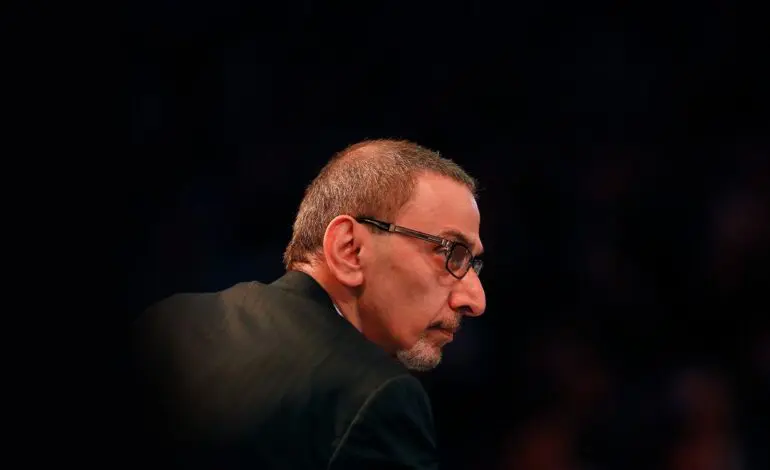

On the morning of Sad Saturday, July 26, sorrow descended over Lebanon and the Arab world following the announcement of the death of the brilliant playwright and musician Ziad Rahbani at the age of 69, after a struggle with illness. His passing triggered national mourning in Lebanon and echoed across the Arab world and beyond.
According to medical and media sources, Lebanon’s most celebrated composer had been suffering from liver fibrosis, which gradually worsened due to medical neglect and his persistent refusal to undergo full treatment or surgery. In the final days of his life, he was admitted to a hospital in Beirut after his condition deteriorated, where he was later declared dead following cardiac arrest.
Local and Arab media outlets, along with social media platforms, widely circulated the news of the death of the man behind “Kifak Inta” (“How Are You”) and covered his funeral, which was attended by his mother, Fairuz, the legendary Lebanese singer. The tributes included constant replays of his creative works in music, song and theater, as well as clips from his radio and television interviews, known for his commanding presence and political stances in support of Arab resistance movements in Lebanon, Palestine and beyond.
Rahbani’s funeral was held at the Church of the Dormition of the Virgin in his hometown of Mhaydseh, near Bikfaiya, with mourners arriving from across Lebanon to say goodbye to “the voice that said the unspeakable.” The ceremony was attended by a host of artists and intellectuals, as well as his mother, whose silence and visible grief added deep symbolic meaning to the farewell.
Rahbani’s legacy is not just in the notes he wrote, but in the uncomfortable truths he sang — truths that still haunt the Arab world.
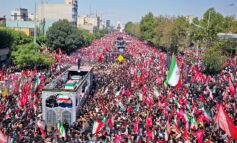
The funeral also drew the participation of ministers, members of parliament, representatives of the presidency and numerous public and artistic figures — including actors, singers and poets — many of whom delivered eulogies highlighting Rahbani’s cultural and national stature. But the most poignant scene was outside the church, where thousands of ordinary citizens — young and old — gathered holding his photos and chanting lyrics from his songs and plays.
Rahbani emerged onto the artistic scene in the 1970s when, at just 14-years-old, he composed the music for the play “Al-Mahatta” (“The Station”) after his father, the legendary musician Assi Rahbani, fell ill. This marked the beginning of a prolific artistic journey as a musician, writer, composer and playwright.
From early on, Ziad diverged from the traditional legacy of the Rahbani family and forged his own unique artistic and intellectual path. His name and presence were no longer just extensions of a famous musical dynasty; he became an artistic brand in his own right — known for challenging conventions and breaking with Rahbani traditions through a satirical and critical lens that made him the voice of a generation wearied by war and division.
He was heavily influenced by Western musical schools, particularly jazz and classical music, and deeply immersed himself in Lebanon’s political and social debates. The country’s polarizations formed the backdrop for his later works, which combined bold experimentation with deep political commitment.

Four decades of brilliance, rebellion, and commitment — Ziad Rahbani gave voice to Lebanon’s wounds and dreams through music, theater and satire.
Ziad Rahbani was a multi-dimensional artist: musician, playwright, poet, composer and political commentator. Most importantly, he was a committed artist who used his art to challenge the collective consciousness and critique Lebanon’s political and social structures. His body of work reflects the turbulent transformations Lebanon has undergone — conveyed in a style both satirical and realistic.
Rahbani’s contribution to theater was as significant as his impact on music. His plays became part of the collective cultural memory of Lebanon and the Arab world. More than just artistic productions, they served as living documents of a volatile reality — written in the language of the street and blending political satire with social drama.
Among his most iconic works is the play “Bennesbeh Labokra Chou?” (“What About Tomorrow?”) from 1978, which is considered the pinnacle of his theatrical output. Set in a small bar during the Lebanese Civil War, it portrayed the collapse of values and political and class contradictions in Lebanon. Then came “Film Ameriki Taweel” (“A Long American Movie”) in 1980, which delved even deeper into the divided Lebanese society, using a police investigation as a narrative tool to expose the absurdity of the political and sectarian order. The play reflected his clear leftist convictions and his sharp critiques of the political system, political parties and corruption.
Rahbani didn’t just compose music — he composed Lebanon’s pain, sarcasm and relentless yearning for truth.
Other notable plays include “Sahriyyeh” (1973), “Nazl Al-Sourour” (1974) and “Bi Khusus Al-Karama wal-Shaab Al-Anid” (1993), in which Rahbani continued to expose political and social realities with sharp humor tinged with profound sadness.
His songs were not merely musical compositions or rhymed poetry, but living political and social statements. At a time when Arabic songs tended to be emotional and classic, this musical genius opened the door to satirical, provocative and socially conscious music. He created a new school of thought that fused jazz, Oriental notes and colloquial language that resonated with the everyday citizen.
Among his most famous songs are those he wrote and composed for himself — delivered in his weary, sincere voice — such as “Ana Mish Kafer” (“I Am Not an Infidel”) and “Bima Inno” (Just Because), among many others. These weren’t just tunes; they were “artistic declarations” tackling identity, religion, poverty, corruption and societal collapse.
In a world of false grandeur, Ziad Rahbani was brutally honest — his melodies cried, laughed and shouted for the people.
Rahbani also composed a number of songs for his mother, which broke with the traditional Rahbani style. These included “Biktob Ismak Ya Habibi” (“I Write Your Name, My Love”), “Sa’alouni Al-Nass” (“The People Asked Me About You”), “Bala Wala Shi” (“With Nothing at All”), “Kifak Inta” (“How Are You”), “Allah Kbeer” (“God Is Great”) and “Habbeit Ma Habbeit” (“I Loved, Whether I Loved or Not”). These songs were notable for their complex musical phrasing and arrangements that bore Rahbani’s unmistakable signature.
Despite his powerful presence and artistic influence, Ziad Rahbani lived a career marked by interruptions — periods of silence and withdrawal followed by sudden reappearances that reignited public debate. This inconsistency was part of his temperament and his deep artistic honesty, unconcerned with production schedules or audience expectations.
In the 1990s and early 2000s, Rahbani distanced himself from theater and television, disappearing from the media for years and releasing only scattered musical recordings or live performances. This retreat was not an official retirement, but rather a form of protest reflecting his disillusionment with political realities — and at times, with the artistic scene itself. Yet whenever he returned to the spotlight, he astonished the public anew — whether through a rare television appearance or a live concert that drew massive crowds.
Leave a Reply