




“Greater Israel” — from theory to implementation
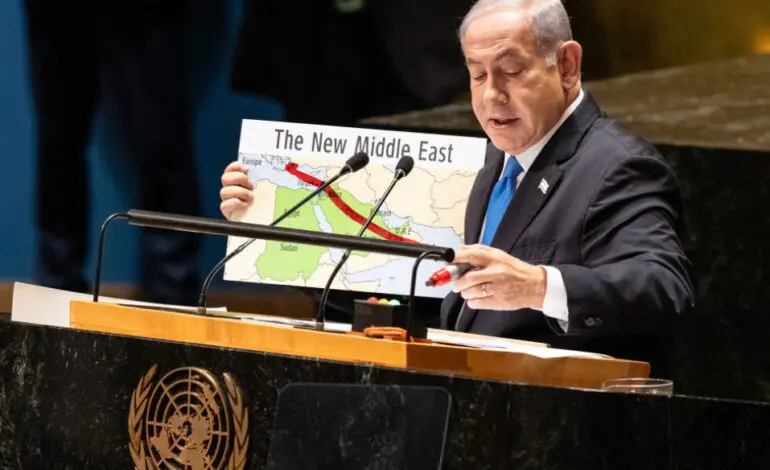
The “Greater Israel” project — stretching from the Nile to the Euphrates — is no longer a mere fantasy or “conspiracy theory.” It has become a tangible direction on the ground, evident both in statements by Israeli officials, including Prime Minister Benjamin Netanyahu, and in the geopolitical changes that have taken place in the region since the Al-Aqsa Flood operation in October 2023. Israel seeks to consolidate these changes by attempting to disarm the resistance in Lebanon and Gaza, and by establishing the so-called “David Corridor”, now on the verge of carving out large swaths of Syrian territory under the acquiescence of the de facto authority in Damascus.
While Netanyahu insists on continuing the war in Gaza and fully occupying the Strip, disregarding the deepening humanitarian crisis there, the wanted war criminal — sought by international justice — went so far as to speak publicly, in a televised interview, about his attachment to the Zionist dream of the “Greater Israel” project. This project aims not only to seize all of historic Palestine, but also to extend control into six other Arab countries: Syria, Lebanon, Jordan, Iraq, Egypt and Saudi Arabia. The remarks have drawn official condemnations from some of these states, which appear incapable of challenging Israel beyond issuing statements of denunciation and protest.
In Gaza, after the Israeli security cabinet approved the plan to occupy the Strip — a plan still facing operational challenges that raise serious questions about its feasibility — Netanyahu reaffirmed his determination to carry out his brutal war until achieving his extreme right wing government objectives: disarming the resistance, securing the return of the remaining Israeli captives and establishing military control over Gaza in preparation for handing it over to a new authority without Hamas or the Palestinian Authority, as he stated.
As Israel continues its land and air assaults on the devastated enclave, targeting civilians while enforcing a starvation policy on the besieged population since March, Palestinian resistance factions have continued to confront Israeli forces and armor with daily operations and ambushes, vowing to keep fighting and never lay down their arms. Meanwhile, mediators in Doha, Cairo and Ankara have been pressing Hamas to accept a new proposal based on the idea of a “comprehensive deal” to end the war — one that would ultimately result in the disarmament of the resistance in Gaza, the well-known Israeli demand that Netanyahu reiterated by saying, “There is no possibility for a partial deal, and we will not go back.”
The Israeli escalation in Gaza comes amid the deafening silence of President Trump’s administration, which appears, for now, to have confined its role to calling for more humanitarian aid to Gaza’s residents. Washington has dismissed airdrops of aid as “not a serious option”, despite the rising number of deaths from hunger and malnutrition. Israel began permitting food airdrops in late July in response to mounting global outrage over the humanitarian toll of the war and blockade.
Israel now faces growing international pressure over the humanitarian crisis, with criticism focused on the Gaza Humanitarian Foundation, which operates distribution sites only in southern Gaza. Aid groups and the United Nations have described the operation as “dangerous and ineffective”, citing the killing and injury of thousands of Palestinians waiting for food.
With the death toll from two years of war approaching 60,000 in Gaza, authorities there report that an increasing number of people are dying from hunger and malnutrition. Images of starving children have shocked the world and intensified criticism of Israel for the sharp deterioration in conditions.
In a clear display of disregard for international law, Israeli forces targeted a small journalists’ tent outside the Al-Shifa Medical Complex in Gaza City on Sunday evening, reducing it to ashes and killing five journalists — among them Al Jazeera correspondents Anas al-Sharif and Mohammed Qreiqa, as well as photographers Ibrahim Zaher, Moamen Aliwa and Mohammed Noufal and freelance journalist Mohammed al-Khaldi.
The crew had been documenting daily suffering around the Strip’s largest hospital when the blast struck — part of Israel’s ongoing efforts to obscure its atrocities. Targeting journalists in conflict zones is a blatant violation of the Geneva Conventions and their Additional Protocols, which clearly state that civilian journalists are protected persons unless they take direct part in hostilities.
The Israeli army claimed it was targeting a Hamas “cell leader” disguised as a journalist, alleging it found “documents” proving this. International human rights organizations have called for these claims to be proven before an independent investigation, stressing that targeting civilian journalists is a flagrant breach of international law. According to U.N. Human Rights Office spokeswoman Ravina Shamdasani in late 2023, attacks on journalists are “not only potential crimes against individuals, but direct assaults on the public’s right to know.”
More than 238 journalists have been killed since October 7.
Netanyahu’s “Greater Israel” vision
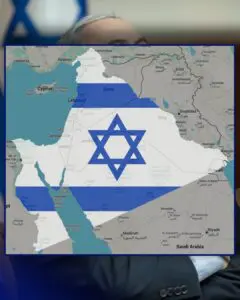
In an interview with Israel’s i24 News channel, Netanyahu declared that he is “on a historic and spiritual mission and emotionally connected to the vision of Greater Israel” — a vision based on expansion, the occupation of more Arab lands, and the displacement of Palestinians.
“I am on a mission of generations,” Netanyahu said when asked whether he felt he was “on a mission on behalf of the Jewish people.” “If you ask whether I have a sense of mission — historically and spiritually — the answer is yes. I am deeply connected to the vision of Greater Israel.”
The Palestinian Authority, Jordan, Qatar, Saudi Arabia, Egypt, the Arab League and Hamas all condemned Netanyahu’s remarks as an “extension of the occupation’s policies of arrogance and incitement” and a “threat to the sovereignty of states, a violation of international law and the U.N. Charter, and a dangerous provocation that exposes the region to more tension and violence.”
Egypt’s foreign ministry demanded clarifications from Netanyahu, stressing that such statements undermine stability and reject the path of peace. It reaffirmed that peace can only be achieved through a return to negotiations, an end to the war in Gaza and the establishment of a Palestinian state on the June 4, 1967 borders with East Jerusalem as its capital, based on the two-state solution and relevant U.N. resolutions.
Hamas said the remarks “clearly confirm the danger this fascist entity poses to all countries and peoples of the region, and its expansionist schemes that spare no state.” The group called Netanyahu’s claim of a historic and spiritual mission “a reflection of the madness and delusion” guiding his behavior and that of the extremist ruling clique waging a war of genocide and starvation against Gaza and seeking to expand its aggression against other states in the region.
The “Greater Israel” concept, openly embraced today by the Israeli right wing extremists, was first advanced by the Likud Party upon taking power under Menachem Begin in 1977. It is rooted in Zionist ideas and biblical doctrines claiming that the “promised land” extends from the Nile in Egypt to the Euphrates in Syria and Iraq, including vast areas of northern Arabia — even Medina in Saudi Arabia — along with all of historic Palestine, all of Lebanon and Jordan, more than 70 percent of Syria, half of Iraq, about one-third of Saudi territory and a quarter of Egypt.
Before Israel’s founding in 1948, David Ben-Gurion, one of its founders, wrote in 1938 that “establishing the state, even on a small part of the land, is the greatest reinforcement of our strength at present and a powerful boost to our historic mission. We will break the borders imposed on us — not necessarily through war.”
Israel’s Torah and Land Institute website asserts that “Greater Israel extends from the Euphrates to the Nile” — a phrase attributed to Zionist movement founder Theodor Herzl, who announced his expansionist project in 1904. Netanyahu and his far-right coalition now view recent regional developments as a historic opportunity to turn that biblical concept into an actionable political program, especially in Syria, where conditions are being prepared for the creation of the “David Corridor” — framed as “humanitarian” — to connect Israel with the stricken Sweida Governorate via Quneitra and Daraa, reaching the Euphrates and Kurdish-controlled areas in eastern Syria.
The “David Corridor”
Syria’s new regime, led by Ahmed Al-Sharaa, has shown no public opposition or principled resistance to Israeli ambitions in southern Syria. Foreign Minister Asaad Al-Shibani is even scheduled to travel to Paris next week to meet Israeli Strategic Affairs Minister Ron Dermer and U.S. Envoy to Syria Tom Barrack to discuss plans for a humanitarian corridor linking Israel with the besieged Sweida, following July’s bloody assaults by Al-Sharaa forces and allied tribes.
Weeks earlier, Israel tried to deliver aid to Sweida’s Druze community via Jordan, but Amman refused, prompting Israeli forces to resort to airdrops. According to Axios, which cited U.S. and Israeli officials, the Trump administration is trying to broker an agreement to establish a humanitarian corridor between Israel and Sweida to deliver aid to the Druze minority.
The planned meeting on Wednesday was postponed to next week to allow “more time to finalize preparations and refine the agenda,” Axios said. Officials believe a Syrian-Israeli deal on such a corridor could help repair relations and possibly revive U.S. efforts toward eventual normalization, with expectations that Damascus may offer more concessions to Tel Aviv in exchange for securing its new governing order — which last week suffered two major political blows: one at the U.N. Security Council, and another through the emergence of a potential minority coalition against the Damascus government.
Axios said the Paris meeting would have been the second between Dermer and Al-Shibani in three weeks. Syrian objections to the “humanitarian corridor” are reportedly limited to fears that “Druze militias” could use it to smuggle weapons, without rejecting the principle of the project — which observers see as a clear precursor to the “David Corridor,” considered a cornerstone of the “Greater Israel” scheme.
Turkey, however, opposes Damascus’ complete embrace of Israel, rooted in Ankara’s rejection of continued Kurdish control of large parts of Syria. Turkish Foreign Minister Hakan Fidan made a surprise visit to Damascus following a “North East Syria Components Unity” meeting organized by the SDF, prompting Damascus to announce it would not participate in the Paris meetings originally set to include Kurds and the Damascus government under U.S.–French auspices.
The resistance axis
After the Lebanese government led by Prime Minister Nawaf Salam submitted to U.S. dictates — the “Barrack Paper” — tasking the Lebanese army with presenting a plan to disarm Hezbollah by the end of August, Ali Larijani, secretary-general of Iran’s Supreme National Security Council, arrived in Beirut on Wednesday from Baghdad. His day-long visit included meetings at official institutions, the Iranian embassy and a sit-down with Hezbollah Secretary-General Sheikh Naim Qassem.
According to Lebanon’s Al-Akhbar newspaper, Saudi officials and the U.S. embassy team in Beirut made extensive calls to politicians, advisers and media figures to gather all possible information on Larijani’s visit, focusing particularly on its Hezbollah dimension.
Larijani reaffirmed Iran’s commitment to supporting the Lebanese resistance in the face of the U.S.–Israeli — and even Saudi — drive to strip Lebanon of its defensive strength, paving the way for its inclusion in the Abraham Accords normalization track after the collapse of internal balance following Israel’s recent war.
His visit coincided with a speech by Yemen’s Ansarallah leader Abdul-Malik Al-Houthi on the war in Gaza and related regional developments, in which Lebanon figured prominently. He recalled that “for more than 40 years, the Israeli enemy has been in a state of aggression against Lebanon, occupying its land, with liberation milestones achieved — by God’s grace — through the mujahideen and the Lebanese resistance.”
“From now on, it is clear the Lebanese army will be the last to receive any official political order to confront Israel,” Al-Houthi said, stressing that “Lebanon’s interest lies in the resistance experience, which has proven successful for 40 years. It is better for Lebanon to grant official and popular embrace to the resistance, rather than wage war against it on behalf of forces aligned with the Israeli enemy.”
He added that, “official orientations in Lebanon are subservient to the Israeli enemy and responsive to its dictates — a disgrace in every sense — as Israel seeks to strip Lebanon of its arms so its lands remain exposed and to remove the real obstacle in its way.”
Al-Houthi also mocked the Lebanese government’s “sensitivity” to statements of solidarity, noting that it labels any political or military support for Lebanon as “interference in Lebanese affairs” and responds with loud rhetoric — while at the same time displaying “humiliating submission” to Israel’s crimes and attacks.
Leave a Reply