




When Hannah Arendt coined the phrase “the banality of evil” in her reflections on the trial of Adolf Eichmann, she shocked the world by suggesting that unspeakable crimes could be carried out not only by fanatics but by ordinary men who operated through bureaucratic obedience and a refusal to think critically about the consequences of their actions. Evil, she argued, could wear an ordinary face. It could hide beneath polite speech, pressed suits and a simple sense of duty. It could become routine. Arendt concluded that great evils in history are often not carried out by monsters but by ordinary people who accept the premises of their state and participate in destructive systems without critical reflection or moral judgment. Evil, then, can be banal in the sense that it arises not from demonic motives but from thoughtlessness, conformity and a lack of ethical imagination.
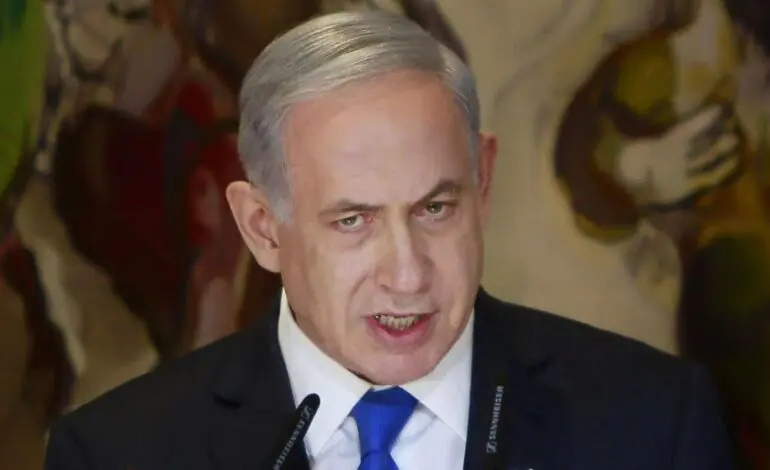
Today, the concept echoes with unsettling force when one looks at the long career of Benjamin Netanyahu, Israel’s longest serving prime minister. Unlike the archetypal tyrant, Netanyahu does not storm into history books with wild gestures or the overt madness of despots. Instead, he projects the air of a seasoned politician, comfortable in the rhythms of parliamentary debate, media spin and calculated coalition building. Yet beneath this ordinary political mask lies a record of cruelty and devastation that resonates with Arendt’s insight.
The bureaucratic language of violence
Netanyahu’s political genius has never been in flamboyance but in normalization. His greatest power lies in his ability to reduce catastrophe to policy, to wrap the destruction of Palestinian lives in the sterile language of national security and counterterrorism. He does not present himself as a bloodthirsty tyrant but as a statesman who claims to act on behalf of the survival of his people. By using familiar political rhetoric, he transforms extraordinary cruelty into something that feels administrative, a matter of security briefings, military budgets and routine operations.
When bombs fall on Gaza and children are buried beneath the rubble, Netanyahu rarely speaks in the language of sorrow or even triumph. Instead, he invokes necessity. He appeals to the need for deterrence, the inevitability of reprisals, the cold calculus of defense. In doing so, he embodies Arendt’s warning. He presents mass suffering as the unavoidable outcome of rational policy. He drains violence of its visible horror and cloaks it in the language of obligation.
This is what makes him so dangerous. For in that veneer of responsibility lies a refusal to acknowledge the moral weight of his choices. His words seek to transform horror into normalcy, and once normalized, horror can continue indefinitely.
The face of indifference
Arendt emphasized that the banality of evil is rooted not in monstrous hatred but in thoughtlessness and indifference. Netanyahu has perfected this mode of political being. He rarely dwells on the human toll of his decisions. When confronted with images of devastation in Gaza or accounts of hunger in the West Bank, his response is predictable. He insists that Israel is defending itself. He diverts blame toward Hamas. He repeats slogans about security. What is absent in this rhetoric is the acknowledgment of Palestinian humanity.
This absence is not accidental. It is a cultivated indifference, one that allows policy to continue without the burden of conscience. Under Netanyahu’s leadership, checkpoints, blockades, home demolitions and settlement expansions have become part of the daily rhythm of governance. They are not announced as acts of cruelty but as administrative necessities. In the face of such routinization, Palestinians are reduced to statistics, obstacles or collateral. Their suffering becomes invisible within the bureaucratic machine of the state.
In this sense, Netanyahu mirrors Eichmann’s disturbing ordinariness. He does not need to scream genocidal rhetoric to preside over policies that systematically strip a people of land, dignity and hope. He needs only to persist with the ordinary language of security while ensuring that the machinery of control continues to run.
The international theater
Netanyahu’s banality of evil is further revealed in the theater of international diplomacy. At the United Nations, he wields charts, maps and diagrams. He speaks with the calm tone of a technocrat explaining global risks. His speeches are carefully tailored for Western audiences, designed to frame Israel as the bulwark of civilization against chaos. He rarely rants. He rarely raves. Instead, he embodies the respectable face of policy-driven politics.
Yet behind the podium performance lies the grim reality of Gaza blockades, West Bank settlements and decades of systematic displacement. His diplomatic persona functions as a mask, one that convinces allies abroad that his government is simply grappling with complex security dilemmas. In this way, the extraordinary cruelty of occupation becomes obscured by the ordinary rituals of global politics. Netanyahu’s very respectability serves as camouflage for a moral disaster.
The machinery of occupation
The true measure of Netanyahu’s legacy can be found not only in war but in the grinding machinery of occupation. The daily checkpoints, the permit regimes, the confiscation of land and the relentless spread of settlements across Palestinian territory — all of these persist under his leadership. None of these policies appear in fiery speeches about extermination. They appear in bureaucratic orders, military briefings and zoning regulations. They are executed by clerks, soldiers and administrators who insist they are simply following protocol.
This is the heart of Arendt’s insight. Evil often does not announce itself with horns and flames. It creeps through offices and committee meetings. It reproduces itself in paperwork, legal codes and official seals. Netanyahu has presided over this system not as a monster outside of it but as its most experienced operator. He embodies its logic, perfects its justifications and ensures its continuity.
The Global consequence
If the banality of evil is the ordinary face of extraordinary cruelty, then its danger extends beyond borders. Netanyahu’s policies reverberate throughout the Middle East. His pursuit of normalization with Arab states often occurs in tandem with escalations in Palestinian suffering. His alliances with Western powers shield Israel from meaningful accountability at the United Nations. Each move is justified as rational, pragmatic and necessary. Each move deepens the abyss.
The consequence is not only the devastation of Palestinian lives but the erosion of moral clarity worldwide. When powerful states accept Netanyahu’s policies as routine, they participate in the normalization of atrocity. They too are drawn into the banality of evil, repeating the language of security while ignoring the cries of the oppressed.
The illusion of pragmatism
Supporters of Netanyahu often describe him as pragmatic, a realist who navigates a volatile region with shrewdness. Yet this pragmatism is precisely what Arendt warned against. Pragmatism without moral vision becomes a mask for evil. Realism without conscience becomes complicity in atrocity. By presenting himself as the responsible adult in the room, Netanyahu hides the extraordinary cruelty of his choices behind the illusion of sober statesmanship.
A call for recognition
Netanyahu is the true embodiment of the banality of evil, and he shares the statesman-like façade that past architects of genocides have held. We need to recognize the mode of politics that he represents. We need to recognize how ordinary speech, ordinary policy and ordinary bureaucracy can sustain extraordinary injustice. It is to acknowledge that evil today does not always come in the form of a dictator’s scream but often in the calm voice of a politician explaining security concerns.
Recognizing this banality is the first step in resisting it. For as long as the world accepts Netanyahu’s rhetoric without questioning its moral emptiness, the machinery of occupation will continue to grind forward. The challenge is to refuse normalization, to expose the ordinary face of cruelty for what it is and to insist on the humanity of those who suffer beneath its weight.
Toward a different future
The future will judge Netanyahu not by his speeches at the United Nations but by the lives lost in Gaza, the children displaced from their homes and the generations forced to live under occupation. His legacy will be written not in the language of security but in the testimonies of those who endured hunger, grief and despair while the world looked away.
Yet the future is not only about judgment. It is also about possibility. Arendt’s warning was not meant to paralyze but to awaken. The banality of evil reveals the ease with which ordinary people can participate in atrocity, but it also implies the possibility of resistance. If evil is sustained by thoughtlessness, then its antidote is the courage to think critically. If it is sustained by indifference, then its antidote is compassion.
The challenge before humanity is to confront the ordinariness of Netanyahu’s cruelty and to refuse its normalization. It is to break the illusion that his policies are mere pragmatism. It is to recognize that what appears ordinary can, in fact, be extraordinary cruelty. Only then can the world begin to imagine a different future, one in which the humanity of Palestinians is acknowledged, and the machinery of occupation is dismantled.
In the end, Netanyahu’s career demonstrates that Arendt’s insight remains as urgent as ever. The banality of evil is not confined to the past. It lives wherever violence is masked as necessity, wherever cruelty is presented as pragmatism and wherever ordinary men use ordinary words to justify extraordinary suffering. Netanyahu’s legacy will remain a case study in how evil can become ordinary, and how the ordinary can destroy the extraordinary gift of human life.
– Amjad Khan is a contributing writer for The Arab American News. He is an educator, writer and academic researcher with a deep commitment to addressing the challenges facing the Muslim world. Through his work, he seeks to inspire meaningful dialogue and help chart a path toward unity, justice and peace.



Leave a Reply